国家元首豁免权

Search documents
美国或许能包装审判马杜罗的合法性,却更凸显美式霸权的狂妄与强横
Xin Lang Cai Jing· 2026-01-14 23:31
Core Viewpoint - The article discusses the implications of the U.S. military operation against Venezuela, termed "Absolute Resolve," highlighting its legality under international and domestic law, and the potential consequences for international order and norms [1][2][3][4][5][6][7][13]. Summary by Sections U.S. Military Action - The U.S. launched a military operation against Venezuela, capturing President Maduro and his wife, which was characterized as a unilateral action without UN approval or congressional authorization [1][2]. - The operation involved direct military engagement, including missile strikes and air assaults, which are seen as violations of the principle of non-violence in international law [3][4]. Legal Violations - The operation is argued to violate international law, particularly the UN Charter, as it lacked Security Council authorization and did not meet the criteria for self-defense [3][4]. - The action is also viewed as a breach of U.S. domestic law, as it bypassed Congress's authority to declare war, raising concerns about executive overreach [5][6][7]. Judicial Authority - The article explores whether U.S. courts have jurisdiction to try Maduro, despite the illegal nature of his capture, citing the Ker-Frisbie principle which allows courts to proceed with trials regardless of the legality of the arrest [8][9]. - It discusses the complexities surrounding Maduro's status as a sitting president, which typically grants him immunity from prosecution under international law, but suggests that U.S. courts may not recognize this immunity due to political considerations [10][11][12]. Broader Implications - The article warns that the U.S. action sets a dangerous precedent, undermining international law and the principle of sovereign equality, potentially leading to a more unstable global order [12][13].
委内瑞拉总检察长强调马杜罗享绝对豁免权,委国民警卫队称已全国范围部署兵力
Yang Shi Xin Wen· 2026-01-06 22:00
Core Viewpoint - The Attorney General of Venezuela, Tarek William Saab, asserts that President Nicolás Maduro enjoys absolute personal immunity under international law, and calls for the immediate release of Maduro and his wife, claiming their arrest is invalid and violates international law [1][2]. Group 1 - Saab emphasizes that the current head of state has absolute personal immunity, which is a constitutional principle and a fundamental tenet of international law [1]. - Maduro was re-elected on July 28, 2024, and will begin his term from January 10, 2025, which means he cannot be arrested or prosecuted by foreign courts [1]. - Saab condemns the U.S. military actions against Venezuela as illegal armed aggression and a form of terrorism, violating the United Nations Charter [1]. Group 2 - Saab demands the unconditional release of Maduro and his wife, stating that their detention violates international law, the International Covenant on Civil and Political Rights, and the Universal Declaration of Human Rights [2]. - He calls on international organizations to condemn the actions taken against Maduro and to ensure his and his wife's immediate release [2]. - Saab has appointed a special investigation team to thoroughly investigate the casualties of innocent civilians and military personnel in the context of the alleged war crimes [2]. Group 3 - The Venezuelan National Guard has deployed forces nationwide, and the National Police has increased security measures amid external unrest [2]. - The rapid response units have strengthened their presence around strategic locations in the capital, with the Defense Minister instructing to maintain the cohesion of the people, military, and police to address any threats [2].
马杜罗庭审纪实:缚手跛行,对旁听席公众说“新年快乐”
Xin Lang Cai Jing· 2026-01-06 05:03
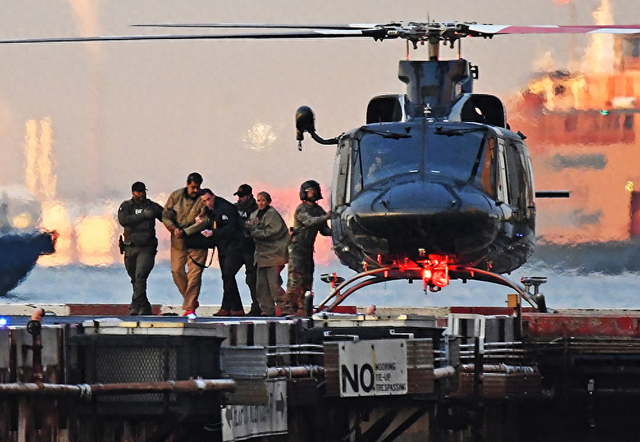
Core Viewpoint - Venezuelan President Nicolás Maduro and his wife were forcibly taken to a New York court for trial, where Maduro denied all charges and claimed he was "kidnapped" [1][3][5] Group 1: Court Proceedings - Maduro appeared in court on January 5, 2026, wearing a blue shirt and orange prison attire, and was not handcuffed but wore leg shackles [5][6] - The court session lasted approximately 30 minutes, with Judge Alvin Hellerstein presiding, and Maduro is scheduled to return for a hearing on March 17 [3][6] - During the hearing, Maduro insisted he is a "prisoner of war" rather than a typical criminal defendant, suggesting that his capture was a military operation rather than a law enforcement action [3][10] Group 2: Charges and Defense - The U.S. government has charged Maduro with conspiracy to commit drug terrorism, cocaine trafficking, possession of firearms, and conspiracy related to firearms against the U.S. [1][6] - Maduro's defense team questioned the legality of his forced capture and indicated plans to submit extensive documentation to challenge the charges [7][10] - Both Maduro and his wife have not applied for bail but reserve the right to request pre-trial release in the future [7] Group 3: Public Reaction and Protests - Outside the courthouse, there were significant protests, with demonstrators holding signs such as "Free Maduro" and "No War on Venezuela," indicating a divided public opinion on U.S. intervention [12][13] - The United Nations Security Council held an emergency meeting regarding the situation in Venezuela, with multiple countries condemning the U.S. military actions as a violation of international law [13]

“世纪审判”首次听证会:马杜罗“我无罪、我是个正直的人”,法官“92岁高龄”,“36年前有先例”
Hua Er Jie Jian Wen· 2026-01-06 00:29
Core Viewpoint - The article reports on the first court appearance of Venezuelan President Nicolás Maduro and his wife, Cilia Flores, in a U.S. federal court, where they both pleaded not guilty to various charges, including drug trafficking and conspiracy [1][4]. Group 1: Court Proceedings - Maduro and Flores appeared in court on January 5, where Maduro claimed he was "kidnapped" and insisted on his innocence [1][4]. - The court session was presided over by Judge Alvin Hellerstein, who emphasized that the current proceedings were only for identity confirmation, and legal defenses would be addressed later [5][10]. - The next hearing is scheduled for March 17, with Maduro's legal team planning to challenge the legality of the U.S. actions [7][9]. Group 2: Legal Context - Maduro's defense argues that as a head of state, he is entitled to sovereign immunity, questioning the legality of the U.S. military actions [5][13]. - Historical precedent from the 1989 case of Manuel Noriega is cited, where the U.S. courts ruled that sovereign immunity does not protect individuals from drug trafficking charges [13]. Group 3: Geopolitical Implications - The Venezuelan government characterizes the U.S. actions as "military aggression" and highlights underlying geopolitical motives related to resources [16]. - The situation poses risks for global energy markets and emerging market investors, particularly concerning potential power vacuums and social unrest in Venezuela [16].
“国家元首豁免权”成焦点:美国军事抓捕马杜罗,冲击国际法基本准则
美股IPO· 2026-01-04 16:03
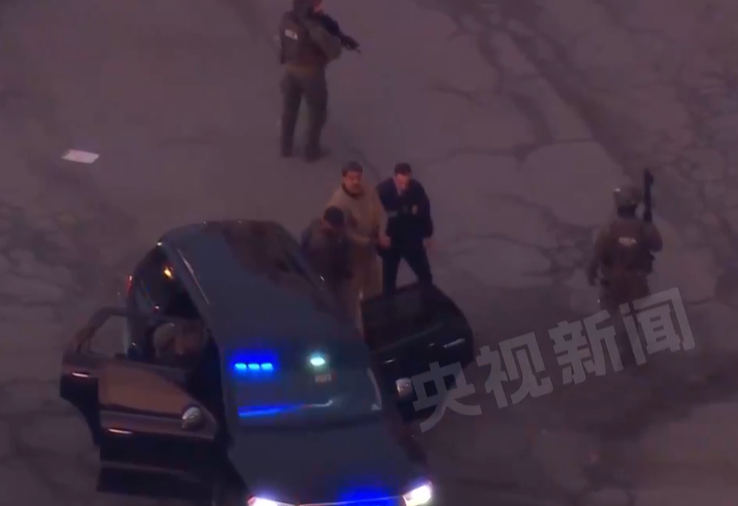
Core Viewpoint - The article discusses the legal implications and historical context of the U.S. military operation to capture Venezuelan President Nicolás Maduro, emphasizing the lack of legal justification for such actions under international law [4][5][6]. Legal Basis of the Operation - The author argues that the U.S. government's legal arguments for the operation lack validity and do not provide a legitimate defense for the military actions taken in Venezuela [6][7]. - Claims of self-defense against drug trafficking, allegedly supported by Maduro, do not hold under international law, as self-defense is traditionally reserved for armed attacks, not drug smuggling [7][8]. Historical Context and Precedents - The article references the historical precedent of U.S. interventions in Latin America, particularly the invasion of Panama to capture Manuel Noriega, highlighting the similarities in justifications used by the U.S. government [12][19]. - The author notes that the invocation of Monroe Doctrine principles by President Trump signals a troubling return to justifications for military intervention in Latin America [18][19]. Implications of Leadership Recognition - The discussion includes the complexities surrounding Maduro's status as a legitimate leader, with the potential for legal challenges in U.S. courts regarding his immunity as a head of state [10][12]. - The article raises concerns about the implications of a U.S. president unilaterally determining the legitimacy of foreign leaders, which could undermine international law and norms [16][17]. Consequences of Military Action - The potential long-term risks for U.S. soldiers involved in the operation are highlighted, contrasting this action with previous, shorter military interventions [19]. - The article suggests that the operation is driven by interests in Venezuelan oil rather than humanitarian concerns, indicating a shift towards using military force for resource acquisition [19][20].
美国温水煮青蛙钝化委内瑞拉警惕性
Xin Lang Cai Jing· 2026-01-03 17:12
Core Viewpoint - The U.S. military conducted a surprise operation in Caracas, Venezuela, resulting in the capture of President Maduro and his wife, which has significant geopolitical implications for the region [1][3][6]. Group 1: U.S. Military Action - The U.S. military launched a large-scale attack on Caracas, capturing Maduro within three hours [5]. - The operation was characterized as a "drug lord capture," indicating a strategic shift in U.S. policy towards Venezuela [3][6]. - The U.S. Justice Department has charged Maduro with multiple crimes, including drug trafficking and terrorism [1][6]. Group 2: Venezuelan Government Response - The Venezuelan government, represented by Vice President Rodriguez, has demanded proof of life for Maduro and condemned the U.S. actions as "brutal and unilateral" [6]. - The Venezuelan UN delegation has called for an emergency meeting of the UN Security Council to address the situation [6]. Group 3: Regional and International Reactions - Several Latin American countries, including Mexico, Brazil, and Colombia, have publicly opposed U.S. intervention in Venezuela, reflecting a growing anti-American sentiment in the region [7]. - Countries such as Cuba, Colombia, Russia, and Iran have condemned the U.S. military action, drawing parallels to historical interventions [6][7]. - The incident has led to a significant trust deficit between the U.S. and Latin American nations, with calls for a UN resolution to affirm the immunity of heads of state [7].
专家:美国策反委总统府中低层警卫军官美国温水煮青蛙钝化委内瑞拉警惕
Xin Lang Cai Jing· 2026-01-03 17:12
Core Viewpoint - The article discusses the recent U.S. military operation that resulted in the capture of Venezuelan President Nicolás Maduro, highlighting the implications for U.S.-Venezuela relations and the broader geopolitical landscape in Latin America [1][2][3] Group 1: U.S. Military Action - The U.S. conducted a surprise operation to capture Maduro, which was described as a significant escalation in U.S. intervention in Latin America [1] - The operation was executed swiftly, taking just over three hours from the initial explosion to Maduro's capture, indicating a lack of preparedness in Venezuelan defense [1] - U.S. military presence in the Caribbean has been increasing, contributing to a state of heightened alertness in Venezuela [1] Group 2: Internal Divisions in Venezuela - Reports indicate that U.S. intelligence successfully recruited mid-level officers in Maduro's security detail through incentives such as bonuses, amnesty, and green cards [2] - The Venezuelan government is currently unaware of Maduro's whereabouts and has demanded proof of life for him and his wife [2] - The Venezuelan government has condemned the U.S. actions as "brutal, unreasonable, and unilateral," calling for an emergency meeting of the UN Security Council [2] Group 3: Regional Reactions - The capture of Maduro marks the first instance of a U.S. military operation targeting a Latin American president since the Cold War, leading to increased anti-U.S. sentiment in the region [3] - Major Latin American countries, including Mexico, Brazil, Colombia, and Chile, have publicly opposed U.S. intervention in Venezuela, viewing it as a return to a more aggressive U.S. foreign policy [3] - Several Latin American nations have submitted a draft to the UN General Assembly to condemn unilateral military actions and affirm the principle of head of state immunity [3]
委内瑞拉称美方侵犯国家元首豁免权
Xin Lang Cai Jing· 2026-01-03 16:08
Core Viewpoint - Venezuela condemns the United States for allegedly infringing on the sovereign rights of President Maduro, claiming that the U.S. actions are purely aimed at resource exploitation [1] Group 1: Diplomatic Actions - Venezuelan Foreign Minister Arreaza stated that the country will exercise its rights in response to what it describes as a sudden attack [1] - Venezuela has communicated with foreign ministers from over ten countries, all of whom have firmly condemned the actions of the U.S. [1] - The Venezuelan government plans to continue its international efforts to counter what it calls a conspiracy through international law and active diplomacy [1] Group 2: Legal and International Implications - The statement asserts that the U.S. actions violate the immunity rights granted to heads of state under international law [1] - This precedent is claimed to threaten all democratic nations in the Americas and globally [1] Group 3: Resource Exploitation Allegations - Venezuela accuses the U.S. of having ulterior motives behind its actions, specifically aimed at the plundering of natural resources [1]
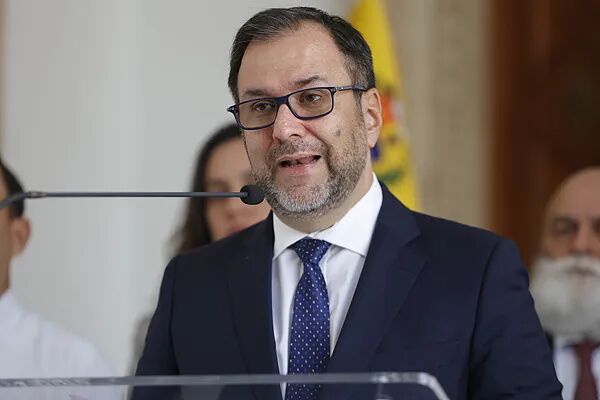
委内瑞拉外长声明:美方侵犯了国际法赋予国家元首的豁免权,必须立即释放马杜罗夫妇
Xin Lang Cai Jing· 2026-01-03 15:10
Group 1 - The Venezuelan Foreign Minister, Hill, announced that Venezuela has suffered a sudden attack and will exercise its rights [2] - The statement demands that the U.S. prove the survival of President Maduro and claims that the U.S. must be responsible for Maduro's personal safety, calling for the immediate release of Maduro and his wife, Flores [2] - Venezuela has communicated with foreign ministers from over ten countries, all of whom strongly condemn the actions of the U.S. [2] Group 2 - The statement asserts that the U.S. actions violate the immunity granted to heads of state under international law, setting a dangerous precedent for democratic countries in the Americas and globally [2] - The attack is characterized as a pure attempt to plunder natural resources, with no other intent behind it [2]