
国家公园体制改革

Search documents
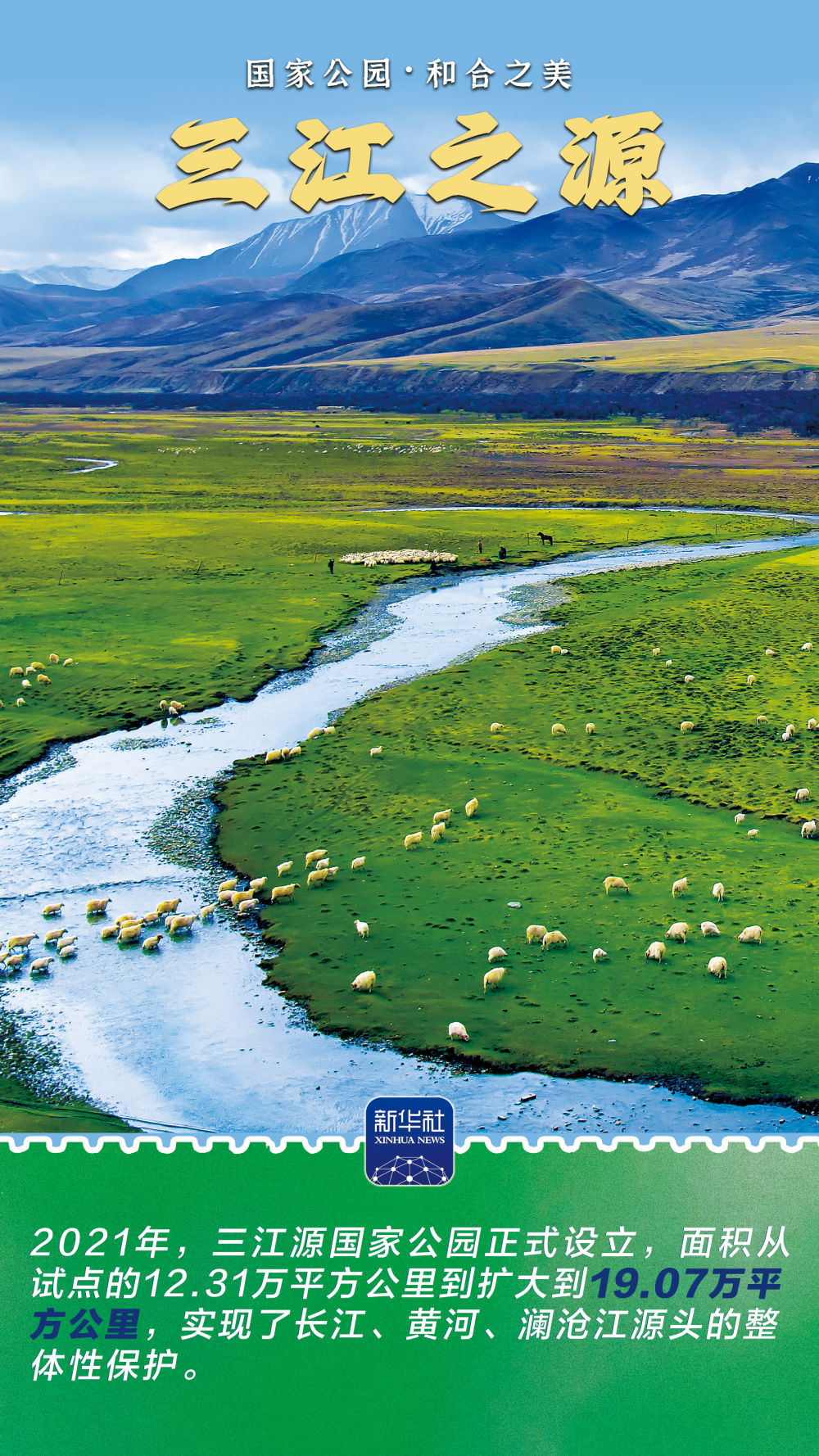
三江源国家公园:中华水塔、稳固丰盈
Xin Hua She· 2025-10-21 04:02
Core Viewpoint - The establishment of Sanjiangyuan National Park has significantly improved the ecological environment and biodiversity in the region, marking the 10th anniversary of China's national park system reform [1][3]. Group 1: Park Establishment and Area - Sanjiangyuan National Park was officially established in 2021, expanding from an initial area of 123,100 square kilometers to 190,700 square kilometers, achieving comprehensive protection of the sources of the Yangtze, Yellow, and Lancang Rivers [3]. Group 2: Ecological Improvements - The ecological environment in the Sanjiangyuan region has continuously improved under the national park system, with significant increases in the populations of wildlife such as Tibetan antelope, Tibetan gazelle, and Tibetan wild donkey [11][13]. - The number of Tibetan antelope has recovered from fewer than 20,000 to over 100,000 [13]. Group 3: Biodiversity and Species - As of September 2024, the park is home to 30 species of wild terrestrial vertebrates, including key protected species such as Tibetan antelope and wild yak [18]. - The park contains 832 species of seed plants and 200 species of wild vascular plants, making it a core distribution area for seed plants in the Sanjiangyuan region [21]. Group 4: Local Community Involvement - The park has implemented a public welfare job hiring system for ecological protection, transforming local herders into ecological protectors, which has led to an average annual income increase of 12,700 yuan for ecological caretakers [24].

焦点访谈|国家公园体制改革10周年,这里正在探索一种新模式
Yang Shi Wang· 2025-10-13 13:55
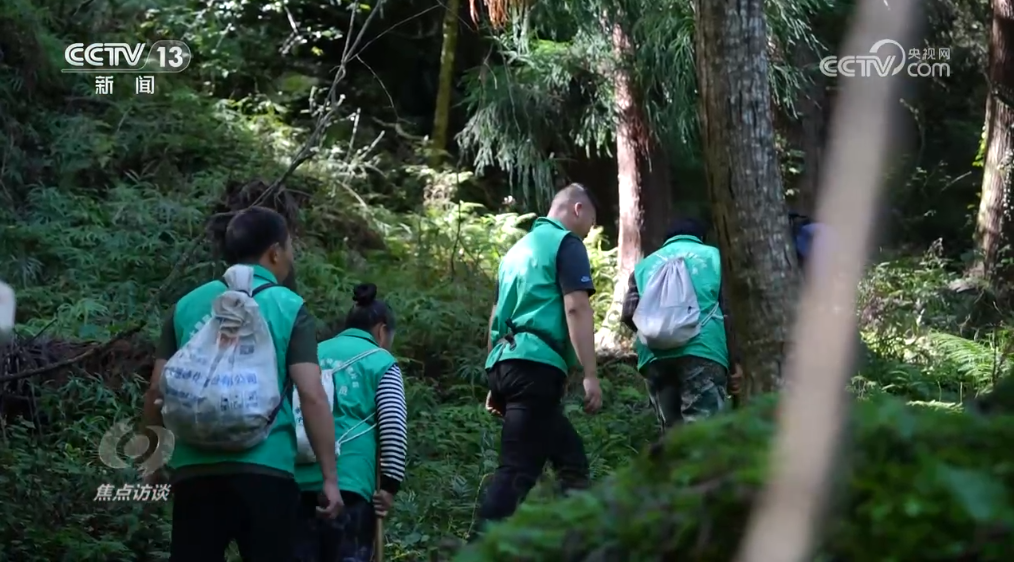
Core Viewpoint - The article highlights the progress and achievements of China's national park system, particularly focusing on the community-led conservation model in the Giant Panda National Park, which balances ecological protection with local residents' livelihoods [1][5][22]. Group 1: National Park Development - This year marks the 10th anniversary of China's national park system reform, with the establishment of the first five national parks, including the Giant Panda National Park [1]. - The National Park Law was officially published in September, providing a solid legal foundation for the construction of national parks in China [1]. - The Giant Panda National Park integrates over 80 existing nature reserves, becoming a core area for global biodiversity protection [5]. Group 2: Community-Led Conservation - The community-led model in Guamba Village aims to protect the ecosystem while ensuring the livelihoods of local residents, transitioning from traditional resource exploitation to conservation [7][9]. - Guamba Village has established a natural protection center, with 30% of households participating in conservation efforts, supported by government funding [9][12]. - The model emphasizes community involvement, allowing villagers to manage and benefit from conservation activities, contrasting with traditional top-down approaches [9][12]. Group 3: Economic Transition - Villagers have shifted from hunting and gathering to roles as conservation patrols, receiving compensation for their efforts [10][12]. - Beekeeping has replaced hunting and grazing, providing villagers with a sustainable income while promoting ecological balance [16][20]. - The honey produced in Guamba has gained certification as an "original ecological product," leading to successful sales and economic benefits for the community [22]. Group 4: Future Vision - The community envisions a future where wildlife thrives, and local youth can find employment opportunities without leaving their hometowns, supported by eco-tourism and green industries [22]. - The establishment of a natural education base is planned, with investments aimed at enhancing community benefits and promoting ecological education [22].
晶采观察丨给国家公园“上户口” 以“制度之力”守护生态之美
Yang Guang Wang· 2025-08-13 14:10
Core Points - The establishment of a legal registration system for natural resources in China's first five national parks, including the completion of the registration for Sanjiangyuan National Park, aims to clarify ownership and management responsibilities [2][3] - The national parks are not merely recreational areas but are designated for the protection of typical ecosystems, with a focus on ecological integrity [3][4] Summary by Sections National Park Registration - Sanjiangyuan National Park has completed its natural resource registration, marking the first of five national parks in China to have a legally recognized "household registration" [2] - The registration process aims to address issues in ecological protection by clarifying ownership and responsibilities for natural resources [2][3] Ecological Significance - The five national parks are characterized by their ecological functions, with Sanjiangyuan focusing on the Qinghai-Tibet Plateau, while others protect endangered species like the giant panda and the Northeast tiger and leopard [2][3] - The registered areas include Sanjiangyuan (190,700 square kilometers), Northeast Tiger and Leopard (14,100 square kilometers), Giant Panda (22,000 square kilometers), Hainan Tropical Rainforest (4,268.54 square kilometers), and Wuyi Mountain (1,280.41 square kilometers) [3] Environmental and Economic Impact - The implementation of ecological guardianship in Sanjiangyuan has led to significant increases in wildlife populations and vegetation cover, with local residents seeing an annual income increase of 15,000 to 21,000 yuan [4] - In Hainan Tropical Rainforest National Park, efforts to restore damaged natural forests have resulted in a growth in the population of the critically endangered Hainan gibbon from 35 to 42 individuals [4] - The national parks are promoting a dual benefit of ecological preservation and improved livelihoods for local communities, with relocated residents earning nearly four times their previous income [4]