
国家教育数字化战略行动

Search documents
教育数字化亮出“成绩单”!去教育部发布会现场看看
Bei Jing Ri Bao Ke Hu Duan· 2025-12-30 08:21
Core Viewpoint - The "14th Five-Year Plan" marks a significant year for educational digitalization in China, which is seen as a crucial breakthrough for developing new educational advantages and opportunities [1][3]. Group 1: Implementation of the Digital Education Strategy - The digital education strategy is essential for building a strong educational nation, as emphasized by President Xi Jinping, and is included in the Party's 20th National Congress report [3][4]. - The Ministry of Education has initiated the national digital education strategy, focusing on integration, intelligence, and internationalization, which has led to a qualitative leap in digital education [4][26]. Group 2: Achievements of the National Education Digitalization Strategy - The National Smart Education Public Service Platform has over 178 million users, covering more than 200 countries and regions, with a daily access volume of 52 million [5][6]. - The platform has gathered over 130,000 quality resources for primary and secondary education, 12,500 vocational education courses, and 145,000 higher education courses, covering all educational stages [6][27]. - Various applications like dual-teacher classrooms and famous teacher classrooms are widely implemented, promoting equitable access to quality educational resources [7][8]. Group 3: Enhancements in Teaching Quality and Teacher Development - The platform integrates over 60 application tools to support various educational scenarios, enhancing teaching quality through innovative teaching methods [8][9]. - More than 64 million teachers have utilized the platform for lesson preparation, and over 90 million teachers have received training, significantly improving their digital literacy and professional skills [9][10]. Group 4: Lifelong Learning and Community Engagement - The national lifelong education platform offers over 8,000 courses from 38 institutions, catering to various learning needs, including job skills and personal enrichment [10][11]. - Initiatives like the "Silver Age Learning" program provide resources for elderly learners, enhancing their quality of life through education [11][12]. Group 5: Data-Driven Educational Governance - The establishment of the National Education Big Data Center facilitates data sharing and analysis across educational institutions, improving governance and resource allocation [18][19][30]. - The integration of data-driven decision-making enhances the precision and efficiency of educational management, moving towards a more modern governance model [30][21]. Group 6: International Collaboration and Influence - China has hosted the World Digital Education Conference for three consecutive years, attracting participants from 84 countries, showcasing its international influence in digital education [22][25]. - The release of the "China Smart Education White Paper" provides a framework for global digital education development, promoting cultural exchange and collaboration [23][24]. Group 7: Future Directions - The Ministry of Education plans to advance the national digital education strategy 2.0, focusing on enhancing public service levels and governance capabilities in education [26].

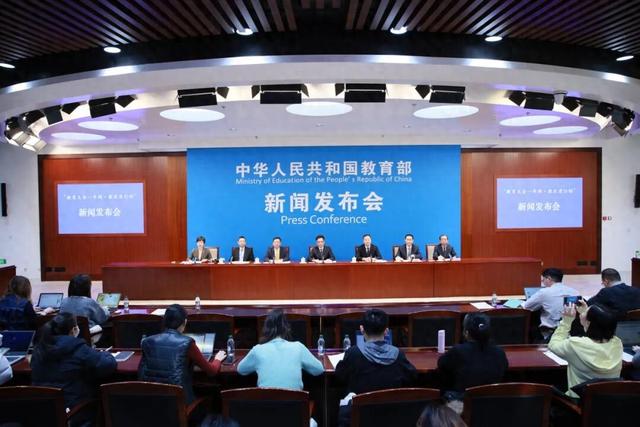
我国教育数字化发展成效显著:“双平台”涵盖教育教育全过程,服务全龄段学习者
Huan Qiu Wang· 2025-12-30 08:21
Core Insights - The Ministry of Education has reported significant advancements in educational digitalization during the "14th Five-Year Plan" period, particularly since the launch of the National Education Digitalization Strategic Action, emphasizing a shift from quantity to quality in digital education [3][4] Group 1: Digital Education Development - The National Smart Education Public Service Platform has become the world's largest and highest-quality educational resource center, aggregating over 130,000 primary and secondary school resources, 12,500 vocational education courses, and 145,000 higher education courses, with a total user base exceeding 178 million and daily visits reaching 52 million [3][4] - The platform supports various educational applications, including dual-teacher courses and specialized classrooms, promoting equitable access to quality resources across regions [3][4] Group 2: Lifelong Learning Center - A lifelong learning center has been established, offering over 8,000 courses from 38 institutions, focusing on skill enhancement for graduates and social learners, including over 2,600 micro-credentials and 1,400 vocational training courses [5] - The platform has also introduced initiatives for elderly learners, such as health courses that gained over 12 million views shortly after launch, enhancing knowledge accessibility for all age groups [5] Group 3: Public Service Center - The National Platform's public service center has integrated 51 educational services, serving 140 million people, and has improved efficiency through a one-stop service model, significantly reducing the administrative burden on parents [6][7] - The platform has implemented a national student financial aid management system, streamlining access to scholarship information and other support services [6] Group 4: Education Data Center - The National Education Big Data Center has established connections with 32 provincial education departments and over 1,300 universities, facilitating data sharing and enhancing educational governance through precise resource allocation [7] - The data-driven approach has enabled the development of models for identifying economically disadvantaged students, ensuring targeted financial support [7] Group 5: International Influence - The first Smart Education White Paper was released, showcasing China's digital education model and attracting participation from over 400 international guests at the World Digital Education Conference [8] - The establishment of the World Digital Education Alliance and the launch of multilingual courses have enhanced China's global educational influence, with initiatives reaching 31 countries [8] Future Directions - The Ministry of Education plans to advance the National Education Digitalization Strategic Action 2.0, focusing on improving public service levels and governance capabilities in digital education [9]

我国已建设国家智慧教育公共服务平台
Zhong Guo Jing Ji Wang· 2025-09-23 14:58
Core Points - The article discusses the implementation of China's national education digitalization strategy during the 14th Five-Year Plan period, focusing on three main areas of development [1][2] - The strategy aims to enhance educational equity and personalized learning while creating conditions for lifelong learning [1] Group 1: Key Developments in Education Digitalization - The establishment of a national smart education public service platform that aggregates quality resources and encourages participation from various schools and teachers [1] - The creation of a national education service center that streamlines 51 administrative services across 8 categories, facilitating easier access for the public [1] - The development of a lifelong learning center offering 1,000 "micro-specialties" and 1,000 vocational training courses, along with over 5,000 quality courses to enhance lifelong learning resources [1] Group 2: International Impact and Future Plans - The strategy has led to the creation of international public products, with over 800 courses available for free on the international version of the national platform, promoting global sharing of digital educational benefits [1] - The education ministry plans to advance the national education digitalization strategy 2.0, focusing on expanding access to quality educational resources and promoting educational equity and high-quality development [2]