
教育数字化

Search documents
2026年中国GenAI+教育行业发展报告
艾瑞咨询· 2026-03-25 00:08
Core Insights - The article emphasizes that 2025 will be a pivotal year for smart education in China, driven by advancements in Generative AI (GenAI) technologies, which are set to transform educational productivity and personalized learning experiences [1][7][10]. Group 1: GenAI's Role in Education - GenAI is identified as a foundational technology that will enable significant changes in teaching methods, research paradigms, and personalized education [1][2]. - The report introduces a 40/60 split, indicating that approximately 40% of educational tasks can be automated by technology, while 60% remains the domain of human educators, focusing on emotional engagement and complex problem-solving [2][5]. Group 2: Market Growth and Projections - The Chinese AI industry is projected to grow at a compound annual growth rate (CAGR) of 32.1% from 2025 to 2029, potentially exceeding 1 trillion yuan by 2029 [7]. - The education sector is expected to see a significant increase in GenAI-related procurement, with estimates suggesting that by 2025, the total scale of GenAI products and services in education could reach 344.2 billion yuan, growing to 891 billion yuan by 2028 [18][19]. Group 3: GenAI Adoption in Educational Institutions - In schools, GenAI-related procurement is anticipated to account for 25%-35% of total purchases in higher education and 20%-30% in primary and secondary education by 2025 [10][12]. - The demand for GenAI technologies in educational institutions is expected to rise significantly, with a notable increase in projects focusing on smart teaching and campus management [21][24]. Group 4: User Engagement and Behavior - By the end of 2025, the user base for GenAI in education is projected to reach 602 million, marking a 141.7% increase from 2024, with a penetration rate of 42.8% among parents and adult learners [12][13]. - Parents are increasingly using GenAI applications to assist their children with homework, with 57.3% of parents reporting usage in tutoring scenarios [12][44]. Group 5: GenAI's Impact on Learning and Teaching - GenAI is reshaping the educational supply logic, with a total market size for C-end education projected at 1.3 trillion yuan in 2025, increasing to approximately 1.5 trillion yuan by 2028 [15][66]. - The technology is expected to enhance the efficiency of educational delivery, with GenAI products covering 15%-20% of adult education and 10%-15% of K12 education by 2025 [15][18]. Group 6: Regional Variations in GenAI Adoption - There are notable differences in GenAI adoption among different city tiers, with first-tier cities showing a more cautious yet open attitude towards AI tools, while new first-tier cities exhibit a more aggressive investment approach [60][66].



开学在即!首都教育官微发文展望:让每个孩子“上好学”
Xin Lang Cai Jing· 2026-02-28 01:38
Group 1 - The core focus of the articles is on the development of equitable and high-quality education in Beijing, emphasizing the importance of providing accessible education to every child [1][2][11] - The implementation of the New Era Basic Education Expansion and Quality Improvement Plan aims to enhance the public education service system, resulting in the addition of 175,000 new school places since the 14th Five-Year Plan began, with a 100% quality rate for new placements [2][11] - The integration of urban and rural education is being promoted through initiatives like the "Hand-in-Hand" program, which connects urban and rural schools to share resources and improve educational quality [3][11] Group 2 - The establishment of educational groups in Beijing has created a comprehensive educational chain, with 218 groups covering 1,120 schools, achieving an 80% coverage rate [5][11] - The focus on digital education has led to the creation of over 13,000 digital courses and the implementation of a smart education platform, facilitating access to quality resources for students in rural areas [8][9] - The online training program for teachers has provided over 8,000 sessions, benefiting approximately 120,000 participants, thereby enhancing the quality of the teaching workforce [9][11]

风口再起!教育行业尾盘大幅上行,中公教育领衔,政策 + 需求双轮驱动行情
Jin Rong Jie· 2026-02-27 07:20
Group 1 - The A-share education sector experienced a significant rise in the afternoon trading session, with market sentiment and capital attention increasing simultaneously [1] - Key stocks such as Zhonggong Education, Kede Education, Angli Education, Doushen Education, Huatu Shanding, and Quantu Education saw collective upward movement, indicating enhanced capital allocation willingness towards the education service sector [1] Group 2 - The vocational education sector is undergoing deep reforms, with new programs being added to meet the demands of emerging industries like low-altitude economy and artificial intelligence, promoting integration of industry and education [2] - The construction of an education powerhouse is being continuously advanced, with a clear long-term development framework established through the "Education Powerhouse Construction Plan Outline (2024-2035)" [2] - The acceleration of digitalization in education is being promoted, with initiatives to integrate AI into teaching scenarios and expand access to quality resources [2] Group 3 - The vocational skills training industry is benefiting from increased employment demand and policy support, leading to high demand for public examinations and vocational skills training [3] - The education digitalization sector is seeing growth opportunities as AI and virtual simulation technologies empower teaching scenarios, benefiting smart education hardware and platform service providers [3] - The demand for higher education and enrollment services remains resilient, with improvements in educational quality and standardized development favoring quality institutions [3]



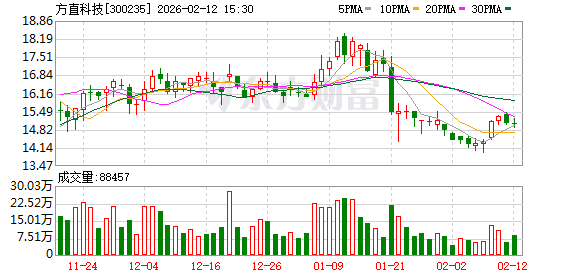
方直科技:以AI大模型重塑视频内容生态 用“温度技术”陪伴儿童成长
Zheng Quan Ri Bao· 2026-02-12 12:36
Core Viewpoint - The company is committed to deepening its "AI + education digitalization" strategy, focusing on the integration of AI with educational scenarios and the continuous development of AI-based software and hardware products [2][4]. Group 1: Business Strategy - The company has established a dual-driven strategy, focusing on building a new video business landscape through AI digital human videos and media services, while also creating a new category of children's intelligent companionship products with the "Yangzai AI Companion Machine" [2]. - The company is advancing a three-in-one educational intelligent ecosystem that includes "digital teachers, scene reconstruction, and content evolution" [2]. Group 2: Capital and Partnerships - In July 2025, the company signed a partnership agreement to establish "Ark Vision Media," where it holds an 80% stake with a capital contribution of 5 million yuan [2]. - Ark Vision will focus on the development and operation of educational psychological short dramas, marking the company's entry into the film and television content production sector [3]. Group 3: Technological Development - The company's subsidiary, Shenzhen Muyu Technology Co., Ltd., was recognized as a high-tech enterprise in February 2026, providing a complete technical support system for the company's video business [3]. - The collaboration with Huawei Ascend has strengthened the company's position as a core partner in educational scenarios [3]. Group 4: Product Launches - The educational micro-short drama "Eavesdropping Wind Language," produced by Ark Vision in collaboration with South China Agricultural University, has quickly become a hit in the educational short drama sector [3]. - The Yangzai AI Companion Machine exemplifies the company's ability to apply AI video generation capabilities to children's scenarios, developed in partnership with Alibaba's model team and the Chinese University of Hong Kong [3][4].

多维发力绘就教育强国新图景
Xin Hua Ri Bao· 2026-02-09 23:26
Core Viewpoint - The article emphasizes the ambitious goal of building a strong education nation by 2035, as outlined in the "Education Strong Nation Construction Plan Outline (2024-2035)", marking a fundamental shift in the development stage of China's education sector [1] Group 1: Resource Allocation - The changing scale and structure of school-age population is a fundamental variable affecting education development, with Jiangsu province utilizing census data and predictive models to assess trends in school-age population changes [2] - Education resource allocation is transitioning from "experience-driven" to "data-driven", establishing a dynamic allocation mechanism that adapts to population changes [2] Group 2: Small Class Teaching - The implementation of small class teaching is a key requirement of the "Education Strong Nation Construction Plan" and is seen as essential for enhancing educational quality [3] - Jiangsu has made significant progress in small class teaching, addressing challenges such as uneven implementation pace and insufficient teacher allocation through various measures [3] Group 3: Elite Talent Cultivation - The cultivation of elite innovative talents is crucial for achieving technological self-reliance and enhancing national competitiveness, as highlighted by national policies [4] - Jiangsu is actively working on early-stage cultivation of elite talents but faces challenges such as an incomplete competition management system and a weak professional coaching team [4] Group 4: Digital Transformation - Education digitalization is viewed as a critical breakthrough for shaping new competitive advantages, with a focus on transforming educational concepts, teaching models, and governance systems [5] - Jiangsu's progress in building smart campuses is uneven between urban and rural areas, prompting initiatives to strengthen strategic leadership and enhance digital resource availability [6] Group 5: Teacher Education - Teacher education reform is essential for building a strong education system, with various explorations underway to enhance teacher training and development [7] - Jiangsu has implemented innovative teacher education models and is focusing on creating a collaborative mechanism among universities, government, schools, and communities to support teacher development [7] Group 6: Future Outlook - To achieve the goal of becoming a strong education nation by 2035, continuous theoretical research and practical exploration are necessary, addressing resource imbalances, enhancing quality through small class teaching, and leveraging digital technology [8]
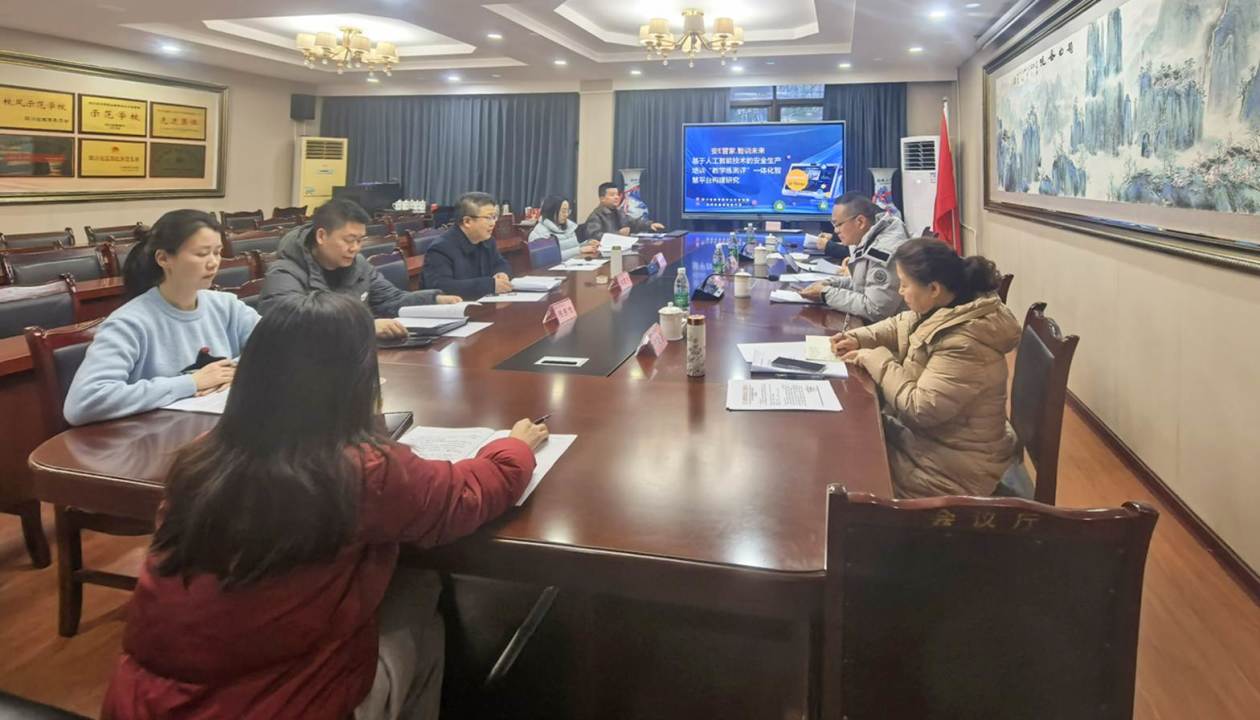
四川教育数字化科研新课题“AI赋能安全生产培训智慧平台”启动
Xin Lang Cai Jing· 2026-02-09 05:09
Group 1 - The core focus of the project is to address key issues in the safety production training sector, which include the disconnection between training content and the latest standards, lack of intelligent support in teaching methods, and sustainability challenges in platform operations [3][4] - The project aims to develop an integrated smart platform for teaching, training, and assessment that aligns with the new standards set by the Ministry of Emergency Management in 2024, leveraging artificial intelligence for compliance, personalization, practicality, and sustainable operation [3][4] Group 2 - The research will create a teaching support system based on a "data-driven, scenario interaction, intelligent assessment, and precise feedback" model, utilizing AI technology for dynamic content updates, personalized learning paths, virtual simulations, and intelligent evaluation [4] - Experts have recognized the project for its theoretical and practical significance, asserting that it aligns with national strategies for safety production and educational digitalization, potentially offering replicable solutions for the digital transformation of the safety training industry [5]
技术赋能 AI推动构建海外留学辅导新生态
Ren Min Wang· 2026-02-03 12:15
Group 1 - The rapid development of artificial intelligence is reshaping various industries, with a specific focus on integrating AI technology into the entire educational process as outlined by the Ministry of Education and nine other departments in China [1] - The overseas study sector is facing structural challenges such as information asymmetry and insufficient personalized guidance, which do not meet the increasing demand for high-quality services from study-abroad families [1] - The penetration rate of China's overseas university course tutoring industry has reached 40%, indicating a significant market opportunity as the demand for efficient learning solutions grows due to the diversification of study destinations and younger students [1] Group 2 - Companies in the education sector are exploring new service models driven by policy guidance and market demand, emphasizing that AI is not a replacement for teachers but a tool to empower education and enhance student efficiency [1] - A specific platform has developed a dynamic knowledge network by analyzing teaching outlines and identifying student weaknesses through assignment data, while also utilizing AI algorithms to plan learning paths and provide targeted content [1] - The digital transformation of China's study abroad education is aimed at cultivating globally-minded talents, with industry efforts enabling more students to achieve significant skill advancements on the international academic stage [2]
南财V快评:两会晋行时|学不到?学不起?广东不允许
2 1 Shi Ji Jing Ji Bao Dao· 2026-01-27 15:58
Group 1 - The core idea is that Guangdong is systematically dismantling barriers to learning through a comprehensive digital education platform, making quality educational resources accessible to everyone regardless of location [1][2] - The initiative aims to provide a reliable, usable, and affordable learning pathway for individuals at different life stages, supported by collaboration among government, communities, universities, and businesses [1][2] - The ultimate goal is to integrate learning into daily life, making it a seamless and natural part of everyday activities, thus promoting lifelong learning [2][3] Group 2 - The approach focuses on using technology and public services to reduce various obstacles to learning, including geographical, financial, temporal, and psychological barriers [2][3] - The commitment behind this initiative is to ensure that no individual who wishes to improve is left behind in the progress of society [3]
多地大学建设未来学习中心 高等教育“未来式”长啥样
Ren Min Ri Bao· 2026-01-19 22:36
Core Viewpoint - The article discusses the rapid development and implementation of future learning centers in various Chinese universities, emphasizing the transformation of learning spaces and teaching methods through digitalization and technology integration [1][2][3]. Group 1: Future Learning Centers Implementation - The Ministry of Education and nine other departments have outlined plans to explore the construction of cloud schools, intelligent manufacturing spaces, and future learning centers by 2025 [1][2]. - Future learning centers are being established in universities such as Beijing University of Posts and Telecommunications, East China Normal University, and Shandong University, marking a shift in educational practices [3][4]. Group 2: Changes in Teaching Methods - The new teaching environments feature smart classrooms where students and AI can collaborate in real-time, enhancing interactive learning experiences [5][6]. - East China Normal University has created a physical future learning development center to integrate resources across various departments, promoting shared learning experiences [7]. Group 3: Student-Centric Design and Collaboration - Beijing University is involving students in the design and operation of future learning centers, ensuring that their needs and preferences shape the educational environment [9][10]. - The focus on student-led initiatives fosters a culture of exploration, collaboration, and sharing among peers [18][19]. Group 4: Challenges and Considerations - There are concerns regarding the effective utilization of advanced technologies and resources in future learning centers, with some institutions facing challenges in resource availability and quality [11]. - The role of teachers is evolving, requiring them to adapt to new technologies and redesign teaching processes to enhance student engagement [12]. Group 5: Educational Philosophy and Goals - The exploration of future learning centers aims to cultivate human-centric values in education, emphasizing the importance of personal development and social emotional skills in the age of AI [16][17]. - The ultimate goal is to create an educational ecosystem that balances technology with the nurturing of critical thinking and creativity among students [21].
AI赋能教育,香港不能落后——访香港特区立法会议员邓飞
Xin Hua She· 2026-01-18 00:21
Group 1 - The emergence of generative artificial intelligence is significantly transforming work and life, with profound impacts on the education sector in Hong Kong [1] - Hong Kong must seize the opportunity to integrate artificial intelligence into education to keep pace with the times, as emphasized by Legislative Council member Tang Fei [1] - The Hong Kong government has established a Digital Education Strategy Development Steering Committee to actively promote the integration of digital education [1] Group 2 - Tang Fei highlights the importance of enhancing patriotic education through artificial intelligence to make it more appealing to the younger generation [2] - The current government is actively implementing policies to attract and retain talent, with universities in Hong Kong increasingly recruiting international students [2] - The development of the "Northern Metropolis University Education City" aims to solidify Hong Kong's position as an international education hub by reserving land for educational development [2] Group 3 - The "Northern Metropolis University Education City" may develop through local university expansion or by attracting renowned institutions from mainland China and abroad, with a preference for the latter approach [3] - Building a complete industry-university-research system is essential for Hong Kong to maintain its status as an international education hub, focusing on high-quality research and faculty [3] - The transformation of research outcomes into industry applications is crucial for attracting quality students and sustaining educational excellence in Hong Kong [3]