国际法原则

Search documents
美国驻以色列大使相关言论遭多方谴责
Zhong Guo Xin Wen Wang· 2026-02-22 13:35
Group 1 - The U.S. Ambassador to Israel, Mike Huckabee, made controversial remarks suggesting that Israel could take over the entire Middle East, which has drawn widespread condemnation from various countries and organizations [1][2] - A joint statement from multiple nations, including the UAE, Egypt, Jordan, and others, criticized Huckabee's comments as dangerous and provocative, violating international law and threatening regional security [1] - The statement emphasized that Israel has no sovereignty over the occupied Palestinian territories and opposed any attempts to annex the West Bank or expand settlements in these areas [1] Group 2 - Iran's Foreign Ministry spokesperson condemned Huckabee's remarks as extremist, claiming they would exacerbate Israel's ongoing crimes against Palestinians [2] - The Palestinian Foreign Ministry described Huckabee's comments as provocative and detrimental to efforts for lasting peace in the region, reaffirming that Gaza, the West Bank, and East Jerusalem remain occupied Palestinian territories under international law [2]
多个阿拉伯和伊斯兰国家及国际组织发表联合声明谴责美驻以大使有关言论
Xin Lang Cai Jing· 2026-02-22 12:48
Core Viewpoint - The statements made by U.S. Ambassador to Israel Mike Huckabee regarding Israel's potential dominance over the Middle East have been strongly condemned by multiple Islamic and Arab nations, as well as international organizations, highlighting concerns over regional security and stability [1][2]. Group 1: Joint Statement by Nations and Organizations - A joint statement was issued by countries including the UAE, Egypt, Jordan, Indonesia, Pakistan, Turkey, Saudi Arabia, Qatar, Kuwait, Oman, Bahrain, Lebanon, Syria, Palestine, and organizations such as the Organization of Islamic Cooperation and the Arab League [1]. - The statement described Huckabee's remarks as dangerous and provocative, violating international law principles and the UN Charter, posing a serious threat to regional security and stability [1]. - The signatories firmly oppose any attempts to legitimize the occupation of foreign lands and reject any plans to annex the West Bank or separate it from Gaza [1]. Group 2: Reactions from Other Nations - The Palestinian Foreign Ministry condemned Huckabee's comments as provocative and unacceptable, asserting that they should be condemned by the international community [2]. - The Iraqi Foreign Ministry also issued a strong condemnation, stating that Huckabee's remarks severely violate international law principles and infringe upon the sovereignty and territorial integrity of nations, negatively impacting regional security and stability [2]. - Huckabee's comments were made during an interview where he suggested that if Israel were to take over the entire Middle East, it would be acceptable, although he later attempted to clarify his statement as an exaggeration [2].
觊觎格陵兰岛,美国欲补齐在西半球关键拼图 |国际识局
Xin Lang Cai Jing· 2026-01-15 13:16
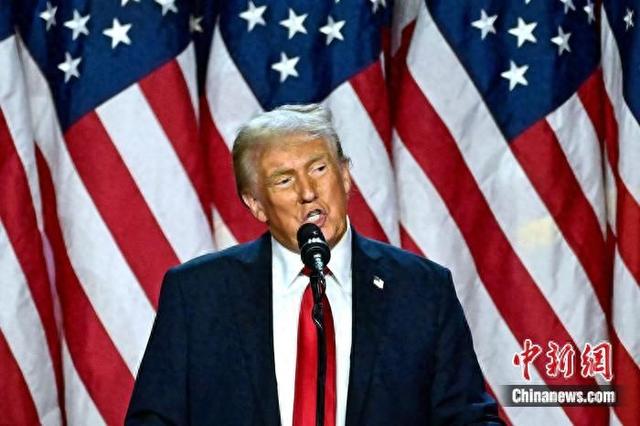
Core Viewpoint - The recent interest of the Trump administration in acquiring Greenland is framed within the context of U.S. Arctic strategy, North Atlantic security, and competition for critical resources, highlighting a structural strategic demand in the current geopolitical environment [3][4]. Group 1: Strategic Importance of Greenland - Greenland's geographical position is crucial for U.S. military and security interests, particularly its location over the Greenland-Iceland-United Kingdom (GIUK) gap, which has historically been a key defense line against Soviet naval forces during the Cold War [4][6]. - The GIUK gap has regained importance due to the resurgence of great power competition and increased military activities in the Arctic, making Greenland's strategic position more significant [4][6]. Group 2: Military Presence and Historical Context - The U.S. has a long-standing military presence in Greenland, dating back to World War II, and has maintained military operations there under a defense agreement with Denmark since 1951 [6]. - The U.S. military's reliance on Greenland includes critical facilities like the Thule Air Base, which plays a vital role in missile warning and defense systems [6]. Group 3: Resource Competition - Greenland is believed to possess significant mineral resources, particularly rare earth elements, with estimates of around 1.5 million tons, making it a target for U.S. interests amid growing concerns over supply chain vulnerabilities [7]. - The U.S. government's focus on securing rare earth resources reflects a shift in perspective, viewing these materials as a national security issue rather than merely an economic one [7]. Group 4: Historical Precedents for Territorial Acquisition - The U.S. has a historical precedent for acquiring territory through purchase, such as the Louisiana Purchase in 1803 and the acquisition of Alaska in 1867, which were significant for U.S. expansion [8][9]. - The notion of purchasing territory has been part of U.S. expansionist strategy, although contemporary international law and principles of self-determination complicate such actions today [9][11]. Group 5: International Law and Self-Determination - The issue of Greenland's status is not merely a bilateral matter between the U.S. and Denmark but involves historical contexts, self-determination rights, and international law principles [11]. - Recent polls indicate that a majority of Greenlanders prefer independence from Denmark, with a significant opposition to joining the U.S., highlighting the complexities of any potential territorial transaction [11].

这个“梦中情岛” 他眼馋很久了
Xin Lang Cai Jing· 2026-01-12 16:57
Core Viewpoint - President Trump has reiterated the U.S. intention to acquire Greenland, emphasizing the need for ownership rather than mere military presence, which has sparked discontent among NATO allies and led to discussions among European nations about military deployment in Greenland [2][5][7]. Group 1: U.S. Position on Greenland - Trump stated that the U.S. must "own" Greenland for national security reasons, dismissing the idea of merely leasing or having military bases there [2][8]. - He expressed skepticism about NATO's support for the U.S. in critical times, claiming that the alliance is more dependent on the U.S. than vice versa [2][7]. - Trump's comments have been characterized as a significant escalation in U.S. foreign policy regarding Greenland, which he views as a strategic asset [8][9]. Group 2: European Response - European nations, led by the UK and Germany, are discussing the deployment of NATO forces to Greenland in response to Trump's aggressive stance [4][5]. - Danish Prime Minister Mette Frederiksen indicated that the situation regarding Greenland is at a "decisive moment," suggesting potential ramifications for NATO if the U.S. pursues aggressive actions [2][6]. - A joint statement from several European countries emphasized that Greenland belongs to its people and that only Denmark and Greenland can decide their own affairs [7]. Group 3: Strategic Importance of Greenland - Greenland is strategically located and rich in key minerals and fossil fuels, making it a focal point for global powers amid climate change, which is making these resources more accessible [9]. - The island's potential for rare earth resources has seen a surge in interest, particularly from U.S. leadership, which could impact market dynamics for companies involved in these sectors [9]. Group 4: Potential U.S. Strategies for Acquisition - Analysts suggest four potential methods the U.S. might consider to acquire Greenland: purchasing it, inciting independence, binding treaties, or military action [11][12][16][17]. - The idea of purchasing Greenland has faced strong opposition from both the Danish government and the local population, raising legal and ethical concerns [12][15]. - Military action, while considered an option, could lead to severe political repercussions and jeopardize NATO's unity, as highlighted by the Danish Prime Minister [17].
古巴国家主席:目前古巴与美政府“不存在任何对话”
Xin Lang Cai Jing· 2026-01-12 14:26
Core Viewpoint - The President of Cuba, Diaz-Canel, stated that there is currently "no dialogue" between Cuba and the U.S. government, only technical contacts in the area of immigration [1] Group 1 - Cuba is open to serious and responsible dialogue with all U.S. administrations, including the current one [1] - Any dialogue must be based on principles of sovereign equality, mutual respect, international law, non-interference in internal affairs, and full respect for Cuba's independence [1]
委外交部:委古关系建立在兄弟情谊与合作共赢基础上
Yang Shi Xin Wen· 2026-01-11 21:46
Group 1 - Venezuela's Foreign Ministry reaffirmed its historical stance on relations with Cuba, emphasizing alignment with the principles of the UN Charter and international law [1] - The relationship between Venezuela and the Caribbean region, including Cuba, is based on brotherhood, solidarity, mutual assistance, and win-win cooperation [1] - Venezuela stressed that international relations should adhere to principles of international law, non-interference, equality of state sovereignty, and the right to self-determination of peoples [1] Group 2 - Venezuela highlighted that political and diplomatic dialogue is the only path to peacefully resolve disputes [1]
德国副总理:格陵兰岛的未来不由美国决定
Xin Lang Cai Jing· 2026-01-11 12:26
Core Viewpoint - The future of Greenland is a matter solely for Denmark and Greenland, and the U.S. should respect international law and territorial sovereignty [1] Group 1: International Relations - German Vice Chancellor and Finance Minister Lars Klingbeil emphasized that the decision regarding Greenland's future is entirely up to Denmark and Greenland [1] - Klingbeil stated that principles of respect for sovereignty and territorial integrity under international law apply to all countries, including the U.S. [1] - As NATO allies, countries should work together to enhance security in the Arctic region rather than create divisions [1] Group 2: Upcoming Events - The G7 finance ministers' meeting scheduled for the 12th will focus on key mineral-related topics [1] - Klingbeil indicated that the issue of the U.S. desire to "acquire" Greenland may be discussed during the meeting [1] Group 3: U.S. Position - Since taking office in 2025, U.S. President Trump has repeatedly expressed interest in acquiring Greenland and has suggested the possibility of using force [1] - Trump mentioned in a recent interview that Venezuela might not be the last country the U.S. intervenes in, asserting the necessity of Greenland for the U.S. [1] - European countries, including Denmark, have strongly opposed U.S. military actions against NATO allies, with Danish Prime Minister Frederiksen warning that such actions would lead to severe consequences [1]
南非专家:国际社会应对美国打击委内瑞拉做出实质性集体回应
Xin Lang Cai Jing· 2026-01-10 06:06
Core Viewpoint - The article argues that the recent U.S. military action against Venezuela is a violation of the country's sovereignty and represents direct resource plundering, setting a dangerous precedent for international relations [1]. Group 1: U.S. Military Action - The motivations behind the U.S. strike are largely unrelated to democracy, human rights, or drug control, with President Trump openly admitting the intention to take over Venezuela's oil reserves [1]. - This action is characterized as direct resource plundering, reminiscent of colonial practices, utilizing military force to seize resources that cannot be obtained through economic pressure or political manipulation [1]. - The military action was conducted without authorization from the United Nations Security Council or approval from the U.S. Congress, fundamentally violating principles of international law [1]. Group 2: Long-term Implications - The U.S. infringement on Venezuela's sovereignty is seen as the culmination of a long-term regime change strategy, where imperialist forces resort to overt violence when indirect methods fail [1]. - The threats posed to Colombia, Mexico, and other nations indicate a bullying strategy by the U.S. against any country perceived as an obstacle to its unilateral resource acquisition and market access [1]. Group 3: Call for International Response - The article emphasizes the need for a substantial collective response from the international community, moving beyond mere verbal support to establishing integrated defense arrangements and alternative financial and trade systems to resist unilateral coercion [2]. - Peace-loving nations must form unbreakable alliances to counteract such rampant aggression, or they risk being forced to fight alone [2].
南非专家:国际社会应对美国打击委内瑞拉做出实质性的集体回应
Xin Hua She· 2026-01-10 05:16
Core Viewpoint - The article argues that the recent U.S. military action against Venezuela is a violation of the country's sovereignty and represents direct resource plundering, setting a dangerous precedent [1]. Group 1: U.S. Military Action - The motivations behind the U.S. strike are not related to democracy, human rights, or drug control, as stated by President Trump, who openly admitted the intention to take over Venezuela's oil reserves [1]. - This action is characterized as direct resource plundering, akin to colonial practices, using military force to seize resources that cannot be obtained through economic pressure or political manipulation [1]. - The military action was conducted without authorization from the United Nations Security Council or approval from the U.S. Congress, fundamentally violating principles of international law [1]. Group 2: Long-term Implications - The U.S. infringement on Venezuela's sovereignty is seen as the culmination of a long-term regime change strategy, where imperialist forces resort to open violence when indirect methods fail [1]. - The threats to Colombia, Mexico, and other nations indicate a bullying strategy by the U.S. against any country perceived as an obstacle to its unilateral resource acquisition and market access [1]. Group 3: Call for International Response - The article emphasizes the need for a substantial collective response from the international community, moving beyond mere verbal support to establishing integrated defense arrangements and alternative financial and trade systems [2]. - Peace-loving nations must form unbreakable alliances to counteract such rampant aggression, or they will be forced to fight alone [2].
第1现场|多方角力委内瑞拉:审判、变局与国际声援
Xin Lang Cai Jing· 2026-01-06 11:05
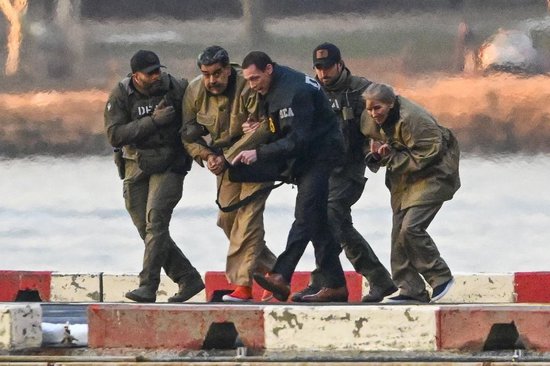
Core Viewpoint - The political crisis surrounding Venezuelan President Maduro, who was forcibly taken by the U.S. and appeared in a New York court, has drawn global attention as he denies all charges against him and asserts his innocence [1][3][31]. Group 1: Court Proceedings - On January 5, Maduro and his wife, Cilia Flores, appeared in the U.S. District Court for the Southern District of New York, where Maduro faced multiple serious charges including "drug terrorism conspiracy" and "cocaine trafficking conspiracy," all of which he denied [3][33]. - Maduro claimed he was "kidnapped" and emphasized that he remains the President of Venezuela, while his lawyer questioned the legality of the U.S. military's actions [7][36]. - Flores also pleaded not guilty to all charges, and her lawyer indicated she required medical treatment due to injuries sustained during the U.S. military operation [7][36]. Group 2: Political Developments - On the same day, Delcy Rodriguez was sworn in as the acting President of Venezuela following Maduro's detention [17][49]. - The Venezuelan government characterized the U.S. military actions as a form of military aggression, violating the United Nations Charter and posing a threat to regional and international peace [25][55]. Group 3: International Reactions - The United Nations Security Council held an emergency meeting on January 5, where multiple countries condemned the U.S. actions against Venezuela [25][57]. - Venezuela's UN representative, Samuel Moncada, stated that the U.S. actions violated international law and called for the immediate release of Maduro and his wife [28][58]. - Moncada also highlighted that the Venezuelan government maintains constitutional order and effective control over its territory, asserting that the U.S. actions are driven by geopolitical motives [30][60].