资源掠夺

Search documents
委内瑞拉殖民时代开始?特朗普亲自带货,向印度推销委石油
Sou Hu Cai Jing· 2026-02-14 09:43
Core Viewpoint - Venezuela's oil has become a contentious asset in the international energy market, with the U.S. exerting control over its resources while facing challenges in selling the imported oil domestically [1][3]. Group 1: U.S. Control Over Venezuelan Oil - The U.S. has systematically monopolized Venezuelan oil through strategies affecting logistics, sales, and production since late 2025, including requiring U.S. approval for oil exports [3]. - Following the capture of Maduro, the U.S. has enforced a blockade that has cut off Venezuela's independent transportation channels, leading to a situation where oil sales revenue is controlled by the U.S. [3]. - Venezuela's oil industry has been opened to Western private capital through the Oil and Gas Reform Act, effectively making it an economic dependency of the U.S. [3]. Group 2: Challenges in Oil Sales - After a $20 billion supply agreement, Venezuelan oil exports to the U.S. surged nearly threefold to 284,000 barrels per day, but U.S. refiners reported an inability to process the influx [5]. - The U.S. has become a leading oil producer, reducing its need for foreign oil, which has led to a surplus of Venezuelan oil that cannot be absorbed by the market [6]. - Venezuelan heavy crude oil is less competitive compared to Canadian oil, making it less attractive to refiners who prefer cheaper alternatives [6]. Group 3: International Implications and Strategies - The U.S. is attempting to sell Venezuelan oil to India as a solution to its domestic surplus, with Trump negotiating reduced tariffs in exchange for India ceasing purchases of Russian oil [10]. - Despite promises of revenue sharing, the majority of the proceeds from Venezuelan oil sales are controlled by the U.S., leaving Venezuela with minimal financial benefits [10]. - The situation highlights the contradictions of U.S. resource control, where forcibly acquired resources ultimately face market realities, raising concerns for resource-rich nations about the loss of control over their assets [10].

美国“特调”,霸权混饮 | 新漫评
Xin Lang Cai Jing· 2026-01-31 06:05
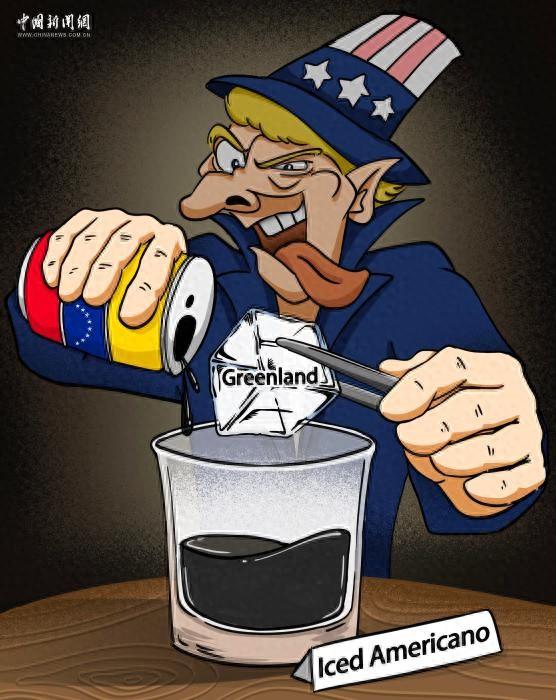
Core Viewpoint - The article discusses the United States' military intervention in Venezuela and its implications for other countries, particularly its long-standing interest in Greenland, which is a territory of Denmark. The U.S. is accused of pursuing its own interests at the expense of other nations' sovereignty and international order [2]. Group 1: U.S. Military Intervention - The U.S. has forcibly intervened in the situation in Venezuela, suggesting that it may not be the last country targeted for intervention [2]. - The U.S. has expressed a strong desire for Greenland, indicating a broader agenda of territorial expansion [2]. Group 2: Greenland's Sovereignty - Greenland is an autonomous territory of Denmark, and both Denmark and Greenland have warned the U.S. against any attempts to annex the island, emphasizing the need to respect Denmark's territorial integrity and sovereignty [2]. - The article highlights the perception of U.S. actions as a form of resource plundering and geopolitical control, using Venezuela's oil and Greenland's resources as examples [2]. Group 3: International Response - The article argues that the international community should not allow the sovereignty of other nations and the global security order to be compromised for the selfish desires of a single country [2]. - It suggests that the U.S. approach, characterized as "hegemonic," will eventually face backlash and consequences [2].
特朗普春风得意,成功卖出首笔委石油净赚5亿,将与委代总统互访
Sou Hu Cai Jing· 2026-01-19 07:12
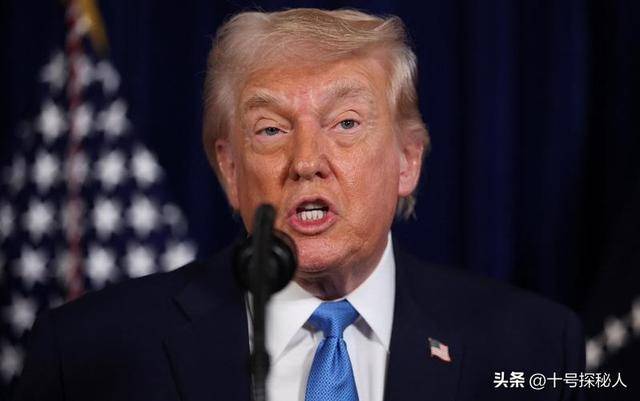
Group 1 - The core claim of the article revolves around a purported $500 million oil deal between the U.S. and Venezuela, which is suggested to be more of a political spectacle than a genuine transaction [1][3][27] - The identity of the buyer for the $500 million worth of oil remains undisclosed, raising questions about the legitimacy of the deal and suggesting potential manipulation by the U.S. government [5][10][20] - The article posits that the transaction may actually involve U.S. oil companies or commodity traders, indicating a "left hand to right hand" operation rather than a true international sale [10][12][24] Group 2 - The conversation between Trump and Venezuelan interim president Rodriguez is portrayed as a façade, with the U.S. claiming a dominant position while Rodriguez emphasizes mutual respect, indicating a more balanced dialogue [14][16] - The article suggests that Trump's motivations extend beyond the immediate financial gain, aiming to establish a "model" for resource acquisition through military and political means, which could have broader implications for U.S. foreign policy [22][32] - The challenges of extracting oil from Venezuela, including high costs and political instability, are highlighted as significant barriers that undermine the feasibility of the U.S. plan [24][26][29]
5亿美元!特朗普卖掉委国第一批石油,钱进了美国口袋,接盘的不是中印,买家身份出乎所有人意料
Sou Hu Cai Jing· 2026-01-17 22:22
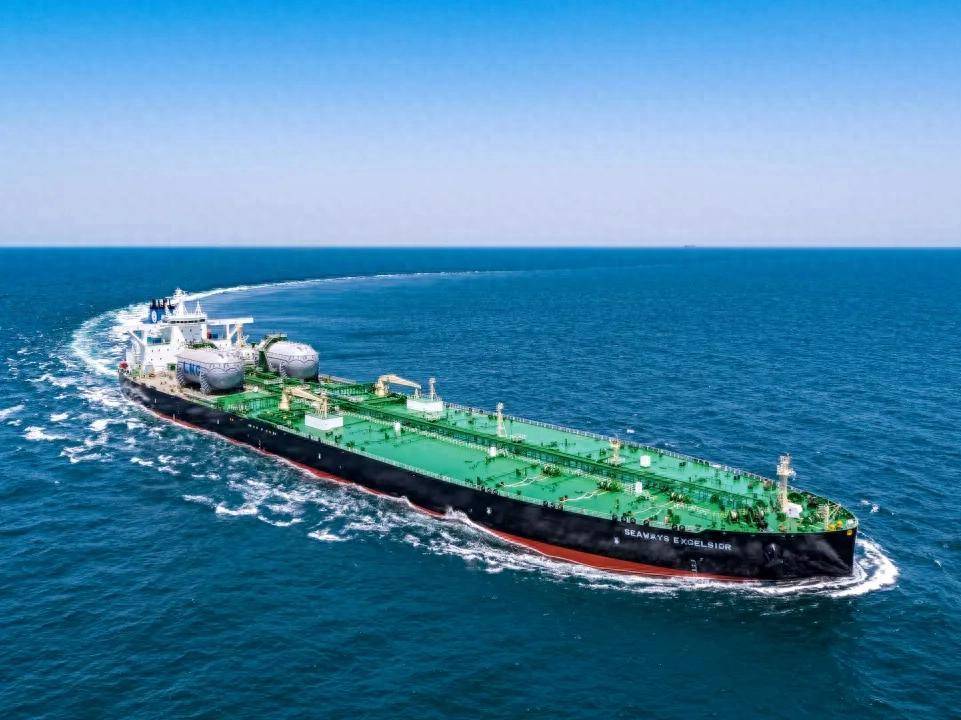
Core Insights - The article discusses a significant oil transaction involving the U.S. and Venezuela, where the U.S. government has taken control of Venezuelan oil revenues, redirecting them to a special account managed by the U.S. Treasury [1][3]. Group 1: Transaction Details - In January 2026, the U.S. completed a $500 million oil deal with Venezuela, with the proceeds going directly to the U.S. Treasury rather than Venezuela [1]. - An executive order signed by Trump mandated that all revenues from Venezuelan oil sales must be deposited into a U.S.-controlled account, effectively bypassing international legal processes [3]. - The first batch of Venezuelan oil was sold shortly after the executive order, with plans for more transactions to follow [3]. Group 2: Market Reactions - China has explicitly rejected the idea of purchasing Venezuelan oil through U.S. channels, as it would imply acceptance of U.S. control over Venezuelan resources [5]. - Indian company Reliance Industries is reportedly negotiating with the U.S. government for permission to buy Venezuelan oil, as it seeks to fill a gap left by stopping Russian oil imports [6][8]. - The first buyers of the Venezuelan oil were not countries but two multinational commodity trading giants, Vitol Group and Trafigura, who received special licenses to purchase and resell the oil without violating U.S. sanctions [9]. Group 3: Strategic Implications - The transaction is seen as a strategic move for Vitol and Trafigura, allowing them to secure a unique source of oil at potentially discounted prices while avoiding legal risks [9][11]. - The geopolitical context, including tensions in the Middle East and restrictions on Russian oil, makes securing Venezuelan oil resources strategically important for these trading companies [9][11]. - The U.S. government's ability to monetize Venezuelan oil resources marks a significant step in its broader strategy to control oil markets and influence geopolitical dynamics [11][12]. Group 4: Domestic and International Reactions - U.S. oil companies remain cautious about re-entering Venezuela due to political risks and the deteriorating state of its oil infrastructure [12]. - There is growing discontent among Venezuelan citizens regarding the sale of their country's oil and the subsequent control of revenues by the U.S., which could lead to increased anti-American sentiment [14]. - International criticism has emerged, labeling the U.S. actions as a form of resource plunder, lacking legal justification under international law [14].
美国强占委内瑞拉石油!5亿美元首单售出
Sou Hu Cai Jing· 2026-01-15 05:21
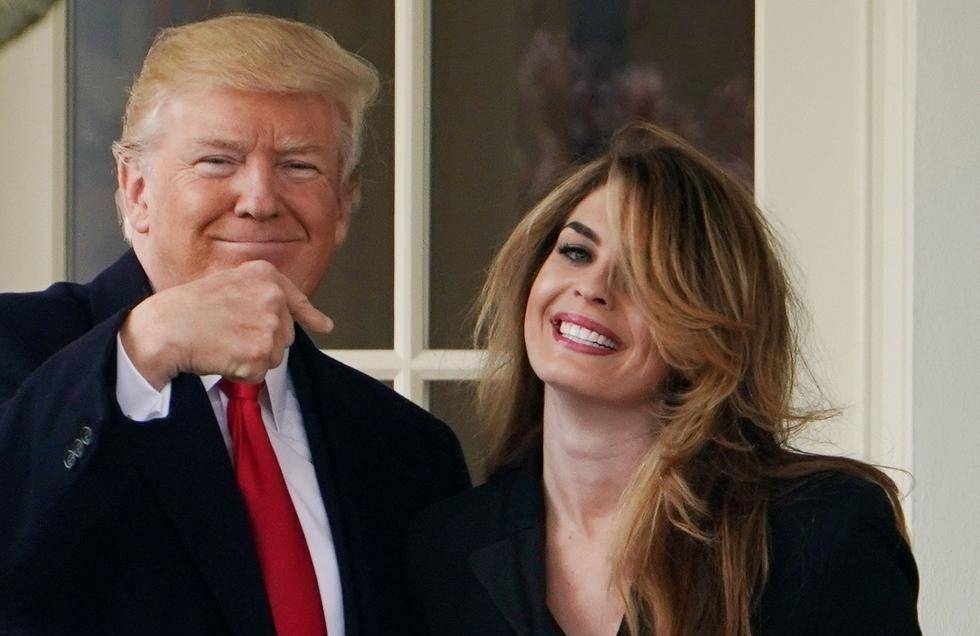
Core Viewpoint - The U.S. government has completed the first batch of $500 million in oil sales from Venezuela, which is viewed as a blatant act of resource plunder rather than a commercial transaction [1][3] Group 1: U.S. Actions and Intentions - The U.S. military conducted a large-scale operation to forcibly remove Venezuelan President Maduro and his wife, subsequently announcing the "takeover" of the country's oil resources [1] - U.S. Vice President Pence stated that Venezuela can only sell oil when it aligns with U.S. interests, indicating a clear agenda behind the actions [1] - Trump announced the establishment of a so-called "interim government" that would transfer 30 to 50 million barrels of oil to the U.S., with all revenues being "regulated" by the U.S. [1] Group 2: Strategic Importance of Venezuelan Oil - Venezuela possesses the world's largest proven oil reserves at 300 billion barrels, with its heavy crude oil filling a structural gap in U.S. refineries for light oil, highlighting its strategic value [3] - The military takeover is seen as an escalation of long-term plundering, with the U.S. having previously forced the sale of Venezuelan state oil company assets in the U.S. [3] Group 3: Reactions and Implications - Despite expectations, U.S. oil giants have not rushed to invest in Venezuela, and Democratic lawmakers have criticized the rapid push for Venezuelan oil as a "war for oil" under the guise of democracy [3] - Trump's disregard for international law and the moral justification for controlling oil revenues raises concerns about the violation of sovereign rights and international legal standards [3] - The situation in Venezuela serves as a warning about the potential for military intervention to seize resources, questioning who might be next if such actions are normalized [3]
南非专家:国际社会应对美国打击委内瑞拉做出实质性集体回应
Xin Lang Cai Jing· 2026-01-10 06:06
Core Viewpoint - The article argues that the recent U.S. military action against Venezuela is a violation of the country's sovereignty and represents direct resource plundering, setting a dangerous precedent for international relations [1]. Group 1: U.S. Military Action - The motivations behind the U.S. strike are largely unrelated to democracy, human rights, or drug control, with President Trump openly admitting the intention to take over Venezuela's oil reserves [1]. - This action is characterized as direct resource plundering, reminiscent of colonial practices, utilizing military force to seize resources that cannot be obtained through economic pressure or political manipulation [1]. - The military action was conducted without authorization from the United Nations Security Council or approval from the U.S. Congress, fundamentally violating principles of international law [1]. Group 2: Long-term Implications - The U.S. infringement on Venezuela's sovereignty is seen as the culmination of a long-term regime change strategy, where imperialist forces resort to overt violence when indirect methods fail [1]. - The threats posed to Colombia, Mexico, and other nations indicate a bullying strategy by the U.S. against any country perceived as an obstacle to its unilateral resource acquisition and market access [1]. Group 3: Call for International Response - The article emphasizes the need for a substantial collective response from the international community, moving beyond mere verbal support to establishing integrated defense arrangements and alternative financial and trade systems to resist unilateral coercion [2]. - Peace-loving nations must form unbreakable alliances to counteract such rampant aggression, or they risk being forced to fight alone [2].
南非专家:国际社会应对美国打击委内瑞拉做出实质性的集体回应
Xin Hua She· 2026-01-10 05:16
Core Viewpoint - The article argues that the recent U.S. military action against Venezuela is a violation of the country's sovereignty and represents direct resource plundering, setting a dangerous precedent [1]. Group 1: U.S. Military Action - The motivations behind the U.S. strike are not related to democracy, human rights, or drug control, as stated by President Trump, who openly admitted the intention to take over Venezuela's oil reserves [1]. - This action is characterized as direct resource plundering, akin to colonial practices, using military force to seize resources that cannot be obtained through economic pressure or political manipulation [1]. - The military action was conducted without authorization from the United Nations Security Council or approval from the U.S. Congress, fundamentally violating principles of international law [1]. Group 2: Long-term Implications - The U.S. infringement on Venezuela's sovereignty is seen as the culmination of a long-term regime change strategy, where imperialist forces resort to open violence when indirect methods fail [1]. - The threats to Colombia, Mexico, and other nations indicate a bullying strategy by the U.S. against any country perceived as an obstacle to its unilateral resource acquisition and market access [1]. Group 3: Call for International Response - The article emphasizes the need for a substantial collective response from the international community, moving beyond mere verbal support to establishing integrated defense arrangements and alternative financial and trade systems [2]. - Peace-loving nations must form unbreakable alliances to counteract such rampant aggression, or they will be forced to fight alone [2].
委内瑞拉代总统:营救马杜罗夫妇!美国:“无限期”控制委石油销售
Hua Xia Shi Bao· 2026-01-08 06:07
Group 1 - The core viewpoint of the news is the escalating political crisis in Venezuela, highlighted by the actions of the U.S. government and the response from Venezuelan authorities and citizens [1][2][4][6]. - Venezuelan interim president Rodriguez emphasized three main objectives: rescuing President Maduro and his wife, ensuring national peace, and maintaining political governance amid challenges [1]. - A public demonstration in Caracas saw thousands of citizens rallying to defend national sovereignty and calling for the release of President Maduro and his wife [1]. Group 2 - The Venezuelan Interior Minister reported that a U.S. military operation to forcibly remove President Maduro and his wife resulted in at least 100 deaths, describing the action as barbaric and inhumane [2]. - U.S. Energy Secretary Chris Wright announced that the U.S. will indefinitely control the sale of Venezuelan oil, with revenues deposited into U.S. accounts, aiming to push Venezuelan crude back into the market [4]. - The U.S. government plans to facilitate the entry of major American oil companies into Venezuela, with the potential for a significant increase in oil production in the coming years, although substantial investment is required to reach historical production levels [4].
美国要“吃干抹净”:无限期控制委内瑞拉石油销售,收入只买美国货
Sou Hu Cai Jing· 2026-01-08 05:15
Core Viewpoint - The Trump administration aims to control Venezuela's oil revenues, mandating that funds from oil sales be used exclusively for purchasing American products, which includes agricultural goods and medical supplies, to improve Venezuela's energy infrastructure [1][2]. Group 1: U.S. Government Actions - President Trump announced that Venezuela's oil revenue would be directed towards buying U.S. manufactured products, emphasizing a partnership with the U.S. [1]. - U.S. Energy Secretary Dan Brouillette stated that the U.S. would indefinitely control the flow and sales of Venezuelan oil, with revenues deposited into U.S. government-controlled accounts [1][2]. - The U.S. has seized two Venezuelan oil tankers, indicating a strong enforcement of its control over Venezuelan oil assets [2]. Group 2: Economic Implications - The agreement allows Venezuela to export nearly $2 billion worth of crude oil to the U.S., potentially redirecting oil supplies originally meant for China [4]. - The U.S. aims to leverage Venezuelan oil to boost its economy and global influence while managing domestic inflation [5]. Group 3: International Relations and Reactions - The Chinese government condemned the U.S. actions as bullying and a violation of international law, asserting Venezuela's sovereignty over its natural resources [6][7]. - Analysts suggest that the U.S. strategy may also be aimed at undermining China's influence in the region, as China holds significant capabilities in critical raw material processing [5].
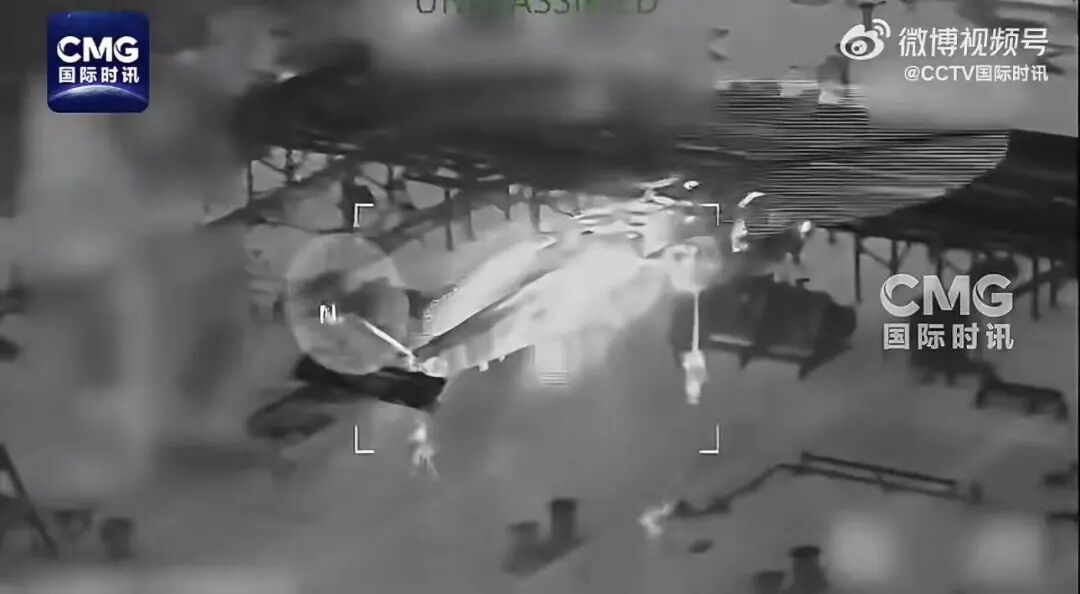
美国“将无限期控制委石油销售”!俄确认美军登船,与油轮失联
Mei Ri Jing Ji Xin Wen· 2026-01-07 22:50
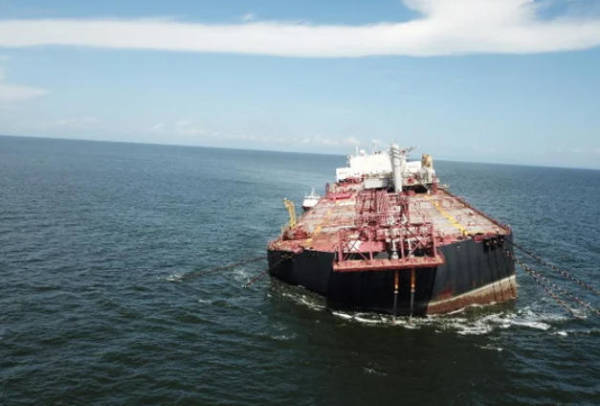
Group 1: U.S. Actions and Responses - The U.S. has seized a Russian oil tanker, "Marinera," claiming it violated sanctions against Venezuela, which has raised tensions with Russia [5][7][10] - U.S. Energy Secretary stated that the U.S. plans to maintain significant control over Venezuela's oil industry, including indefinite oversight of its foreign sales [3] - The U.S. military's actions against Venezuela are viewed as a violation of international law and have drawn widespread condemnation from various governments [11][12] Group 2: Market Reactions - U.S. refining and tanker stocks saw significant gains following the news of the U.S. actions, with Valero Energy up 3.54%, Phillips 66 up 1.84%, and Teekay Tankers up 8.33% [3][4] - The stock performance indicates investor optimism regarding potential U.S. control over Venezuelan oil supplies [3][4] Group 3: Legal and International Implications - Russia's Ministry of Transport emphasized that the seizure of the tanker violates international maritime law, asserting that no country has the right to use force against vessels registered under another nation's flag [8][10] - The situation has raised concerns about the precedent set by the U.S. actions, which could undermine international norms regarding sovereignty and maritime law [12][15]