场景定义技术

Search documents
覆盖主流用车场景,蜂巢能源以差异化创新锚定锂电行业下半场
Zheng Quan Shi Bao Wang· 2026-01-26 08:33
面向高端纯电与增混市场,蜂巢能源推出龙鳞甲3.0+半固态电池方案。该体系全球首次在方形电芯中实 现"火、电分离"设计,并兼容CTC/CTB集成技术。半固态电池引入不可燃固态电解质,配合自研固态 电解质隔膜转印技术,在维持高能量密度的同时,显著提升热稳定性。目前蜂巢能源已建成2.3GWh半 固态专用产线,首代270Wh/kg电芯已获欧洲车企及国内eVTOL项目订单,计划2026年实现批量交付。 随着新能源乘用车渗透率持续突破50%,中国市场已进入电动化普及新阶段。用户需求从单纯追求续航 转向对补能效率、安全性能及全场景体验的综合考量。在此背景下,技术领先与场景化创新成为企业突 围的关键。 日前,蜂巢能源在第六届电池日上,正式发布全球最大电量插混电池包堡垒2.0、全球首个大电量HEV 电池,以及结合龙鳞甲3.0与半固态技术的高安全电池解决方案。这三项核心品类分别瞄准大电量插 混、燃油车混动升级及高端纯电市场,通过电量、安全与快充等维度的突破,试图重新定义各细分赛道 的技术标杆。 此次发布的堡垒2.0电池包专为插混车型设计,系统电量提升至80度,能量密度较前代提升2%,体积利 用率提高6%。其搭载的超充石墨技术支持 ...
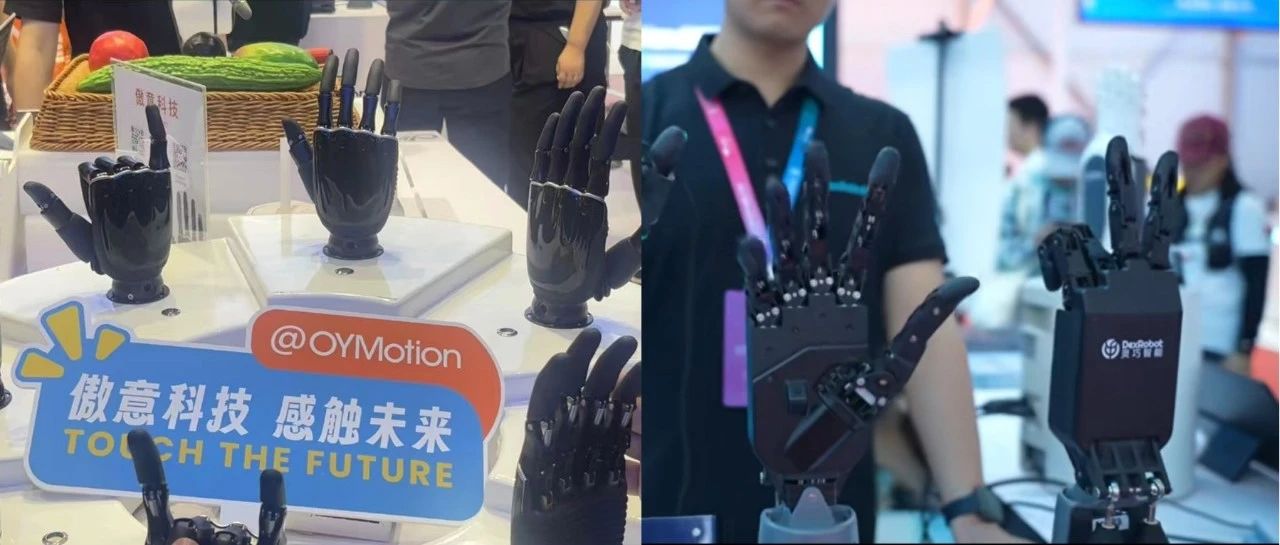
灵巧手的设计与难题!为什么它是打通“手-眼-脑”感知闭环的关键技术?
具身智能之心· 2025-08-15 16:03
Core Viewpoint - The article discusses the evolution of dexterous hands in humanoid robots, emphasizing the transition from morphological mimicry to functional mimicry, highlighting the need for high physical dexterity, multimodal perception, and intelligent decision-making capabilities in these robotic hands [2][5]. Group 1: Key Features of Dexterous Hands - A good research dexterous hand should possess three core features: high physical dexterity (IOD), multimodal perception ability (IOS), and intelligent decision-making potential (IOI) [2]. Group 2: Transmission Solutions - The current transmission solutions for dexterous hands are dominated by three main types: - Linkage transmission, which is rigid and precise but lacks high degrees of freedom [3]. - Gear transmission, which is compact and controllable but limited in force transmission efficiency and passive compliance [3]. - Tendon-driven (cable-driven) systems, favored by companies like Tesla and Shadow Hand, are lightweight and allow for natural passive compliance but face engineering challenges such as friction loss and complex system integration [3]. Group 3: Challenges in Key Hardware - The collaboration between tactile sensors and multi-degree-of-freedom joints is a critical bottleneck for dexterous operation. Existing capacitive or resistive sensors struggle with spatial density, signal drift, and environmental sensitivity, making it difficult to replicate human-level contact topology perception [3]. - The design of high-degree-of-freedom joints encounters a trade-off between performance, cost, and reliability, where increased degrees of freedom lead to more complex drive and transmission systems, resulting in higher failure rates and shorter lifespans [3]. Group 4: Degree of Freedom Debate - The industry is moving away from a fervent "degree of freedom competition" towards a rational pursuit of a "multi-dimensional system balance." While a 42-degree-of-freedom research hand exceeds the human hand's limit (approximately 27 DoF), its practical engineering viability remains to be explored [4]. - The trend is to create a "hexagonal warrior" that optimizes strength, speed, size, weight, lifespan, degrees of freedom, and structural strength [4]. Group 5: Future of Dexterous Hands vs. Grippers - In the short term, two-finger or three-finger grippers dominate structured industrial scenarios due to their low cost, stable control, and high reliability, with some users claiming they can handle 95% of tasks [4]. - However, in the long term, non-structured environments such as home services, medical care, and precision assembly will require the versatility, flexible object handling, and multimodal grasping capabilities that grippers may not provide [4]. Group 6: Industry Evolution - As the industry shifts from "mass production illusion" to "application vision," those that can bridge the "hand-eye-brain" loop, achieve soft-hard collaboration, and build a developer ecosystem will likely become the foundational infrastructure of the embodied intelligence era [5].