
城市大模型

Search documents
【快讯】每日快讯(2026年3月19日)
乘联分会· 2026-03-19 08:38
Domestic News - Jiangsu plans to support over 300 typical application scenarios for urban models and intelligent agents by 2030, focusing on digital transformation of infrastructure and smart city applications [7] - In Shaanxi, the industrial added value above designated size grew by 4.1% year-on-year in the first two months of the year, with fixed asset investment increasing by 1.9% [8] - Shanghai has recognized 30 new regional headquarters of multinational companies and 15 foreign-funded R&D centers, primarily in key industries such as biomedicine and high-end equipment [9] - Chery Automobile's solid-state battery is expected to achieve a range of over 1500 km, with plans for vehicle validation by 2027 [10] - Zhiji released the IM Ultra Agent, the first super intelligent agent in the industry, which integrates advanced AI capabilities into vehicles [11] - Geely's CFO stated that the impact of rising upstream commodity prices is manageable, and the company aims to achieve autonomous driving capabilities comparable to Tesla's within the year [13] - Xiaomi's ultra-strong steel has won a national innovation award, with applications in new vehicle models [14] - Pony.ai and Ruqi Mobility have established a Robotaxi fleet, with over 100 vehicles delivered and operational in major cities [15] International News - Germany plans to double its general data center computing power by 2030, with AI-specific computing power expected to increase fourfold [16] - Japan's exports to the U.S. have declined for three consecutive months, with a notable drop in automotive exports [17] - Hyundai Motor Group has launched an autonomous taxi service in Las Vegas in partnership with Uber, utilizing the IONIQ 5 model [18] - Vietnam's fuel vehicle sales have significantly decreased, while hybrid vehicle sales have increased, indicating a shift in consumer preferences [19] Commercial Vehicles - Shenzhen has announced restrictions on diesel trucks starting April 6, 2026, to improve air quality [22] - Jiangling Motors has been awarded the title of National Excellent Intelligent Factory, recognizing its advancements in smart manufacturing [23] - Dongfeng and Cummins have signed a memorandum of cooperation to enhance their strategic partnership and focus on sustainable development in commercial vehicles [24] - Yuanmeng and Anbang have signed a strategic agreement to launch a methanol electric super VAN for security transport, emphasizing green and intelligent innovations [25]

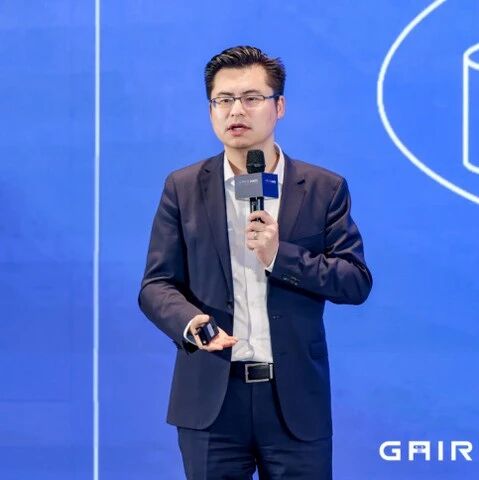
京东副总裁郑宇:未来管理智慧城市,会像玩游戏一样简单丨GAIR 2025
雷峰网· 2025-12-19 10:29
Core Viewpoint - The article discusses the challenges and developments in spatiotemporal AI, emphasizing the need for AI to transition from virtual to physical worlds to unlock its full industrial value [3][4][39]. Group 1: Challenges of Spatiotemporal AI - Spatiotemporal AI faces three main challenges: data scarcity and high collection costs, weak modeling capabilities due to unknown physical laws, and difficulties in creating closed-loop intelligent solutions [4][8][20]. - Data in the physical world is often limited, with high costs and long collection cycles, making it difficult to gather sufficient information for effective modeling [4][9]. - Existing models do not adequately account for spatiotemporal attributes, complicating the application of AI in real-world scenarios [9][20]. Group 2: Development Stages of Spatiotemporal AI - The development of spatiotemporal AI has progressed through five stages, starting from classic models in 1960-1995 to the current focus on city-scale models [26][32][34]. - The second stage (1995-2008) involved discovering spatiotemporal patterns, leading to the application of these patterns in various scenarios, including public health [27][28]. - The third stage (2009-2016) saw the integration of classic machine learning with spatiotemporal features, significantly improving predictive accuracy in air quality monitoring [29][30]. - The fourth stage (2016-2030) introduced deep learning techniques to handle complex spatiotemporal data, particularly in urban environments [32][33]. - The current stage (2023-2035) emphasizes the need for multi-source data fusion and the development of urban intelligence systems, integrating various data types for comprehensive city management [34][35]. Group 3: Application in Smart Cities - The article highlights Xiong'an New Area as a model for smart city development, utilizing spatiotemporal AI to manage urban operations effectively [39][40]. - Real-time data analysis in Xiong'an allows for proactive management of resources, such as electricity and public safety, demonstrating the practical applications of spatiotemporal AI [39][40]. - The integration of various data types, including traffic, weather, and demographic information, is crucial for creating a responsive urban intelligence system [34][39].

五部门发文 深化智慧城市发展
Mei Ri Jing Ji Xin Wen· 2025-11-02 13:37
Core Insights - The "Action Plan" aims to accelerate the development of smart cities and promote comprehensive digital transformation by fostering a data factor market and integrating data-intensive industries such as low-altitude economy, unmanned driving, and embodied intelligence [1][2][3] Group 1: Overall Objectives - By the end of 2027, significant progress is expected in data-enabled urban economic and social development, with the establishment of over 50 fully digitally transformed cities [1][5] - Major cities will lead in creating a new system for smart and efficient governance, implementing advanced and controllable urban models [1][5] Group 2: Innovation and Testing - Cities are positioned as "innovation testing grounds," providing real-world scenarios for new technologies and industries to be tested and iterated [2][3] - The "Action Plan" facilitates the creation of urban-level application scenarios for emerging industries, enhancing the integration of autonomous vehicles into a broader intelligent transportation system [3] Group 3: Data as a Core Element - The plan emphasizes the importance of data as a core production factor, aiming to break down data barriers at the urban level to promote efficient data circulation [3][4] - A positive feedback loop is envisioned where data-driven industrial innovation enhances the value of data [3][4] Group 4: Integrated Innovation Ecosystem - The ultimate goal is to foster cross-industry collaboration, creating synergies that exceed the sum of individual contributions [4] - Examples include the integration of low-altitude economy logistics with embodied intelligence for efficient urban management [4] Group 5: Public Data Integration - The "Action Plan" highlights the need for unified digital infrastructure to achieve comprehensive urban governance and management [6] - It aims to ensure that digitalization permeates all aspects of urban life, creating a cohesive "smart organism" [6] Group 6: Strategic Framework - The "Action Plan" serves as a detailed implementation guide under the broader strategic framework established by previous guidelines, setting specific targets for urban digital transformation [7] - The rapid development of technologies like AI and marketization of data factors is seen as an opportunity to enhance urban digital transformation efforts [7]

事关智慧城市发展 5部门发布《行动计划》:到2027年底建成50个以上全域数字化转型城市
Mei Ri Jing Ji Xin Wen· 2025-10-31 16:10
Core Insights - The "Action Plan" aims to accelerate the development of smart cities and digital transformation across all domains, emphasizing the integration of data-driven industries with urban digitalization [1][4] Group 1: Urban Innovation and Testing - Cities are designated as "innovation testing grounds," providing real-world scenarios for new technologies and industries to be tested and iterated [2] - The plan facilitates the creation of urban-level application scenarios for advanced industries, enhancing the integration of autonomous vehicles into smart traffic systems [2][3] Group 2: Data as a Core Production Element - The "Action Plan" highlights the importance of data as a core production factor, aiming to break down data barriers at the city level to promote efficient data circulation [2] - High-quality data is essential for the innovation and development of data-intensive industries, creating a positive feedback loop between data-driven innovation and industry value [2] Group 3: Integrated Innovation Ecosystem - The ultimate goal is to foster cross-industry collaboration, generating synergies that exceed the sum of individual contributions [3] - Examples include the integration of low-altitude economy (drone logistics) with embodied intelligence (warehouse robots) for efficient logistics management [3] Group 4: Comprehensive Digital Transformation Goals - The "Action Plan" sets a target to establish over 50 fully digitally transformed cities by the end of 2027, with major cities leading the way [4] - It emphasizes a holistic approach to urban governance, moving away from fragmented systems to a unified digital infrastructure that supports comprehensive city management [4] Group 5: Advanced and Autonomous City Models - The plan introduces the concept of "advanced, usable, and controllable city models," which are tailored for urban governance and capable of integrating unique city data [5] - These models ensure the safety and autonomy of core technologies, addressing national security and public interest concerns [5] Group 6: Strategic Alignment with National Goals - The "Action Plan" serves as a tactical guide under the framework of previous strategic documents, aligning with national long-term industrial development strategies [6] - Recent advancements in AI and data marketization provide mature tools for urban digital transformation, ensuring that the plan is timely and relevant [6]