城市管理进社区

Search documents
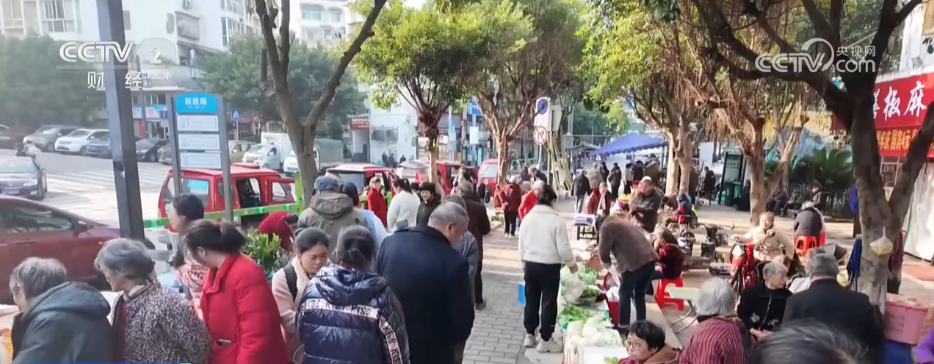
“潮汐摊区” 巧解城市治理难题 “关键小事”见证民生温度
Yang Shi Wang· 2025-11-30 10:42
Group 1 - The core idea of the article is the implementation of a new management approach for street vendors in Chongqing's Banan district, aligning with the "people-centered" urbanization strategy outlined in the 14th Five-Year Plan [1][3] - Banan has identified conflicts between public demand and urban management, particularly with street vendors causing traffic congestion and disorder, leading to the introduction of "tidal stall areas" as a solution [3][5] - The "tidal stall areas" operate during specific hours, providing organized temporary stalls that cater to commuters, enhancing convenience for residents while managing street vendor activities [5][8] Group 2 - Currently, there are five "tidal stall areas" in Banan, which have become popular among local farmers for income generation and serve as convenient stops for residents [8] - Plans are in place to establish an additional 33 "tidal stalls," with public input being sought for their locations, indicating a community-driven approach to urban management [7] - The "tidal stall" model has been adopted nationwide, with over 100 cities setting up more than 100,000 such stalls, showcasing its scalability and effectiveness [7]

200余个地级及以上城市开展城市管理进社区工作
Ren Min Ri Bao· 2025-11-23 22:16
Core Viewpoint - The Ministry of Housing and Urban-Rural Development emphasizes the importance of modernizing urban governance through community engagement and systematic management [1] Group 1: Urban Management Initiatives - Over 20 provinces have deployed specific initiatives for urban management within communities, with more than 200 cities at the prefecture level and above organizing related efforts [1] - The urban management initiative focuses on addressing urgent issues faced by the public in urban management, utilizing a "one committee, one office, one platform" work system [1] Group 2: Governance Mechanisms - The initiative employs mechanisms such as "whistle-blowing and reporting" and "immediate response to complaints" to ensure that urban governance resources reach the grassroots level [1] - Collaboration among urban management enforcement personnel and various municipal services (e.g., sanitation, landscaping, public utilities) is encouraged to enhance resource allocation [1] Group 3: Community Integration - The urban management initiative aims to integrate community environment governance with urban management, focusing on the renovation of back streets and small public spaces [1] - There is a push for interconnectivity between urban operation management service platforms and grassroots governance platforms, enhancing smart analysis, early warning, and decision-making support [1] Group 4: Proactive Governance - The work model is shifting towards proactive governance, with an emphasis on "preemptive action before complaints" to improve service delivery [1]
资源直达基层 住建部:全面推进城市管理进社区
Yang Shi Wang· 2025-11-23 03:00
Core Viewpoint - The Ministry of Housing and Urban-Rural Development is promoting the integration of urban management into community governance to effectively address the urgent issues faced by residents in urban management [1][6]. Group 1: Urban Management Integration - The initiative aims to shift the focus and resources of urban governance to grassroots levels, enhancing service delivery rather than merely extending enforcement [1][6]. - Urban management will encompass various aspects such as waste classification, green space management, parking order, and utilities management, all integrated into community governance [1][6]. Group 2: Resource Allocation and Management - Local authorities are required to consider community size, population structure, and management needs to allocate urban management personnel and resources effectively [5]. - The goal is to extend meticulous management and precise services into communities, ensuring that urban management is responsive to local needs [5]. Group 3: Proactive Service Approach - The Ministry emphasizes the importance of optimizing enforcement services by analyzing community residents' demands and addressing frequent issues proactively [6]. - The approach aims to transition from a reactive "responding to complaints" model to a proactive "addressing issues before they are raised" model, resolving conflicts at the grassroots level [6].