
基层民主

Search documents
这个业委会为何“黄”了
Xin Lang Cai Jing· 2026-02-09 07:57
Group 1 - The establishment of homeowners' committees is a significant practice of grassroots democracy, with both successful and failed cases observed [1][2] - Key factors influencing participation in homeowners' committees include the enthusiasm of older residents, particularly retirees, who have more time and a pressing need for property improvement, while younger working individuals are less likely to engage actively [1] - Trust issues among homeowners can hinder participation, as some may perceive involvement in the committee as self-serving, despite the majority acting with good intentions [2] Group 2 - The formation of homeowners' committees is a right granted by the Civil Code and is crucial for enhancing the quality of life for residents [2] - Unity and trust are essential for the successful establishment of homeowners' committees, requiring both active members to maintain integrity and for homeowners to support and trust their neighbors [2] - Ensuring democratic elections and effective supervision poses a significant challenge for all homeowners and community leaders [2]
课堂内外,他们这样讲述“大国外交”
Xin Lang Cai Jing· 2026-01-25 23:28
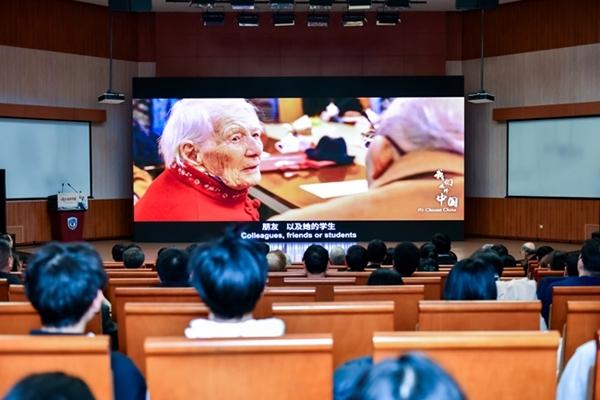
Core Viewpoint - The article discusses the importance of integrating personal narratives with grand diplomatic themes in education, particularly in the context of Chinese diplomacy and its impact on youth [5][6][7]. Group 1: Educational Initiatives - Beijing Foreign Studies University has launched various programs, such as the "China Border and Surrounding Areas Journey," allowing students to engage in practical research and understand the essence of "community of shared future" and "major country diplomacy" [9]. - The university's documentary "We Choose China" highlights the life of Elizabeth Crook, showcasing her contributions to education and diplomacy in China, which serves as an inspirational narrative for students [4][5]. Group 2: Student Engagement and Perspectives - Students express a desire to connect grand narratives of diplomacy with their personal experiences, seeking to understand how international relations affect their lives [6][7]. - The teaching approach emphasizes the relevance of global issues, such as climate change and international cooperation, to students' local contexts, making the subject matter more relatable [6][7]. Group 3: Practical Learning Experiences - Students are encouraged to conduct field research, such as investigating community governance and cross-border trade, which helps them grasp the practical implications of diplomatic policies [10][11]. - The experiences gained from these projects are used to enrich classroom discussions, allowing students to share real-world insights and foster a deeper understanding of China's role in global affairs [11][12]. Group 4: Storytelling and Cultural Exchange - The article emphasizes the need for youth to effectively communicate China's stories in a way that resonates with international audiences, adapting traditional narratives to contemporary contexts [12][14]. - Engaging in cross-cultural exchanges allows students to become active participants in sharing China's narrative, highlighting the importance of personal experiences in understanding broader diplomatic themes [11][14].

云南县级人大街道工委新规2026年1月1日起施行
Xin Hua Wang· 2025-12-26 13:53
Core Points - The "Regulations on the Work Committee of the Street of the County-level People's Congress of Yunnan Province" has been approved and will take effect on January 1, 2026, aiming to provide a clear institutional guarantee and work guidance for the work of the street committees [1][2] - The regulations consist of twenty articles that define the work committee as a legal working body established by the county-level people's congress at the street level, serving to facilitate the exercise of powers by the county-level congress and promote orderly public participation in democratic management [1] - The regulations specify the organizational structure, personnel configuration, work responsibilities, operational mechanisms, and funding guarantees for the street work committees, including the requirement for a full-time director [1] - The regulations also emphasize the importance of promoting grassroots democracy by establishing mechanisms for resident discussions and enhancing the role of representatives and community members in managing economic, social, and cultural affairs [2]
记录伟大时代 讲好中国故事——第35届中国新闻奖获奖作品扫描
Xin Hua She· 2025-11-05 15:04
Core Viewpoint - The 35th China Journalism Awards recognized 377 outstanding works from various media, highlighting the dedication of journalists in documenting the era and telling China's story [2] Group 1: Award Highlights - The awarded works reflect the major themes of China's modernization and the media's role in supporting national objectives, showcasing innovative expressions and diverse perspectives [3] - Notable works include a commentary on reform by People's Daily, a detailed analysis of China's economic navigation by Xinhua, and a report on the Chang'e 6 lunar mission by the Central Radio and Television Station, all contributing to a narrative of national pride and progress [3][4] Group 2: Addressing Social Issues - Several awarded pieces focus on pressing social issues, such as the critique of formalism in digital contexts and the challenges of grassroots governance, demonstrating the media's constructive role in societal development [5] - Reports like the China News Weekly's investigation into digital formalism and the Hubei Daily's commentary on grassroots burdens highlight the media's engagement with real-world problems [5][6] Group 3: Cultural and International Representation - The awarded works also emphasize cultural storytelling and international engagement, showcasing China's rich heritage and its global narrative [7] - Noteworthy pieces include a documentary on the Belt and Road Initiative and a series highlighting traditional Chinese culture, enhancing China's international image and dialogue [7][8]
人大常委会丨我国立法明确村委会、居委会设立老年人和妇女儿童工作委员会
Xin Hua She· 2025-10-28 13:31
Core Points - The 18th meeting of the 14th National People's Congress Standing Committee approved amendments to the Villagers' Committee Organization Law and the newly revised Urban Residents' Committee Organization Law, both effective from January 1, 2026 [1] - The amendments aim to improve the composition, responsibilities, elections, discussions, management, and supervision of the "two committees," enhancing grassroots democratic development and governance modernization [1] - New provisions include the establishment of "Elderly and Women and Children Work Committees" under village and community committees to strengthen care for the elderly and left-behind children [1] - The amendments clarify the relationship between village committees, villager groups, and rural collective economic organizations, allowing village committees to perform the functions of collective economic organizations where none exist [1] - The revised Urban Residents' Committee Organization Law expands the responsibilities of community committees to assist in guiding and supervising owners' meetings and committees, as well as mediating property disputes [1][2] - Changes were also made to the election processes, democratic management, and supervision of both community and village committees [2]
我国立法明确村委会、居委会设立老年人和妇女儿童工作委员会
Xin Hua She· 2025-10-28 10:59
Core Points - The 18th meeting of the 14th National People's Congress Standing Committee approved amendments to the Village Committee Organization Law and the newly revised Urban Residents Committee Organization Law, both effective from January 1, 2026 [1][2] - The amendments aim to improve the composition, responsibilities, elections, deliberation, management, and supervision of the "two committees," enhancing grassroots democracy and governance capabilities [1] - New provisions include the establishment of "Elderly and Women and Children Work Committees" under village and residents' committees to strengthen care for the elderly and left-behind children [1] - The amendments clarify the relationship between village committees, villager groups, and rural collective economic organizations, allowing village committees to perform the functions of collective economic organizations where none exist [1] - The revised Urban Residents Committee Organization Law expands the responsibilities of residents' committees to assist in guiding and supervising owners' meetings and mediating property disputes [1][2]
刘非赴余杭区调研
Hang Zhou Ri Bao· 2025-06-10 03:03
Group 1 - The importance of the West City Science and Technology Innovation Corridor and Future Science City as a high ground for innovation is emphasized, aiming to create a first-class business environment and an optimal innovation ecosystem [1] - Alibaba Group's significant contributions to the economic and social development of Hangzhou are acknowledged, with encouragement for increased investment in technological innovation and support for rural revitalization [2] - Douyin Group's rapid development in Yuhang is highlighted as a growth point for the digital economy, with hopes for more innovative business implementations in Hangzhou [2] Group 2 - The focus on grassroots democratic consultation and its role in enhancing community development and increasing residents' income is discussed, with an emphasis on addressing local issues collaboratively [3] - The need for integrating educational initiatives with the reduction of bureaucratic burdens at the grassroots level is pointed out, aiming for effective governance and high-quality economic development [3]
