
中国特色大国外交

Search documents
大国外交,喜迎“开门红”
Bei Jing Ri Bao Ke Hu Duan· 2026-02-19 00:02
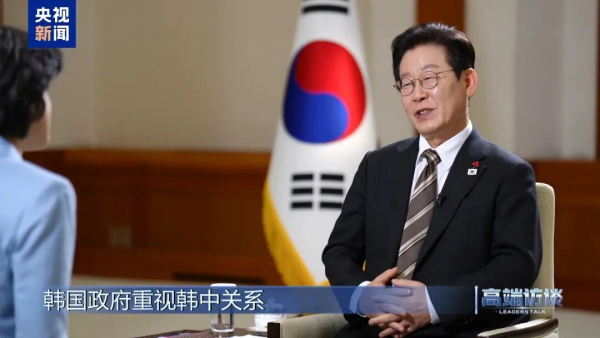
Group 1 - China's diplomacy has started the year 2026 with high frequency, high standards, and broad coverage, showcasing a proactive approach to international relations [4] - The country emphasizes the "good neighbor, secure neighbor, and prosperous neighbor" principle, prioritizing diplomatic relations with neighboring countries [6] - High-level interactions with neighboring countries have led to significant breakthroughs, including deepening strategic trust with Russia and solidifying ties with Pakistan and South Korea [6][9] Group 2 - The recent diplomatic engagements have resulted in practical cooperation agreements, such as the signing of 15 cooperation documents between China and South Korea, covering areas like artificial intelligence and high technology [6][18] - China's relations with Western countries are undergoing a profound transformation, as evidenced by the recent visits from leaders of multiple European nations and Canada, indicating a collective shift towards engaging with China [9][15] - China's role as a "stabilizer" in global economic recovery is highlighted, with international institutions raising China's economic growth forecasts and recognizing its contribution to global growth [15] Group 3 - China is committed to multilateralism and actively participates in global governance, proposing initiatives that address common global concerns [16] - The country promotes international cooperation with an open and inclusive attitude, emphasizing win-win outcomes, which has led to various countries achieving practical cooperation results during recent diplomatic visits [18] - The Chinese leadership has reiterated its commitment to embracing the world and contributing to the construction of a community with a shared future for mankind [19]

省委外事工作委员会(省港澳工作领导小组)召开会议
Shan Xi Ri Bao· 2026-02-04 00:27
Group 1 - The meeting emphasized the importance of implementing Xi Jinping's diplomatic thoughts and the significant discussions regarding Hong Kong and Macau work, aiming to enhance international cooperation and cultural exchanges while promoting collaboration among Shaanxi, Hong Kong, and Macau [1][2] - The provincial leadership highlighted the need to align with national diplomatic strategies, particularly in strengthening relationships with Central Asian countries and enhancing the province's role in China's major diplomatic initiatives [2] - There is a focus on developing a comprehensive open economy by promoting trade, investment, and cultural exchanges, including the transformation of exhibition platforms and the organization of brand activities to attract investment [2] Group 2 - The meeting called for a commitment to the "One Country, Two Systems" principle, with an emphasis on deepening cooperation with the Guangdong-Hong Kong-Macau Greater Bay Area and implementing policies that benefit Hong Kong and Macau [2] - The leadership aims to enhance safety measures for overseas interests and effectively manage foreign-related risks while strengthening the overall leadership of the party and improving mechanisms and team capabilities [2]
课堂内外,他们这样讲述“大国外交”
Xin Lang Cai Jing· 2026-01-25 23:28
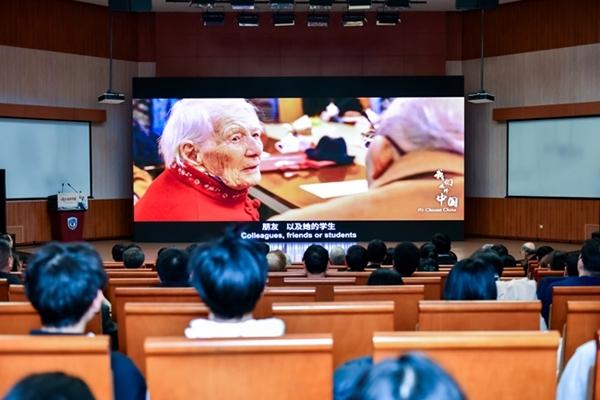
Core Viewpoint - The article discusses the importance of integrating personal narratives with grand diplomatic themes in education, particularly in the context of Chinese diplomacy and its impact on youth [5][6][7]. Group 1: Educational Initiatives - Beijing Foreign Studies University has launched various programs, such as the "China Border and Surrounding Areas Journey," allowing students to engage in practical research and understand the essence of "community of shared future" and "major country diplomacy" [9]. - The university's documentary "We Choose China" highlights the life of Elizabeth Crook, showcasing her contributions to education and diplomacy in China, which serves as an inspirational narrative for students [4][5]. Group 2: Student Engagement and Perspectives - Students express a desire to connect grand narratives of diplomacy with their personal experiences, seeking to understand how international relations affect their lives [6][7]. - The teaching approach emphasizes the relevance of global issues, such as climate change and international cooperation, to students' local contexts, making the subject matter more relatable [6][7]. Group 3: Practical Learning Experiences - Students are encouraged to conduct field research, such as investigating community governance and cross-border trade, which helps them grasp the practical implications of diplomatic policies [10][11]. - The experiences gained from these projects are used to enrich classroom discussions, allowing students to share real-world insights and foster a deeper understanding of China's role in global affairs [11][12]. Group 4: Storytelling and Cultural Exchange - The article emphasizes the need for youth to effectively communicate China's stories in a way that resonates with international audiences, adapting traditional narratives to contemporary contexts [12][14]. - Engaging in cross-cultural exchanges allows students to become active participants in sharing China's narrative, highlighting the importance of personal experiences in understanding broader diplomatic themes [11][14].
近镜头 | 习近平主席引领中国外交新年开新局
Xin Hua She· 2026-01-25 11:25
Core Viewpoint - The new year marks the beginning of a new chapter in China's diplomacy, guided by Xi Jinping's diplomatic thoughts and leadership, emphasizing China's role as a "driving force" for peaceful development and a "stabilizer" in a turbulent world [1] Group 1 - China's diplomatic activities in early 2026 involve extensive bilateral and multilateral interactions across regions including neighboring countries, Europe, North America, Africa, and Latin America [1] - The interactions aim to deepen and expand China's global partnerships based on equality, openness, and cooperation [1] - The signals released by China's leadership during the New Year highlight the country's commitment to being a source of peace and stability in the international arena [1]
人间百味,共赴新岁:跨年钟声里的世界
Xin Lang Cai Jing· 2025-12-31 12:42
Group 1 - In 2025, international tourism in China saw a significant increase, with 40.6 million foreign visitors entering the country, marking a 27.2% year-on-year growth due to the implementation of a 240-hour visa-free transit policy [3] - China's continuous high-level opening-up is expected to bring more opportunities to the world, as the country expands its "visa-free circle" and optimizes its foreign investment environment [3] - The overall core consumer price index in Tokyo, Japan, was reported at 111.1, reflecting a 2.3% increase year-on-year, indicating a growing financial burden on consumers [13] Group 2 - The year 2025 marked the third year of the Russia-Ukraine conflict, with ongoing discussions for peace talks, although significant disagreements remain on key issues such as territory and security guarantees [9] - The global landscape in 2025 was characterized by a mix of conflict and reconciliation, with tensions and hopes coexisting, as highlighted by U.S. President Trump's remarks on the challenges faced during his second term [5][7] - The international community continues to prioritize peace and development amidst increasing global turmoil, with a consensus on the need for unity and inclusivity to overcome challenges [15]

王毅最新发声!信息量很大
Huan Qiu Wang· 2025-12-30 06:40
Core Viewpoint - The speech emphasizes the importance of China's diplomatic efforts in a rapidly changing global landscape, highlighting the need for cooperation, peace, and the construction of a community with a shared future for mankind in the face of rising geopolitical tensions and economic challenges [1][2][3]. Group 1: International Relations and Diplomacy - In 2025, the world witnessed a significant increase in local wars and cross-border conflicts, marking a new high since World War II, which raises concerns about peace versus war [2][3]. - China positions itself as a stabilizing force in international relations, advocating for peace and cooperation while maintaining strong bilateral relations with major powers like the US, Russia, and the EU [3][5]. - The relationship between China and the US has seen fluctuations but has achieved overall dynamic stability, which aligns with the interests of both nations and the international community [3][11]. Group 2: Regional Cooperation and Development - China has strengthened its relationships with neighboring countries, achieving the best diplomatic ties in modern history, and aims to build a community of shared destiny in the region [4][5]. - The "Belt and Road Initiative" continues to expand, with significant investments and cooperation agreements signed with various countries, contributing to regional connectivity and development [8][9]. Group 3: Global Governance and Multilateralism - China has proposed a global governance initiative that emphasizes sovereignty, international law, multilateralism, and human-centered approaches, receiving support from over 150 countries and international organizations [7][18]. - The country aims to enhance the role of the United Nations and promote a more just and equitable global governance system, addressing the needs of developing nations [7][18]. Group 4: Economic Contributions and Trade - China's economic resilience and openness have positioned it as a key driver of global economic growth, contributing approximately 30% to global growth, surpassing the G7 countries combined [8][9]. - The country has implemented various trade agreements and initiatives to foster economic cooperation, including zero-tariff policies for the least developed countries and partnerships with regions like Africa and Latin America [9][16]. Group 5: National Sovereignty and Security - The speech underscores the importance of safeguarding national sovereignty, particularly regarding Taiwan, and emphasizes the need for a unified stance against separatist movements [12][19]. - China is committed to enhancing its capabilities to counter foreign interference and protect its national interests, ensuring the safety of its citizens abroad [18][19].

王毅:中国与世界的关系正在朝着更加积极的方向发展
Xin Lang Cai Jing· 2025-12-30 06:40
Core Viewpoint - China's diplomatic efforts are increasingly positive, with significant improvements in international influence, innovation leadership, and moral appeal as highlighted by Foreign Minister Wang Yi at the 2025 International Situation and China's Diplomacy Seminar [1] Group 1 - The development of China's major country diplomacy in 2025 has led to a deeper understanding of its relationship with the world [1] - China's international influence and innovation leadership have significantly increased [1] - The confidence and resilience of China's diplomacy are attributed to the leadership of President Xi Jinping and the guiding principles of Xi Jinping's diplomatic thought [1] Group 2 - The centralized and unified leadership of the Communist Party of China plays a crucial role in the country's diplomatic success [1] - The strong support from the Chinese populace is essential for the effectiveness of its diplomatic initiatives [1] - China's diplomatic philosophy consistently occupies a high moral ground in the international arena [1]
王毅出席2025年国际形势与中国外交研讨会并作主旨发言
Jing Ji Guan Cha Wang· 2025-12-30 05:55
Group 1 - The year 2025 marks significant anniversaries, including the 80th anniversary of the victory in the World Anti-Fascist War and the establishment of the United Nations, indicating a pivotal moment in the evolution of the international landscape [1] - The global situation is characterized by increasing tensions between progress and regression, with economic globalization facing severe challenges and the choice between openness and closure becoming urgent [1] - The frequency of local wars and cross-border conflicts raises critical questions about peace versus war, highlighting the need for a stable international order [1] Group 2 - China's diplomatic efforts are increasingly seen as contributing positively to global relations, with a notable enhancement in China's international influence, innovation leadership, and moral authority [2] - The "14th Five-Year Plan" period is identified as crucial for solidifying the foundation for socialist modernization, with China poised to make greater contributions to human development and progress [2] - The upcoming "15th Five-Year Plan" is expected to provide stronger strategic support for national development and revitalization, as well as for global cooperation and governance reform [2][3]
“十四五”时期我国发展取得重大成就(学习贯彻党的二十届四中全会精神)
Ren Min Ri Bao· 2025-11-20 22:05
Core Viewpoint - The article emphasizes the significant achievements made during the "14th Five-Year Plan" period in China, highlighting the foundation laid for the upcoming "15th Five-Year Plan" period, with a focus on economic strength, technological innovation, and comprehensive reforms [1][2]. Economic Strength - China's economic total continues to grow, with a projected GDP of approximately 140 trillion yuan by 2025, and per capita GDP nearing high-income country levels. The annual labor productivity growth is around 6%, and China remains a major driver of global economic growth [2][3]. Technological Innovation - The country is prioritizing self-reliance in technology, with R&D spending expected to exceed 3.6 trillion yuan in 2024. The number of high-tech enterprises has surpassed 500,000, and significant advancements have been made in key technologies such as integrated circuits and artificial intelligence [2][3]. Comprehensive Reforms - Reforms are being deepened with a focus on institutional development, aiming for a more mature system by the centenary of the Communist Party. The establishment of a higher-level open economy and the implementation of free trade agreements are creating new opportunities for economic development [3][4]. Cultural Development - The cultural sector is thriving, with public cultural services expanding and the protection of cultural heritage being prioritized. Events like the Beijing Winter Olympics have enhanced China's cultural influence globally [4][5]. Social Welfare - Significant progress has been made in poverty alleviation, with the absolute poverty issue resolved. Employment levels remain stable, and the income ratio between urban and rural residents has improved to 2.34:1. The education and healthcare systems are among the largest in the world, with high coverage rates [5][6]. Environmental Protection - Efforts in environmental conservation have led to a forest coverage rate exceeding 25%, and air quality has improved significantly. The transition to a low-carbon economy is accelerating, with a substantial increase in non-fossil energy generation [5][6]. National Security - National security capabilities have been enhanced, with a focus on food security and energy supply stability. The country has also made strides in financial risk management and crime reduction [6][7]. Military Modernization - Significant advancements in military modernization have been achieved, with a focus on strengthening the military's operational capabilities and reforming defense structures [6][7]. Foreign Relations - China's diplomatic efforts have expanded, promoting a community with a shared future for mankind and advocating for multilateralism. The country is actively participating in global governance and enhancing its international influence [6][7]. Characteristics of Development - The "14th Five-Year Plan" period is characterized by a focus on high-quality development, effective pandemic response, and addressing complex international challenges. The government has implemented significant measures to stabilize the economy and enhance resilience [7][8]. Fundamental Reasons for Achievements - The achievements are attributed to the leadership of the Communist Party and the guiding principles of Xi Jinping's thought, emphasizing the importance of party leadership and strict governance [10][11]. Future Outlook - The "15th Five-Year Plan" period is seen as crucial for solidifying the foundation for socialist modernization, with a call for unity in thought and action towards the goals set by the central leadership [14].
四中全会公报:“十四五”主要目标任务即将胜利完成
Xin Hua She· 2025-10-23 15:38
Core Points - The Fourth Plenary Session of the 20th Central Committee of the Communist Party of China was held from October 20 to 23, 2025, in Beijing [1] - The session affirmed the work of the Central Political Bureau since the Third Plenary Session, emphasizing adherence to the spirit of the 20th National Congress and previous plenary sessions [1] - The meeting highlighted the importance of maintaining a stable and progressive work approach, fully implementing new development concepts, and promoting high-quality development [1] Summary by Categories Political and Strategic Framework - The Central Political Bureau is committed to a comprehensive and accurate implementation of the "Five-in-One" overall layout and the "Four Comprehensives" strategic layout [1] - The session emphasized the need to coordinate domestic and international situations, balancing development and security [1] Economic Development - The meeting focused on deepening reforms, promoting high-quality development, and ensuring the completion of the main goals and tasks of the 14th Five-Year Plan [1] - It was noted that the economy is expected to continue its recovery and improvement [1] Social and Cultural Aspects - The session underscored the importance of enhancing socialist democracy and the rule of law, as well as strengthening cultural work [1] - There was a call to ensure livelihood security and ecological protection [1] National Security and Defense - The meeting addressed the need to maintain national security and social stability, alongside modernizing national defense and military capabilities [1] - It also highlighted the importance of managing relations with Hong Kong, Macau, and Taiwan, as well as advancing major country diplomacy with Chinese characteristics [1] Commemoration and National Spirit - The session marked the 80th anniversary of the victory in the Chinese People's War of Resistance Against Japanese Aggression and the World Anti-Fascist War, aiming to boost national spirit and patriotism [1]