
基础教育扩优提质

Search documents
政府工作报告:增加普通高中学位供给
21世纪经济报道· 2026-03-05 02:15
Core Viewpoint - The government work report emphasizes the enhancement and quality improvement of basic education, focusing on balanced development in compulsory education and inclusive development in preschool education, along with the improvement of free preschool education policies and an increase in ordinary high school enrollment capacity [1]. Group 1 - The report outlines tasks for 2026, highlighting the need to promote quality and equitable development in compulsory education [1]. - It stresses the importance of enhancing the quality and accessibility of preschool education, aiming for a more inclusive approach [1]. - The report indicates a commitment to improving free preschool education policies to ensure broader access [1]. - There is a specific mention of increasing the supply of ordinary high school places to accommodate more students [1].

今年我省力争义务教育优质均衡发展国家认定县(市、区)达到40个
Xin Lang Cai Jing· 2026-02-16 23:40
Group 1 - The core objective is to achieve the national recognition of 40 counties (cities, districts) for quality and balanced development in compulsory education by 2026 [1] - The province plans to implement standardized construction projects for compulsory education schools and expand the coverage of urban-rural school communities and group-based education [1] - In the past year, the provincial government has promoted the optimization of basic education resource allocation, adapting to changes in school-age population and developing tailored educational layout plans [1] Group 2 - There will be an increase in the supply of ordinary high school education resources in urban areas and county towns, along with the exploration of building boarding schools in concentrated population areas of remote mountainous counties [2] - The province will implement a revitalization plan for county-level ordinary high schools and support the creation of provincial-level characteristic high schools [2] - The "double reduction" policy will be leveraged to drive comprehensive reforms in basic education, including the regulation of non-academic training and the establishment of a four-level scientific competition mechanism [2]
我省今年计划新增4万个基础教育公办学位
Hai Nan Ri Bao· 2026-01-23 01:57
Group 1 - The core viewpoint of the articles emphasizes the commitment of Hainan to enhance the quality of basic education through various initiatives, including the addition of public school seats and high school enrollment quotas [1][2] Group 2 - Hainan plans to add 40,000 public school seats and over 10,000 high school enrollment spots in 2026, as part of its educational improvement strategy [1] - In 2025, the province aims to complete 70 public school construction projects and increase high school enrollment by 8% [1] - The province will implement a project to improve the quality of preschool education, adding 120 pilot kindergartens across 18 cities and counties [1] - The focus will be on equitable development in compulsory education, with a goal of over 50% of weak schools improving their status [1] - Hainan will promote group-based school management, targeting over 60% of public primary and secondary schools to be included in this system [1] - The articles highlight the importance of physical education, encouraging schools to provide daily physical activities and improve sports facilities [2]
致力学有“优”教
Xin Lang Cai Jing· 2026-01-18 01:57
Group 1 - The core viewpoint of the article emphasizes the importance of improving education policies for migrant children to address the challenges faced by families without local household registration [1] - The article highlights that China has established the largest and high-quality education system, with more good schools being built close to home, allowing parents to feel more at ease regarding their children's education [1] - It mentions that free education for one year before school benefits over 12 million children, and the tuition fees for top public universities are only 1/10 to 1/20 of those in foreign counterparts [1] Group 2 - The quality of primary and secondary education in China ranks among the best globally, demonstrating significant success in cultivating high-quality talent [1] - The keywords "inclusive" and "high-quality" are identified as central to China's education development, ensuring that every ordinary person has the opportunity to excel in life [1] - The "14th Five-Year Plan" suggests measures to enhance education satisfaction among the people, including expanding the scope of free education and improving the quality of basic education [1]
青海基础教育实现扩优提质之变
Xin Lang Cai Jing· 2025-12-25 19:23
Group 1 - The core viewpoint of the article emphasizes that during the "14th Five-Year Plan" period, Qinghai has prioritized education development, continuously improving the quality and accessibility of basic education to meet public demand [1][2] Group 2 - Qinghai has optimized its educational resource allocation through a structured system comprising 1 overall plan, 8 city and state layout adjustment plans, and 12 supporting policies, resulting in the consolidation of 614 teaching points and small schools, achieving a consolidation rate of 79% [1] - The province has implemented several projects to address peak construction needs for junior and senior high schools, including the establishment of 2 specialized schools and the successful operation of Qinghai classes in 18 schools across 9 provinces, benefiting over 20,000 students from high-altitude areas [1] - The gross enrollment rate for preschool education, the retention rate for compulsory education, and the gross enrollment rate for high school all exceed the national average [1] Group 3 - The coverage of inclusive preschool resources has significantly increased, with the coverage rate of inclusive kindergartens reaching 97.9% and the proportion of children in public kindergartens rising to 77.2%, an increase of 16.03 percentage points since 2020 [2] - The balanced development of compulsory education has deepened, with the elimination of large classes and D-level dangerous buildings, making Qinghai the 24th province in China to achieve basic balanced development in compulsory education [2] - The resources for ordinary high schools have become more sufficient, with the establishment of 11 new ordinary high schools, adding approximately 24,000 new student places to support the new college entrance examination selection system [2]
从“有学上”到“上好学” 山西基础教育“扩优提质”见成效
Zhong Guo Xin Wen Wang· 2025-11-12 01:32
Core Viewpoint - Shanxi Province has made significant progress in enhancing the quality of basic education during the "14th Five-Year Plan" period, aligning with national educational goals and improving resource allocation and educational outcomes [1][4]. Group 1: Financial Investment in Education - Shanxi has increased its financial investment in education, with funding for ordinary high schools, junior high schools, primary schools, and kindergartens rising by 27%, 28%, 23%, and 51% respectively compared to the end of the "13th Five-Year Plan" [4]. - Per-student public budget education funding has also increased, with growth rates of 10%, 6%, 11%, and 53% across the four educational stages, placing Shanxi in a relatively strong position nationally and among the six central provinces [4]. Group 2: Resource Allocation and Infrastructure Development - The province has responded to demographic changes by optimizing the allocation of educational resources, including the establishment of 1,286 public kindergartens and the renovation or expansion of over 1,700 compulsory education boarding schools [4]. - The average scale of primary and junior high schools has increased, with primary schools reaching an average of 403 students (up by 143) and junior high schools at 514 students (up by 185) [4]. Group 3: Educational Quality and Health Initiatives - Shanxi has implemented the "Double Reduction" policy to regulate extracurricular training and enhance management of homework, exams, and schedules, achieving full coverage of after-school services for compulsory education [5]. - The province has seen a 6.67 percentage point increase in the physical health of students and a 5.74% decrease in the rate of myopia among children and adolescents [5]. Group 4: Ongoing Challenges and Future Plans - Despite the progress, Shanxi faces new challenges due to structural changes in the school-age population and regional disparities in educational development [5]. - Future plans include further improving resource allocation mechanisms to adapt to demographic changes and expanding the coverage of quality educational resources [6].
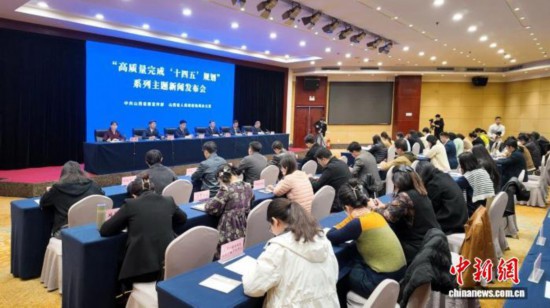
全市新开中小学校34所 推进教室空调能装尽装 上海基础教育持续扩优提质
Jie Fang Ri Bao· 2025-09-01 01:36
Group 1 - Shanghai will welcome approximately 1.82 million primary and secondary school students for the new school year, with 34 new schools opening in the 2025 academic year, adding nearly 13,000 new student places, primarily in population influx areas [1] - The city is enhancing the modernization of school facilities by revising the construction standards for primary and secondary schools and promoting the installation of air conditioning in classrooms as part of public service projects [1] - A new round of the "Urban-Rural School Partnership Program" will cover nearly 200 relatively weaker suburban schools, aiming to transform the support from "blood transfusion" to "blood production" for sustainable development [1] Group 2 - Building on the success of the first round of the public junior high school strong school project, Shanghai is implementing a second round focusing on 79 public junior high schools to enhance educational quality through various measures [2] - The city is exploring small class teaching reforms to better respect students' learning patterns and meet personalized development needs [2] - A negative list for optimizing the basic education ecosystem has been established, along with guidelines for high-quality school-based homework systems and after-school services, promoting a new norm of "after-school education" [2]
湖北:2027年全省公办幼儿园在园幼儿占比达到60%以上
news flash· 2025-07-14 11:27
Core Viewpoint - The Hubei provincial government aims to enhance the early childhood education system, targeting a significant increase in the proportion of children enrolled in public kindergartens to over 60% by 2027 [1] Group 1: Education Policy Initiatives - The government has issued measures to improve the fertility support policy system and build a more family-friendly society [1] - There will be an implementation of a quality enhancement action plan for basic education, focusing on standardizing school construction across the province [1] - The initiative includes increasing the supply of quality high school education resources, particularly in rural areas, to alleviate educational pressures on students and parents [1] Group 2: Financial Investment and Resource Allocation - There will be an increase in fiscal investment to promote the universal and inclusive nature of early childhood education [1] - The government plans to expand the supply of inclusive early childhood education resources through public-private partnerships [1]