
基金组织份额改革

Search documents
潘功胜出席第52届国际货币与金融委员会会议
Jin Rong Shi Bao· 2025-10-20 01:39
Core Insights - The International Monetary Fund (IMF) held its 52nd International Monetary and Financial Committee (IMFC) meeting in Washington D.C. on October 16-17, discussing global economic and financial conditions, as well as IMF operations [1][2] - The meeting emphasized the need for a strong, quota-based, and resource-rich IMF as a core component of the global financial safety net, with a focus on adjusting quotas to better reflect members' relative weight in the global economy while protecting the voice of the poorest countries [1][2] Group 1 - The global economy is undergoing profound changes, with uncertainty, challenges, and opportunities coexisting [1] - Trade frictions and geopolitical uncertainties are dragging down global economic growth, leading to concerns about the sustainability of fiscal policies in developed economies and potential spillover effects [1][2] - Countries are encouraged to strengthen macroeconomic coordination and cooperation, uphold multilateralism, and advocate for an open, rules-based multilateral trading system to inject more stability and certainty into the global economy [1] Group 2 - The IMF's role as the core of the global financial safety net is crucial, and quota reforms are essential for enhancing the legitimacy, effectiveness, and representativeness of the IMF [2] - The IMF is urged to expedite the implementation of the 16th General Review of Quotas and prepare for the 17th General Review to achieve meaningful quota adjustments [2] - The evolving global economic landscape necessitates the IMF to strengthen its economic surveillance functions and enhance global macro policy coordination, particularly in light of heightened uncertainty in tariff policies [2]
潘功胜:基金组织应继续推动份额改革,尽快实现份额占比调整
Jin Rong Shi Bao· 2025-10-18 07:41
Core Viewpoint - The global multilateral trading system is facing unprecedented challenges, necessitating a strong stance against protectionism and a call for dialogue and cooperation to uphold multilateralism [1] Group 1: Global Financial Stability - The International Monetary Fund (IMF) should objectively assess the major risks faced by the global economy and individual countries, providing timely and targeted policy recommendations to help member countries respond to various shocks [1] - There is an urgent need to strengthen the global financial safety net due to the impact of trade tensions on global financial stability [1] Group 2: IMF's Role and Reforms - The IMF is central to the global financial safety net and should continue to promote quota reforms, which are crucial for enhancing the legitimacy, effectiveness, and representativeness of the organization [1] - It is essential to adjust the quota shares to reflect the relative positions of member countries in the global economy, thereby increasing the representation of emerging markets and developing countries [1]
潘功胜出席国际货币与金融委员会会议
Sou Hu Cai Jing· 2025-10-18 07:36
Core Insights - The International Monetary Fund (IMF) is recognized as the core of the global financial safety net, emphasizing the need for quota reforms to enhance its legitimacy, effectiveness, and representativeness [2][3] - The global economic landscape is undergoing profound changes, with uncertainties and challenges impacting growth, particularly due to trade frictions and geopolitical uncertainties [2] - There is a call for enhanced macroeconomic coordination and cooperation among countries to maintain multilateralism and a rules-based multilateral trading system [2] Group 1 - The IMF's quota adjustments should better reflect members' relative weight in the global economy while protecting the voice of the poorest countries [2] - The IMF is urged to expedite the implementation of the 16th General Review of Quotas and prepare for the 17th General Review to achieve meaningful quota adjustments [3] - The evolving global economic landscape necessitates the IMF to strengthen its economic surveillance functions and enhance global macro policy coordination [3] Group 2 - The uncertainty in tariff policies exacerbates risks facing the global economy and financial markets, requiring the IMF to objectively assess these risks and provide targeted policy recommendations [3] - There is an emphasis on the importance of supporting economic globalization and the multilateral trading system to maintain the stability of the international financial system [3] - The IMF should pay more attention to fiscal risks and spillover effects from major developed economies to enhance the resilience of the global financial system [3]

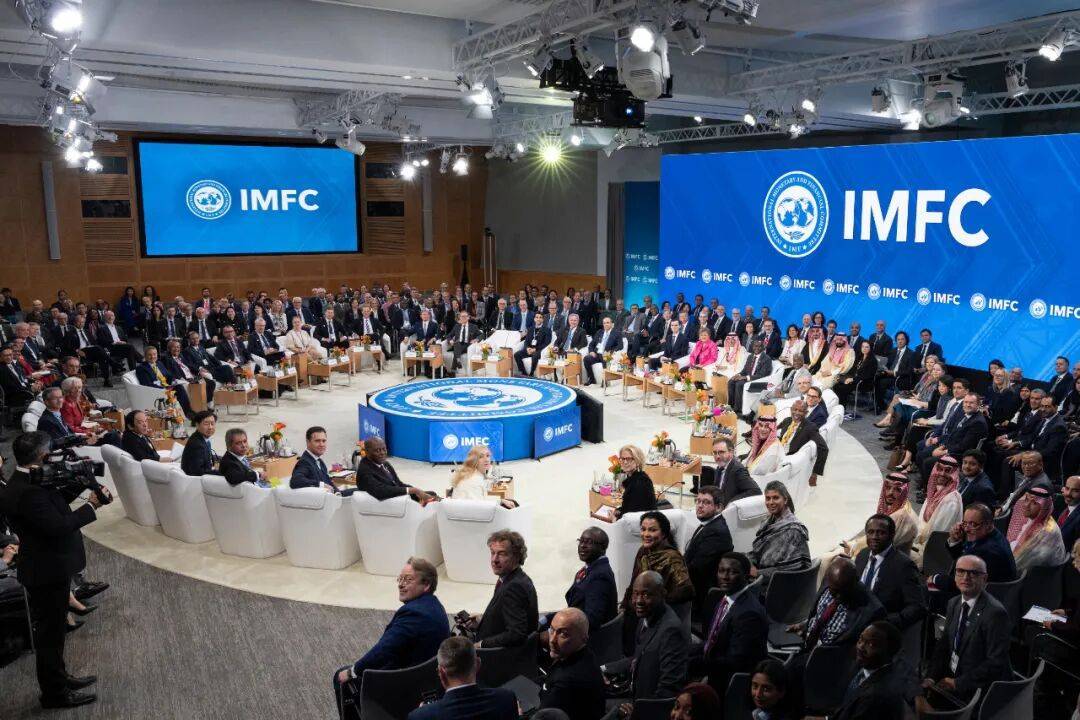
央行行长潘功胜出席第52届国际货币与金融委员会会议
Sou Hu Cai Jing· 2025-10-18 07:03
Core Insights - The International Monetary Fund (IMF) is undergoing discussions regarding global economic conditions and the need for reform in its quota system to better reflect member countries' economic weight while protecting the voice of the poorest nations [1][2] Group 1: Global Economic Conditions - The world economy is experiencing profound changes, with uncertainty, challenges, and opportunities coexisting [1] - Trade frictions and geopolitical uncertainties are dragging down global economic growth, leading to concerns about the sustainability of fiscal policies in developed economies and potential spillover effects [1][2] - Emerging markets and developing economies are facing severe challenges amid weakening global growth momentum [1] Group 2: IMF's Role and Reforms - The IMF is viewed as a core component of the global financial safety net, and reforms in its quota system are crucial for enhancing its legitimacy, effectiveness, and representativeness [2] - There is a call for the IMF to expedite the implementation of the 16th general quota review and to prepare for the 17th review to achieve meaningful quota adjustments [2] - The evolving global economic landscape necessitates the IMF to strengthen its economic surveillance functions and enhance global macro policy coordination [2]
潘功胜:美国滥施关税严重冲击全球经济秩序,破坏全球经济长期稳定增长
凤凰网财经· 2025-04-26 13:12
来源|中国人民银行 潘功胜强调,各国亟须加强宏观经济政策协调,支持多边贸易体系,推动经济全球化朝着更加开 放、包容、普惠、均衡的方向发展,共同促进全球经济金融稳定。中国坚持真正的多边主义,是经 济全球化和贸易自由化的倡导者、世贸组织的坚定维护者和支持者,积极参与全球经济治理,致力 于建设开放型世界经济。中国愿进一步深化与基金组织的合作,支持基金组织在维护全球经济金融 稳定方面发挥更大的作用。 潘功胜指出,基金组织作为全球金融安全网的核心,继续推动份额改革对提高基金组织的合法性、 有效性和代表性至关重要。基金组织是以份额为基础的机构,份额占比调整是治理改革最重要的组 成部分,应尽快实现份额占比调整,使其反映成员国在全球经济中的相对地位,增加新兴市场和发 展中国家的代表性。中国呼吁各方尽快完成内部程序,早日推动第十六次总检查承诺的份额增资生 效,并加快第十七次份额总检查的准备工作,包括对新份额公式的讨论,维护基金组织信誉,早日 实现有意义的份额调整。 【 热门视频推荐 】 点击在 看 持续关注↓↓↓ 2025年4月24日-25日,国际货币基金组织(以下简称基金组织)在美国华盛顿特区召开第51届国 际货币与金融委员 ...