
多模态内容创作

Search documents
沙利文:中国企业级大模型日均调用量提升至37.0万亿tokens 阿里千问领先优势扩大占比第一
智通财经网· 2026-02-24 03:14
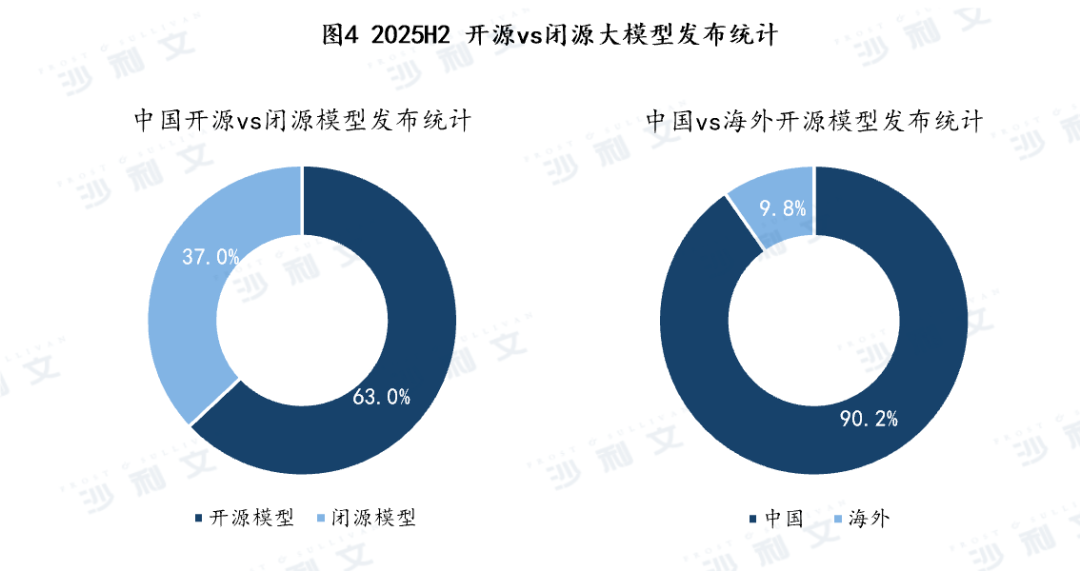
Core Insights - The report by Frost & Sullivan and Toubao Research Institute indicates a significant divergence in strategies among global AI vendors by the second half of 2025, with Chinese companies leading in the open-source ecosystem while overseas firms focus on closed-source models [1][2][4] Group 1: Market Dynamics - By the second half of 2025, the daily usage of enterprise-level large models in China is projected to reach 37 trillion tokens, a 263% increase from 10.19 trillion tokens in the first half of 2025, marking a significant transition in AI's role within enterprises [4] - The growth in daily usage reflects a shift from sporadic assistance to deep integration into key processes, driven by increased frequency of AI calls within individual business processes rather than just an expansion of user base [4][9] Group 2: Model Deployment Trends - Open-source models are expected to surpass closed-source models in terms of usage, becoming the mainstream deployment mode for enterprise-level large models [7] - The increase in usage is attributed to two main demand types: expansion for core systems and external services, which prefer closed-source models for stability, and internal efficiency tools that are more cost-sensitive, favoring open-source models [7][9] Group 3: User Migration Patterns - There is a growing willingness among enterprises to migrate from closed-source to open-source models, with the intent to switch increasing from 22.6% to 48.5% for closed-source users, while the intent to switch from open-source to closed-source remains low at 7.5% [9] - As enterprises scale their AI usage, the cost pressures associated with closed-source models are prompting a shift towards open-source solutions for standardized and replaceable scenarios [9][14] Group 4: Application Areas - Text content creation remains the most significant application area, with multi-modal content creation showing the fastest growth at an 11.9% increase, outpacing AI search and intelligent customer service [11] - The report highlights that large models are now widely used across core business functions, including content production, knowledge acquisition, data analysis, and research support [11] Group 5: Market Concentration - The enterprise-level large model market is becoming increasingly concentrated among leading vendors, as companies prefer to streamline their supplier choices to reduce operational burdens [14] - As daily usage scales reach trillion-level tokens, new traffic is likely to be directed towards established vendors with proven stability and capability, such as Qianwen and Doubao, which offer advantages in computational management and cost efficiency [14]

Seedance 2.0正式发布
Ge Long Hui· 2026-02-12 06:28
Core Insights - ByteDance officially launched the next-generation video creation model Seedance 2.0, which features a unified multimodal audio-video generation architecture that supports text, images, audio, and video inputs [1][2] - Compared to version 1.5, Seedance 2.0 significantly enhances generation quality, particularly in complex interactions and motion scenarios, with improved physical accuracy, realism, and controllability [1] Group 1 - The model demonstrates higher usability in complex scenes, achieving state-of-the-art (SOTA) levels in multi-agent interactions and complex motion scenarios due to its excellent motion stability and physical restoration capabilities [1] - The multimodal capabilities are significantly strengthened, allowing users to input up to 9 images, 3 videos, 3 audio clips, and natural language instructions simultaneously, breaking traditional boundaries in video generation [1] - The controllability of video generation has been greatly improved, with enhanced instruction adherence and consistency, enabling users to easily manage the entire video creation process [1] Group 2 - The model supports high-quality multi-shot audio-video output for 15 seconds and features dual-channel audio capabilities, achieving highly realistic audiovisual effects [2] - The integrated reference and editing capabilities can significantly reduce content production costs in various sectors, including film, advertising, e-commerce, and gaming [2]
2026 年,商业变革者将面对什么?a16z 的最新趋势观察
3 6 Ke· 2026-01-29 10:58
Group 1: AI Capabilities and Paradigms - Vertical AI is transitioning from information retrieval to "multi-agent mode," enabling unprecedented growth in industries like healthcare, legal, and housing, with companies achieving over $100 million in annual revenue [2] - By 2026, vertical AI will unlock "multi-agent mode," allowing for collaboration across various roles in industries, enhancing efficiency and understanding of complex workflows [3] - The emergence of "Agent-native" infrastructure will be crucial, as systems evolve to handle intelligent agent-driven workloads, requiring a redesign of control planes to manage high-frequency tool calls and complex concurrency [6][7] Group 2: Education and Talent Development - The first AI-native university is expected to emerge by 2026, focusing on real-time learning and self-optimizing educational systems, with courses and academic guidance adapting based on data feedback [4][5] - This AI-native university will train graduates proficient in system orchestration, addressing the talent gap in the new economy [5] Group 3: Content Creation and Media - 2026 is anticipated to be a pivotal year for multi-modal content creation, where AI can generate and edit content across various formats, enhancing creative control for users [8][9] - Video content will evolve into interactive environments, allowing for dynamic storytelling and user engagement, blurring the lines between creator and audience [10] Group 4: AI in Business Operations - The traditional metric of "screen time" as a value delivery indicator will be replaced by more complex ROI measures, focusing on outcomes rather than usage time [11] - Companies will increasingly adopt multi-agent systems to manage complex workflows, leading to a rethinking of organizational structures and roles [19][20] Group 5: Consumer AI and Personalization - Consumer-grade AI products will shift from productivity tools to enhancing personal connections and self-awareness, with a focus on understanding users' complete life contexts [21] - The trend towards personalized products will redefine how companies approach consumer engagement, moving from mass production to individualized experiences [13] Group 6: Research and Development - AI will play a significant role in accelerating scientific discovery through autonomous laboratories capable of conducting experiments and iterating research directions [15] - The integration of AI in research workflows will foster a new style of inquiry, emphasizing the relationships between ideas and enabling novel discoveries [22][23] Group 7: Data Privacy and Security - The need for transparent and auditable data access controls will become critical as AI systems operate autonomously, necessitating a shift towards "secrets as a service" to protect sensitive information [25] Group 8: Startup Ecosystem - A new wave of startups will emerge, focusing on providing services to newly established companies, leveraging the current AI product cycle to achieve scalability [26]