多模态内容生成

Search documents
中国大模型打响全球广告!国联民生证券孔蓉:看好多模态、AI硬件与智能驾驶三大机遇
Xin Lang Cai Jing· 2025-12-06 07:53
Group 1 - The recent phase of consolidation in the artificial intelligence sector has sparked renewed discussions about whether AI has formed a bubble [1][7] - Breakthroughs in Chinese large models, represented by DeepSeek, Kimi, and Tongyi Qianwen, are significantly influencing global capital allocation towards Chinese tech assets [1][7] - DeepSeek has effectively served as a "global advertisement" for Chinese assets, enhancing attention and impacting stock performance and market expectations for domestic internet giants [1][7] Group 2 - Valuation improvement is only one aspect; the focus should also be on substantial changes in the fundamentals [2][8] - Overseas tech giants have achieved considerable revenue growth through AI, and if Chinese companies can demonstrate similar sustainable revenue growth, it could lead to fundamental improvements beyond mere valuation recovery [2][8] - The synergy between valuation enhancement and fundamental improvement will significantly boost market confidence [2][8] Group 3 - A notable trend in AI this year is the leap in multimodal content generation capabilities, which has visibly transformed industries like film and content creation [2][8] - The integration of multimodal capabilities with hardware will create new opportunities, such as AI glasses, which are expected to see significant improvements in user experience as technology advances [3][9] - The commercial viability of intelligent driving is progressing rapidly, with both domestic and international companies enhancing their autonomous driving solutions [3][9] Group 4 - Future investment opportunities are diverse and multifaceted, including expanding code generation scenarios, content creation driven by multimodal capabilities, and hardware integration [4][10] - Intelligent driving is gradually being realized, and the robotics sector is anticipated to meet higher market expectations in the coming year [4][10]



悦灵犀AI全新版本面世 底层技术架构全栈进化
Zheng Quan Ri Bao Wang· 2025-10-28 12:49
Core Insights - The core viewpoint of the news is the official launch of the new version 3.0 of the AI photography platform, Yuelingxi AI, by Yueshang Holdings, marking a significant advancement in AI photography and multi-modal content generation [1][2]. Group 1: Product Features - The new version introduces an AI photography function that enables users to generate high-quality 4K portraits through a streamlined process, including scene selection and style confirmation, with advanced features like expression adjustment and background rendering [1][2]. - The AI model, XingYue-3.0, enhances performance with a 38% increase in 4K portrait generation speed and achieves a 98.4% accuracy in matching poses and lighting [2][3]. - The platform now supports a library of 75 portrait styles and stable video output at 30 frames per second, simulating a real studio shooting process [2][3]. Group 2: Technological Advancements - The new version incorporates a distributed computing scheduling system that supports simultaneous image and video generation, expanding the training dataset to 450 million high-resolution portrait samples [3]. - The introduction of a cultural semantic enhancement dataset improves the model's understanding of Eastern aesthetics and cultural symbols [3]. - The platform utilizes a reinforcement learning framework to continuously optimize the model based on user feedback, enabling an iterative evolution of aesthetic capabilities [3]. Group 3: Market Implications - The release of Yuelingxi 3.0 signifies a transition from tool-based AI to a fully integrated AI-native ecosystem, aiming to create a closed-loop AI content production pipeline [2][3]. - The company plans to open the AI photography API to empower brands, photography studios, and creative organizations, fostering a new generation of AI imaging ecosystem [3].

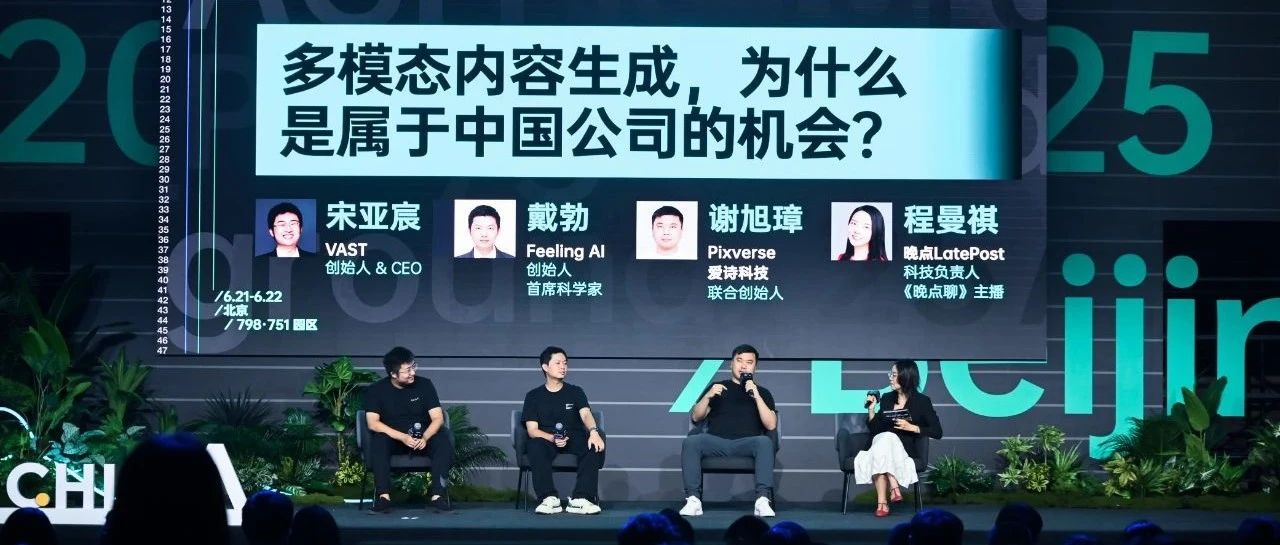
多模态内容生成的机会,为什么属于中国公司?
Founder Park· 2025-06-24 11:53
Core Viewpoint - The article emphasizes that Chinese startups are gaining a leading edge in the multimodal content generation field, particularly in video and 3D creation, contrasting with the U.S. dominance in large language models [1][3]. Group 1: Advantages of Chinese Startups - Chinese teams have accumulated significant experience in video technology, with products like Douyin and Kuaishou laying a strong foundation for video generation [3][7]. - The flexibility of organizational structures in Chinese startups fosters innovation, allowing them to adapt quickly to market needs [3][4]. - The multimodal field remains open for innovation, with rich application scenarios and a strong talent pool in China providing fertile ground for technological advancements [3][8]. Group 2: Competition with Major Players - Startups maintain strategic focus and seek niche opportunities despite competition from giants like Alibaba and Tencent, who are entering the space with open-source models [4][9]. - The competition with large companies is seen as a rite of passage for startups, pushing them to mature and refine their strategies [10][11]. - Startups are leveraging their early investments in core technologies to stay ahead of larger competitors who are now trying to catch up [9][11]. Group 3: Future Trends and Innovations - The article discusses the potential for technology to lower the barriers for content creation, enabling more ordinary users to participate in multimodal content generation [5][37]. - Key trends include the unification of generation and understanding in multimodal models, which enhances controllability and consistency in outputs [14][15]. - Real-time generation capabilities are advancing, with companies like Pixverse achieving near real-time video generation speeds, which could lead to new application scenarios [17][18]. Group 4: User Engagement and Market Dynamics - The shift towards user-generated content (UGC) is highlighted, with startups aiming to create tools that simplify the content creation process for everyday users [21][22]. - The market for short video creation remains vast, with a significant portion of users yet to engage in content creation, presenting growth opportunities for startups [23][24]. - Startups are focusing on developing professional-grade tools that cater to both professional and semi-professional users, ensuring a robust ecosystem for content creation [25][26]. Group 5: Goals and Challenges Ahead - Companies aim to achieve high-quality real-time video generation models and expand their user base significantly in the coming year [37]. - The challenge lies in creating accessible tools for 3D content creation, with aspirations to democratize the process for a broader audience [37].