多策略红利指数

Search documents
规则优化,是如何提升红利指数长期回报的?|投资小知识
银行螺丝钉· 2026-02-28 13:52
Group 1 - The core viewpoint of the article discusses the evolution and optimization of dividend indices, highlighting the changes in selection criteria and their impact on industry distribution and stability of returns [3][4][6] - The first rule modification in 2013 shifted the dividend index from "dividend yield stock selection, market capitalization weighting" to "dividend yield stock selection, dividend yield weighting," resulting in a significant decrease in the financial sector's proportion and a more balanced distribution across materials and consumer discretionary sectors [3] - The second rule modification in 2022 introduced requirements for dividend stability, continuity, and profitability of listed companies, leading to a more stable performance of dividend indices compared to earlier periods [3][6] Group 2 - The emergence of multi-strategy dividend indices reflects the diversification of investor demand, with index companies combining dividend strategies with others like low volatility and quality strategies, resulting in a richer multi-strategy dividend index system [4][5] - An example is the Hong Kong-Shenzhen Dividend Growth Low Volatility Index, which incorporates requirements for earnings growth and market capitalization volatility, helping to mitigate undervaluation traps compared to the CSI Dividend Index [5][6] - The optimization of rules has led to improved returns, with the Hong Kong-Shenzhen Dividend Growth Low Volatility Index outperforming the CSI Dividend Index over the same period due to the integration of multiple strategies [6]


红利指数进化史:规则优化,如何提升红利长期回报? | 螺丝钉带你读书
银行螺丝钉· 2026-02-14 13:40
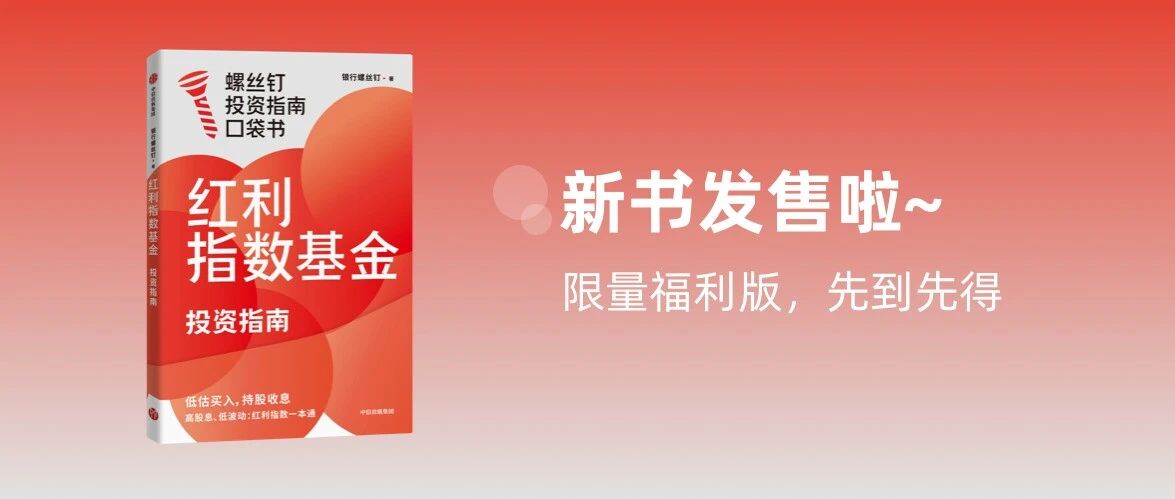
Core Viewpoint - The article discusses the rapid development of dividend indices and their investment strategies, emphasizing the importance of rule optimization in enhancing performance and providing diversified investment options [4][10]. Summary by Sections Introduction to Dividend Indices - The article introduces the book "Dividend Index Fund Investment Guide," which outlines the growth of dividend indices and the most suitable investment strategies, such as undervalued buying and holding for dividends [2][3]. Core Sources of Dividend Index Returns - The three main sources of returns for dividend indices are profit growth, valuation improvement, and dividend income [4]. Rule Optimization in Dividend Indices - Rule optimization in dividend indices occurs in two main aspects: the optimization of individual dividend index rules and the emergence of multi-strategy dividend indices [6][8]. Individual Dividend Index Rule Optimization - The China Securities Dividend Index has undergone two significant rule adjustments in the past 20 years to enhance its performance [7][13]. - The first adjustment in 2013 changed the weighting from market capitalization to dividend yield, resulting in a more balanced industry distribution [14][17]. - The second adjustment in 2022 increased requirements for dividend stability and company profitability, ensuring that only companies with consistent dividend payments are included [24][25]. Multi-Strategy Dividend Indices - Recent developments have led to the creation of multi-strategy dividend indices that combine dividend strategies with other approaches, such as low volatility and quality strategies [9][32]. - These indices aim to improve dividend stability and reduce market volatility, enhancing investor experience [38][40]. Examples of Multi-Strategy Dividend Indices - The article provides a table of various multi-strategy dividend indices, highlighting their specific focus areas, such as state-owned enterprises and quality companies [41]. Performance Comparison - The article notes that the long-term returns of the multi-strategy indices, such as the Hong Kong-Shanghai Dividend Growth Low Volatility Index, have outperformed traditional indices like the China Securities Dividend Index due to the incorporation of multiple strategies [45].