大河文明

Search documents
人民网:2025“大河对话”在武汉举行
Ren Min Wang· 2025-09-27 12:05
Core Points - The 2025 "Great River Dialogue" opened in Wuhan on September 26, focusing on "Great River Civilization - Global Water Security and High-Quality Development" [2] - The event attracted over 40 international experts from more than 20 countries and regions, along with around 200 representatives from domestic universities and research institutions [2] - The dialogue aims to promote cultural exchange and mutual development among major river basins, particularly the Yangtze River and global counterparts [2] Group 1 - The event serves as an important international cultural exchange platform for showcasing river civilization and promoting sustainable development [2] - The forum will feature parallel sessions on "Sustainable Development of Great River Civilization in the Digital Age" and "Expression of Great River Civilization in National Cultural Park Construction," along with a high-level roundtable on ecological protection [3] - Participants will also visit various locations in Wuhan during the event [3]


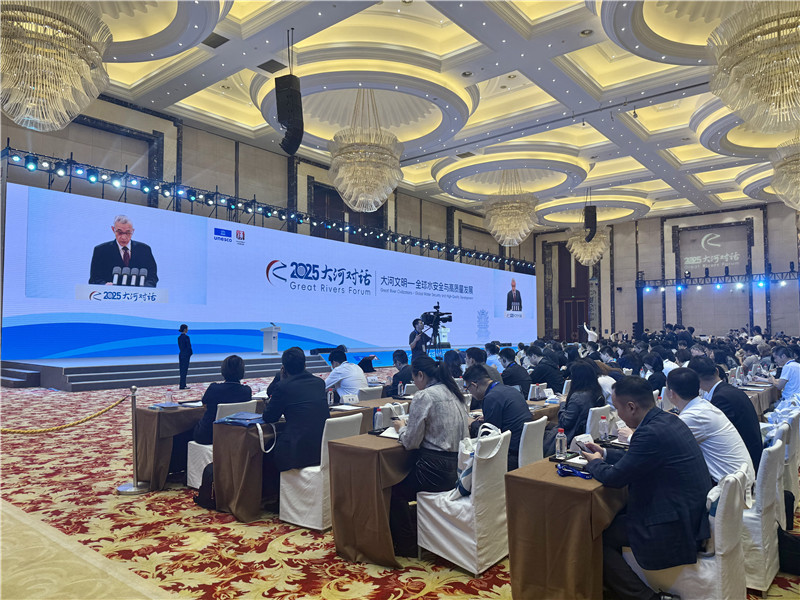
聚全球智慧 论大河文明
Xin Hua She· 2025-09-27 01:45
Core Viewpoint - The "2025 Great River Dialogue" held in Wuhan focuses on global water security and high-quality development, emphasizing China's commitment to water resource protection and international cooperation in water governance [1][2]. Group 1: Event Overview - The event gathered over 40 international experts from more than 20 countries and regions, along with around 200 representatives from domestic universities and research institutions [1]. - The forum serves as an important international cultural exchange platform for showcasing river civilization, promoting sustainable development, and facilitating cross-national cooperation [2]. Group 2: Key Messages from Officials - The Secretary of the Hubei Provincial Committee highlighted the significance of the Yangtze River in promoting sustainable development and shared experiences in water safety and ecological governance [2]. - The UNESCO Deputy Director-General emphasized the historical role of rivers in trade and technology, calling for new partnerships to address increasing global droughts and floods [2]. Group 3: Strategic Insights from Companies - The Chairman of China Three Gorges Corporation noted the strategic shift from construction to management and protection of the Yangtze River, aiming to share China's water governance wisdom globally [3]. - The dialogue aims to enhance cultural exchange and cooperation among river basins, contributing to the sustainable development of cities along major rivers [3].
从黄金水道到文明桥梁
Ren Min Ri Bao Hai Wai Ban· 2025-09-25 22:52
Core Points - The article discusses the significance of rivers, particularly the Yangtze River and the Nile, in shaping ancient civilizations and their cultural heritage [8][12][19] - It highlights the importance of water management tools like the White Crane Beam in China and the Nile Gauge in Egypt, showcasing their roles in agricultural planning and disaster prevention [11][17] - The article emphasizes the ongoing dialogue and collaboration between China and Egypt regarding cultural heritage preservation and ecological sustainability [16][18] Group 1: Historical Significance of Rivers - The Yangtze River and other major rivers have been crucial in the development of ancient civilizations, providing resources and facilitating trade [8][12] - Historical examples include the agricultural innovations and urban planning in ancient Mesopotamia, Egypt, and the Indus Valley, all of which were influenced by river systems [7][9][13] Group 2: Water Management Tools - The White Crane Beam in Chongqing has been used for over 1200 years to monitor water levels and predict agricultural outcomes, demonstrating ancient Chinese wisdom in water management [9][10] - The Nile Gauge, built in 861 AD, served a similar purpose in Egypt, measuring water levels to predict harvests and adjust taxes accordingly [11][12] Group 3: Cultural Exchange and Collaboration - The article discusses the potential joint application for UNESCO World Heritage status for the White Crane Beam and the Nile Gauge, symbolizing a shared cultural heritage [16] - It highlights the importance of cross-cultural dialogue and cooperation in addressing contemporary challenges such as climate change and water resource management [17][18] Group 4: Ecological and Cultural Sustainability - The Yangtze River is positioned as a vital ecological and cultural resource for China, with ongoing efforts to restore its environment and promote sustainable development [17][19] - The article suggests that the shared experiences of river civilizations can inform global strategies for ecological preservation and cultural heritage protection [18][19]

武汉又将举办这一盛会,20多个国家都参与
Chang Jiang Ri Bao· 2025-09-19 09:25
Core Points - The "Great River Dialogue" will be held in Wuhan from September 25 to 27, 2025, marking the third time the city hosts this event after 2016 and 2018 [1] - The event is organized by UNESCO and the Wuhan Municipal Government, focusing on topics such as the inheritance and development of river basin civilizations, water resource security, ecological protection, and cultural exchange [4] Group 1 - The event will last for three days and will include the release of a think tank research report titled "Showcasing Achievements in Yangtze River Governance and Its Global Significance" [4] - Two parallel forums will be held on "Sustainable Development of River Civilization in the Digital Age" and "Expression of River Civilization in National Cultural Park Construction," along with a high-level roundtable on "Ecological Protection of River Civilization: Case Sharing and Experience Learning" [4] - The dialogue will emphasize "River Civilization - Global Water Security and High-Quality Development," with high international participation from scholars and experts from over 20 countries [4] Group 2 - Wuhan, as a national central city in the central region and a core city of the Yangtze River Economic Belt, plays a crucial role in the inheritance and innovation of Yangtze culture [5] - The city has been enhancing cultural heritage protection and developing immersive cultural experiences related to the Yangtze River, promoting the Yangtze cultural tourism brand [5] - Wuhan is actively advancing the construction of the Yangtze National Cultural Park and is in the process of establishing a theme museum focused on Yangtze culture [5]
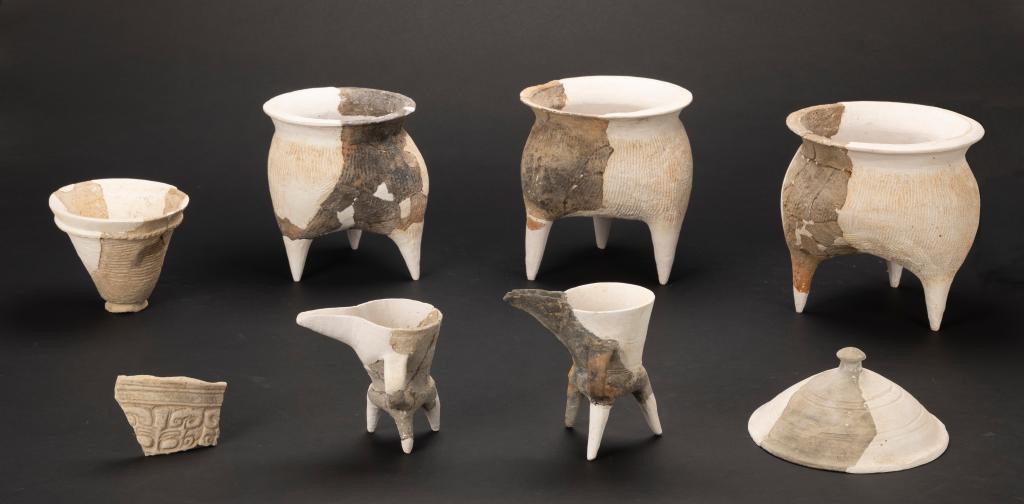
双大河文明绘就湖北盘龙城独特遗存
Xin Hua Wang· 2025-04-29 10:06
Core Insights - The article highlights the significance of the Panlongcheng site as a crucial center of governance during the Xia and Shang dynasties, marking the beginning of the central-local governance model in ancient China [1] - The Panlongcheng site has been recognized as one of the "Top Ten Archaeological Discoveries of 2024," reinforcing its importance in demonstrating that the Yangtze River basin is also a cradle of Chinese civilization [1] - Recent archaeological findings at the Yangjiazhuang area reveal large stone structures dating back to the Middle Shang period, indicating the site's historical significance and its role as a major urban center [2][3] Archaeological Findings - The newly uncovered stone structures at the Yangjiazhuang site measure approximately 81 meters in length and 5 meters in width, showcasing the scale and organized construction typical of the Shang period [2] - This type of stone architecture is the first of its kind discovered in the Yangtze River basin from the Xia and Shang periods, highlighting the importance of the Panlongcheng site in the broader context of ancient Chinese civilization [3] Cultural Significance - The Panlongcheng site evolved into the largest urban center in the middle Yangtze region over its 300-year existence, serving as a direct catalyst for the southward expansion of Shang civilization and the interaction between the Yellow and Yangtze River cultures [3] - The dual river civilization of the Yellow and Yangtze rivers is unique in the world, providing a rich cultural and political landscape that has contributed to the continuity and inclusiveness of Chinese civilization [3] Artifacts and Public Engagement - Significant artifacts, such as a large bronze ding weighing 24.34 kilograms, have been unearthed, showcasing advanced casting techniques of the Shang dynasty and emphasizing the role of Panlongcheng as a key resource distribution hub [6] - The Panlongcheng Archaeological Museum, in collaboration with Wuhan University, has made strides in public engagement and education regarding archaeological findings, aiming to share the stories of the dual river civilization with a global audience [6]