天

Search documents
2026 AWE观察|没有企业能赶上追觅的扩张速度
经济观察报· 2026-03-15 09:41
Core Viewpoint - The article highlights the significant presence and impact of the company追觅 at the 2026 AWE, showcasing its ambition to expand beyond its traditional product offerings and establish itself as a major player in various high-tech sectors [2][3]. Group 1: Exhibition Presence - 追觅 occupies approximately 1/17 of the total exhibition area at AWE 2026, with over 1,200 other exhibitors sharing the remaining space [2]. - The company has set a new record for exhibition scale, surpassing traditional home appliance giants like Haier, which previously dominated the event [2][3]. Group 2: Strategic Goals - 追觅 aims to communicate its broader strategic vision, which includes a diverse range of products beyond vacuum cleaners, such as smartphones, electric vehicles, and advanced robotics [3][4]. - The founder, 俞浩, expresses high expectations for the event, viewing it as a new beginning for the company [2]. Group 3: Product Showcase - The company introduced its AURORA smartphone, with prices ranging from approximately $999 for the base model to $70,000-$80,000 for luxury versions [4]. - 追觅 also displayed a groundbreaking 3D printer with 12 nozzles, surpassing competitors' offerings [5]. Group 4: Technological Advancements - The company unveiled three self-developed chips for intelligent driving, utilizing a 2nm process, which significantly outperforms the average capabilities of mainstream competitors [7]. - The chips' AI computing power reaches 2000 TOPS, three times that of leading competitors [7]. Group 5: Marketing and Engagement - 追觅's exhibition strategy included high-profile celebrity endorsements and a significant budget for booth construction, with costs reaching 70 million yuan for the E7 pavilion alone [3]. - The event attracted large crowds, indicating strong consumer interest and engagement with the brand [3].


华商基金陈恒:2026年A股主线或趋于多元 关注有色电力化工航空等板块
Xin Lang Cai Jing· 2026-02-11 01:31
Core Insights - The article features insights from Chen Heng, a fund manager with 17.4 years of experience in the securities industry, focusing on his investment philosophy and market outlook as the new year approaches [1][5]. Investment Philosophy - Chen Heng aims to balance between "optimal decision-making" and "satisficing decision-making," seeking to avoid both perfectionism and mediocrity while focusing on long-term growth potential, reasonable valuations, and controllable risks [3][9]. - The investment approach emphasizes the importance of deep cognitive understanding over mere speed of information acquisition, advocating for a stable mindset throughout market cycles [3][9]. Industry Selection Framework - Chen Heng's investment methodology is based on a five-dimensional framework derived from traditional Chinese wisdom: - "Dao" focuses on quality factors, targeting leading companies with competitive advantages rather than short-term speculative themes [4][10]. - "Tian" involves observing industry cycles, avoiding sectors that lack favorable conditions regardless of their price [4][10]. - "Di" emphasizes reasonable valuation positions to prevent over-investment in overheated sectors [4][10]. - "Jiang" is about selecting true leaders within niche markets [4][10]. - "Fa" refers to the flexible use of various financial instruments for dynamic adjustments and risk management [4][10]. Market Outlook - For 2025, Chen Heng identifies two main themes: non-ferrous metals and AI, predicting that these sectors will perform prominently throughout the year [4][10]. - As market valuations adjust and industry logic evolves, other sectors are expected to reveal improved cost-effectiveness, leading to a more balanced and diverse A-share market [4][10]. Sector Focus - Chen Heng finds the risk-reward ratio in the non-ferrous metals sector attractive due to global demand and value reassessment [5][11]. - Additional sectors of interest include: - Power equipment, which represents a new core competitiveness for Chinese manufacturing and is essential for AI [5][11]. - Chemicals, which may benefit from a dual boost in profitability and valuation due to commodity reassessment [5][11]. - Aviation, which is experiencing improvements in supply-demand dynamics and overall industry recovery [5][11].

1月10日晚间央视新闻联播要闻集锦
Yang Shi Xin Wen Ke Hu Duan· 2026-01-10 12:52
Group 1 - The core viewpoint emphasizes the necessity of accelerating rural revitalization in China, particularly through the development of industries that enrich the population, as highlighted by General Secretary Xi Jinping [1][5] - Various regions are leveraging local advantages to strengthen characteristic industries and promote comprehensive rural revitalization [1][5] Group 2 - The anti-corruption campaign remains a top priority, with a commitment to maintaining strategic determination and a high-pressure stance, ensuring continuous progress in the fight against corruption [2][6] - The Central Commission for Discipline Inspection and local supervisory bodies are dedicated to deepening the anti-corruption struggle with unwavering perseverance [2][6] Group 3 - The Guangdong-Hong Kong-Macao Greater Bay Area is experiencing rapid development in the low-altitude economy, with increased operations of drone logistics and accelerated intercity routes, indicating the emergence of a trillion-yuan market [1][8] - The construction of an integrated natural disaster monitoring system is planned for the 14th Five-Year Plan period, aimed at enhancing comprehensive risk monitoring and early warning capabilities [1][11]
“七下八上”防汛关键期:留意手机卫星地图里的白色图斑
Ke Ji Ri Bao· 2025-08-06 05:33
Core Viewpoint - The article emphasizes the importance of effective monitoring and prevention of geological disasters during the critical flood period in China, utilizing a combination of technological and human resources for disaster management [1][2][3]. Group 1: Monitoring Methods - The monitoring methods for geological disasters are categorized into four types: "Sky," "Air," "Ground," and "Human" [2]. - "Sky" refers to satellite remote sensing, which allows individuals to check for unusual land features using satellite maps [2]. - "Air" involves aerial remote sensing through drones, which can provide detailed observations of hard-to-reach areas [2]. - "Ground" monitoring includes the use of instruments like crack meters and infrasound devices to detect signs of landslides and mudflows [2]. - "Human" monitoring relies on local residents and tourists to report any signs of geological changes [2]. Group 2: Effectiveness and Public Awareness - The implementation of these monitoring methods has led to significant achievements in disaster prevention, such as a successful evacuation in Danba County, Sichuan, after a warning about mudflow signs [3]. - Public awareness is crucial; individuals are advised to stay informed about weather forecasts and avoid dangerous areas during heavy rainfall [3].
甘怀真:天下是神域,不是全世界
Xin Lang Cai Jing· 2025-05-07 03:07
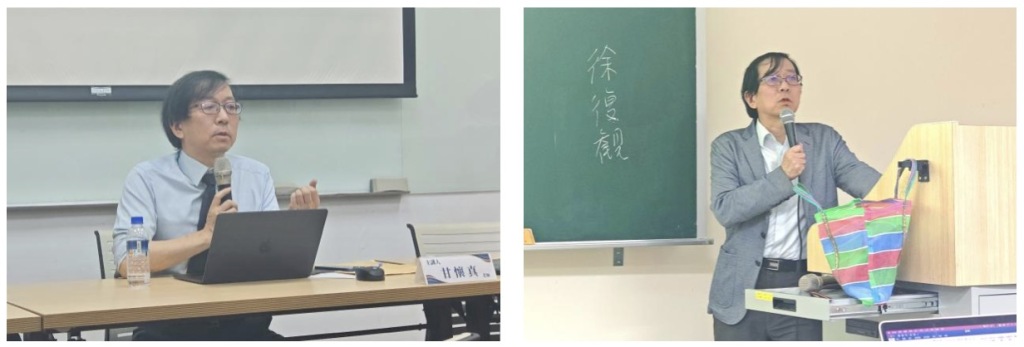
Academic Context and Research Approach - The author supplements the historical methodology of the "Historical Materialism School" by emphasizing the importance of utilizing existing historical materials to construct new theories, even in the absence of new archaeological findings [4] - The author reflects on the question of why China exists and maintains a vast territory, influenced by the recent discourse on "China's resurgence" [5] - The author acknowledges the impact of the study of ancient Chinese autocratic regimes from a socio-economic perspective, while also recognizing the significance of analyzing historical perspectives on the concept of "state" [5][6] Key Concepts in the Book - The author argues that the early concept of "Tian" (heaven) and "Tianxia" (under heaven) differs significantly from later Confucian interpretations, suggesting a more religiously colored understanding in early contexts [8] - The author critiques mainstream historical interpretations that overlook the religious dimensions of ancient Chinese culture, emphasizing the need to recognize the state's engagement with religion through rituals like the "sacrificial rites" [7][9] - The book reinterprets key historical texts to clarify the evolution of the concept of "Tian" from the Shang to the Zhou dynasty, highlighting the transition from ancestor worship to a more universal deity [9][10] Evolution of State Religion - The author discusses the multi-faceted development of religious beliefs during the Warring States period, suggesting that the emergence of polytheistic practices was influenced by Hellenistic theology [11] - The author posits that the Qin dynasty's adoption of the title "Emperor" reflects a direct manifestation of state religion, contrasting it with the unchanging nature of the Zhou's supreme deity [11] - The author concludes that the formation of state sacrificial rites during the Han dynasty marks a significant point in the evolution of ancient Chinese religious thought, which continued to adapt in response to changing political landscapes [12] Dialogue and Discussion - The discussions following the presentations highlight the need for a nuanced understanding of the concept of "Tian" and its relationship with religion, emphasizing the historical context in which these ideas developed [13] - The dialogue also explores the impact of cultural exchanges on the evolution of ancient Chinese civilization, suggesting that cultural changes are often influenced by external factors [14] - The discussions further address specific issues raised in the book, including the monopolization of religious practices by political authorities and its implications for the understanding of state religion [15]