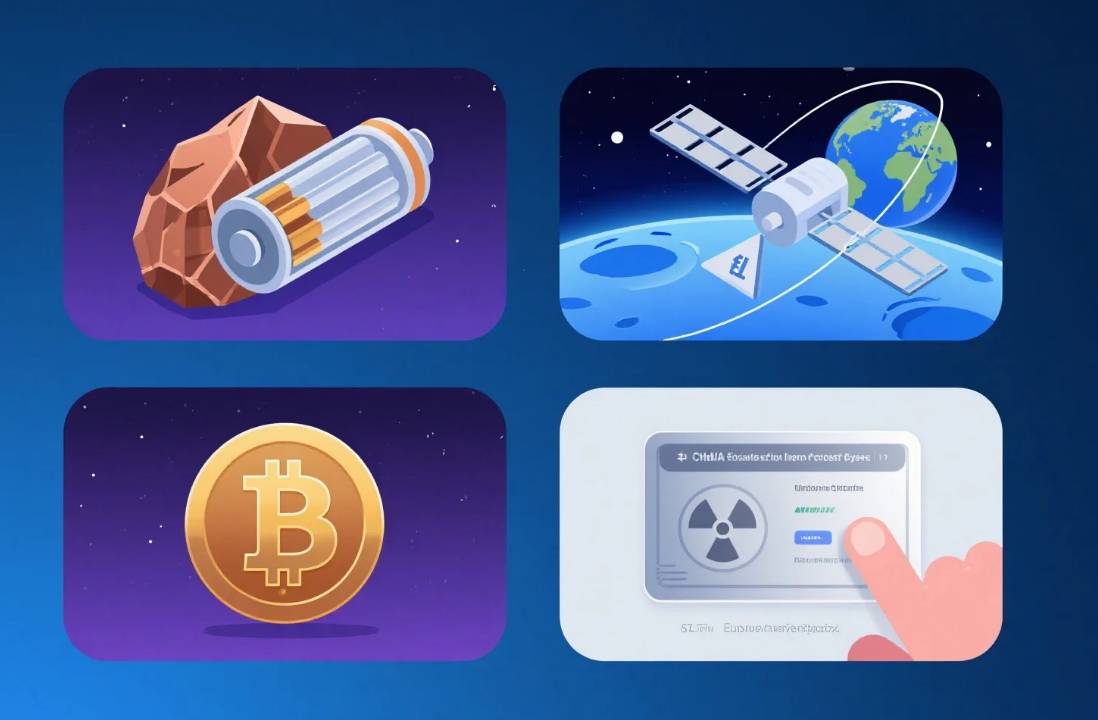
太空资产证券化

Search documents
银河航天公共事务总经理徐颖:技术创新与金融创新需深度结合
2 1 Shi Ji Jing Ji Bao Dao· 2025-11-26 07:15
Core Viewpoint - The development of the commercial aerospace industry heavily relies on financial support, which is crucial for the construction of new space infrastructure and requires continuous investment, particularly patient capital [2][3]. Group 1: Industry Insights - The commercial aerospace and satellite internet sectors are characterized as strategic emerging industries with high technical barriers, necessitating sustained financial investment [2]. - The Chinese government has encouraged private capital participation in national civil space infrastructure since 2014, marking the beginning of commercial aerospace development in China [2]. - The overall industry development is positive, supported by increasing financial institution participation and collaboration, creating a favorable environment for technological enterprises [3]. Group 2: Company Development - Galaxy Aerospace has successfully launched 35 advanced satellites, covering various types such as communication and remote sensing, and has validated satellite internet applications both domestically and internationally [1]. - The company has evolved from relying on venture capital in its early stages to utilizing diversified financial tools, including equity financing and local industry funds, as it matures [2]. - The introduction of the Nantong Development Zone Intelligent Manufacturing Industry Investment Fund has provided financial support for capacity enhancement and optimization of satellite mass production technology [3]. Group 3: Technological and Financial Innovation - There is a significant need for deep integration of technological and financial innovation, especially as new asset forms emerge in the satellite sector, with the global satellite count increasing from over 1,000 a decade ago to more than 10,000 today [3]. - The development of financial instruments backed by satellite assets and the promotion of space asset securitization require active participation from financial institutions and policy support [3]. - The company has implemented AI and automation in satellite monitoring, significantly reducing labor costs and enhancing production efficiency [3][4]. Group 4: Cost Management Strategies - The company emphasizes careful assessment of financial conditions when planning capacity expansion to ensure that funding capabilities align with growth rates [5]. - Continuous communication with financial institutions and awareness of national policies are crucial for effectively utilizing diverse financing tools [5].
隐秘的财富方舟:全球动荡中寻找新避险圣地的深层逻辑
Sou Hu Cai Jing· 2025-04-30 22:57
Core Viewpoint - The article discusses the evolution of safe-haven assets in the context of a complex global economic environment, highlighting the shift from traditional assets like gold to new alternatives such as energy metals and digital currencies [2][3]. Group 1: Evolution of Safe-Haven Assets - Historical evolution of safe-haven tools has undergone three revolutions, indicating a shift from physical assets to digital consensus [2]. - The current market faces a contradiction where the collapse of the old system outpaces the establishment of a new order, forcing capital to seek temporary refuge [2]. Group 2: New Types of Safe-Haven Assets - Energy metals are emerging as hard currencies in the context of green inflation, with global clean energy investment surpassing fossil fuels at $1.8 trillion [3]. - The financial attributes of these metals are strengthening, as evidenced by the correlation of copper inventory to price dropping from 0.68 to 0.21, indicating a shift towards strategic reserve asset logic [3]. - Bitcoin's institutional holding has reached 36%, but its high annual volatility of 48% still deters conservative investors, leading to the emergence of new crypto assets that aim to differentiate between risk and safe-haven assets [3]. Group 3: Alternative Sovereign Assets - The decline of traditional safe-haven currencies like the Japanese yen and Swiss franc is noted, with small country currencies rising due to resource endowment and digital infrastructure [4]. - The total market capitalization of cryptocurrencies has surpassed $4 trillion, making it comparable to the fourth-largest stock market globally [4]. - The demand for lithium is projected to grow 42 times by 2030, with 70% of reserves concentrated in "lithium triangle" countries [4]. Group 4: Capital Flows and Sovereign Wealth Funds - Tracking global sovereign wealth funds reveals a trend of seeking new frameworks for risk diversification as traditional asset correlations rise above 0.8 [4]. - The Norwegian government pension fund has increased its copper futures allocation from 0.3% to 2.1% [5]. - Saudi Arabia's Public Investment Fund is establishing a $30 billion space technology fund, indicating a strategic shift towards innovative asset classes [5]. Group 5: Survival Strategies in the New Safe-Haven Era - Investors are advised to build a three-dimensional defense system, focusing on risk, time, and space dimensions [5]. - Short-term strategies include increasing exposure to energy metal ETFs and digital stablecoins, while long-term strategies involve investing in disruptive technologies like nuclear fusion and quantum computing [5]. - Geographic safety zones should maintain a minimum of 15% in physical assets, with digital asset wallets diversified across at least three jurisdictions [5].