
太阳能利用

Search documents
马斯克重磅预言:太空数据中心成本最低 Optimus明年开卖
证券时报· 2026-01-23 04:49
Group 1: Robotics - The robotics industry is expected to thrive, with humanoid robots becoming standard in households, addressing labor shortages in caregiving and other essential areas [2] - Elon Musk predicts that the number of robots will surpass humans, leading to a redefinition of traditional work and human existence [2] - Tesla's humanoid robot, Optimus, is projected to be available for public sale by the end of 2027, with a goal of producing billions of units at low costs to meet human needs [2] Group 2: Energy - Musk identifies electricity as the primary bottleneck for AI development, rather than chip production, with global electricity supply growing at only 3%-4% annually [3] - China leads in solar energy production, with an annual capacity of 1500 GW and deployment exceeding 1000 GW, contributing approximately 250 GW of stable electricity each year [3] - A proposed solar panel area of 100 miles by 100 miles could supply all of the United States' electricity needs, highlighting the potential of solar energy [3] Group 3: Space Exploration - Musk envisions that within 2-3 years, space will become the most cost-effective location for deploying AI data centers due to the efficiency of solar energy in space [5] - The development of fully reusable rockets, such as SpaceX's Starship, is crucial for reducing the cost of access to space by 100 times [5] - SpaceX aims to launch solar-powered AI satellites in the coming years, with a long-term goal of establishing a multi-planetary species [5] Group 4: Autonomous Driving - Full Self-Driving (FSD) technology is claimed to be essentially solved, with some insurance companies recognizing its safety and offering reduced rates for FSD users [6] - Tesla has begun deploying Robotaxi services in several cities, with plans for broader coverage by the end of the year [6] Group 5: Longevity and Exploration - Musk believes that reversing aging is a solvable issue, as aging appears to be synchronized across the body's cells [7] - He warns that achieving immortality could lead to societal stagnation, emphasizing the importance of curiosity and exploration in human life [7] Group 6: Overall Vision - Musk's dialogue presents a comprehensive engineering roadmap where AI surpasses human intelligence, driven by abundant electricity from solar energy, with space as the optimal environment for energy utilization [8] - The integration of robotics, energy solutions, and space exploration is aimed at ushering humanity into an era of abundance while addressing the risks associated with technological advancements [8]


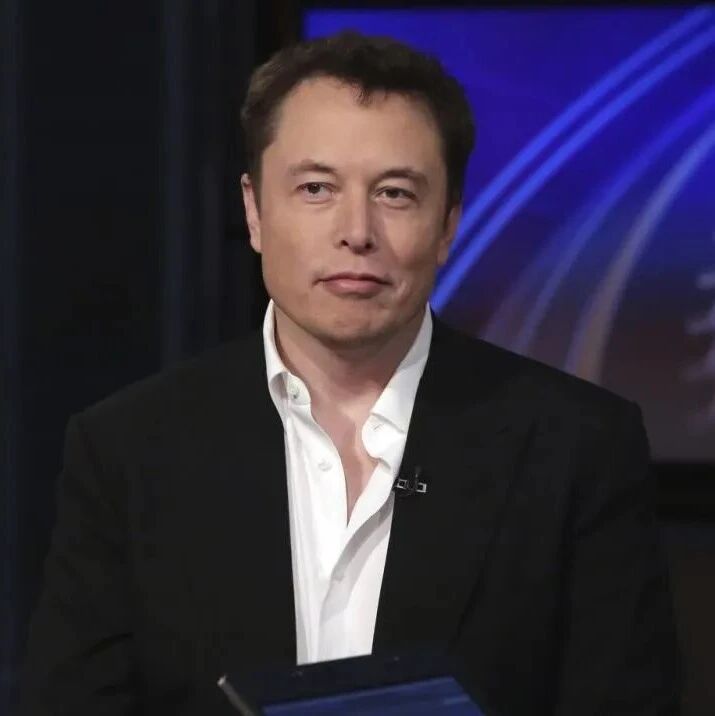
马斯克称合理目标是获得太阳能量的百万分之一
Xin Lang Cai Jing· 2026-01-07 07:16
Core Viewpoint - Elon Musk emphasizes the importance of solar energy in achieving a Type II Kardashev civilization, suggesting that even a fraction of solar energy utilization could vastly exceed current energy production capabilities [1] Group 1: Solar Energy Utilization - Musk states that humanity is progressing towards a Type II Kardashev civilization, which relies heavily on solar energy [1] - He mentions that achieving just one-millionth of solar energy utilization could provide over 1000 times the energy currently available on Earth [1] - Currently, only about one five-hundred-millionth of solar energy reaches Earth, indicating a significant gap to reach the proposed goal [1] Group 2: Future Goals - Musk proposes that a reasonable target is to strive for one-millionth of solar energy utilization, highlighting the need for substantial advancements in solar technology [1] - He notes that humanity is still very far from utilizing even one-billionth of solar energy, emphasizing the challenges ahead [1]

太空电站:点亮未来的“宇宙灯塔”
Qi Lu Wan Bao· 2025-09-19 16:29
Core Viewpoint - The development of space-based solar power stations is seen as a crucial solution to the energy crisis of the 21st century, leveraging the abundant solar energy available in space compared to terrestrial limitations [1][2]. Group 1: Reasons for Building Space Power Stations - Space power stations aim to efficiently harness solar energy by relocating solar power generation to space, where solar energy is less affected by atmospheric conditions and can achieve higher power output [1]. - Estimated power generation capabilities indicate that solar panels in geostationary orbit can produce 10-14 kW per square meter, significantly higher than the 0.4 kW in China's northwest region and 7-8 kW in the stratosphere [1]. Group 2: Technical Challenges - Constructing a space power station presents multiple technical challenges, including the need for a structure equivalent to 1,400 football fields, with a power output in the megawatt range and a lifespan of over 30 years [3]. - Key areas requiring breakthroughs include materials, transportation, spacecraft control, in-orbit assembly, and maintenance [3]. - The concept of using numerous small satellites to assemble large solar power systems or employing 3D printing in space for manufacturing is suggested as potential solutions [3]. Group 3: Advantages of Space Power Stations - Space power stations can provide targeted power supply to remote areas, disaster zones, and critical facilities without relying on large-scale power grids, enabling mobile charging solutions for electric vehicles [2]. - The ability to collect and utilize solar energy on a large scale without interference from weather or geographical factors positions space power stations as a viable alternative to traditional energy sources, comparable to nuclear power plants in output [1].
在离太阳最近的地方“发热”
Shan Xi Ri Bao· 2025-08-25 00:51
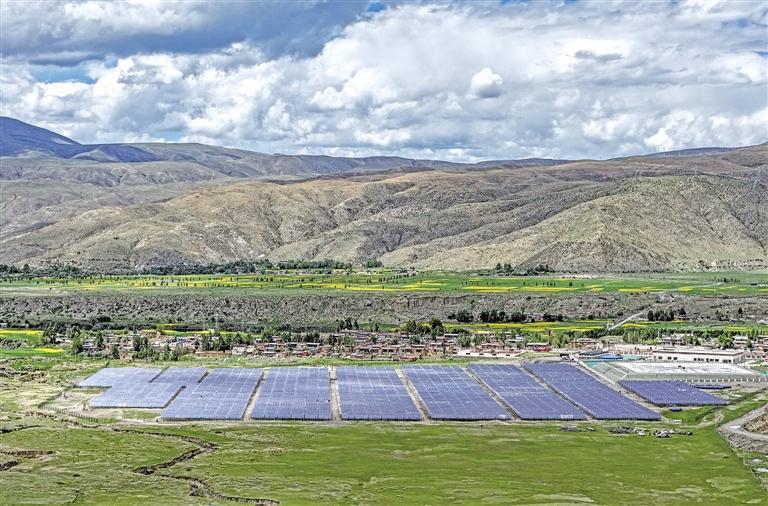
Core Viewpoint - The article highlights the development and implementation of solar energy heating systems in Tibet, emphasizing the importance of utilizing local solar resources to improve living conditions in the region [1][10][21]. Group 1: Research and Development - The research team, led by Liu Jiaping and Liu Yanfeng, faced numerous challenges in developing a solar heating system suitable for the harsh conditions of the Tibetan Plateau [5][6][15]. - Over a span of ten years, the team conducted extensive field research and testing, overcoming technical difficulties related to solar energy collection, storage, and distribution [7][16][26]. - The team developed large solar collectors that convert solar energy directly into heat, which is then stored for winter heating [16][21]. Group 2: Project Implementation - In 2018, the first large-scale solar heating demonstration project was completed in Langkazi County, covering an area of 23,000 square meters and capable of heating over 110,000 square meters of residential space without using coal, gas, or electricity [21][27]. - The project has achieved a 100% operational guarantee over four years, resulting in a reduction of 13,000 tons of carbon dioxide emissions annually [22][27]. - The research team has assisted in establishing over 30 solar heating pilot projects across various regions in Tibet, benefiting more than 500,000 residents [27]. Group 3: Future Prospects - The team aims to expand solar heating solutions across Tibet, with plans to integrate additional functionalities such as oxygen supply and humidity control to enhance living conditions [27]. - The ongoing efforts and innovations in solar energy technology are expected to lead to widespread adoption of solar heating systems in suitable areas of Tibet within a few years [27].
海尔申请太阳能随动控制系统等相关专利,能够为空调机房提供稳定的电能供应
Jin Rong Jie· 2025-07-26 01:41
Core Insights - The State Intellectual Property Office of China has reported that Qingdao Haier Air Conditioning Electronics Co., Ltd., Qingdao Haier Air Conditioning Co., Ltd., and Haier Smart Home Co., Ltd. have applied for a patent titled "Solar Tracking Control System, Solar Tracking Control Method, and Electronic Device" with publication number CN120371027A, filed on December 2024 [1] - The patent describes a solar tracking control system that includes a servo subsystem, an analog signal subsystem, and a spatiotemporal scheduling subsystem, which work together to optimize the angle of solar panels based on light intensity and current spatiotemporal information [1] Company Overview - Qingdao Haier Air Conditioning Electronics Co., Ltd. was established in 1999 in Qingdao, primarily engaged in the manufacturing of specialized equipment, with a registered capital of approximately 9.67 billion RMB. The company has invested in 15 enterprises and participated in 4,353 bidding projects, holding 127 trademark records and 5,000 patent records [2] - Qingdao Haier Air Conditioning Co., Ltd. was founded in 1996 in Qingdao, focusing on the manufacturing of electrical machinery and equipment, with a registered capital of approximately 9.36 billion RMB. The company has invested in 19 enterprises and participated in 3,430 bidding projects, holding 259 trademark records and 5,000 patent records [2] - Haier Smart Home Co., Ltd. was established in 1994 in Qingdao, also engaged in the manufacturing of electrical machinery and equipment, with a registered capital of approximately 94.38 billion RMB. The company has invested in 58 enterprises and participated in 1,698 bidding projects, holding 285 trademark records and 5,000 patent records [2]
