
奢侈品消费性价比

Search documents
权威机构入局激活消费 奢侈品市场复苏,消费价值观重塑
2 1 Shi Ji Jing Ji Bao Dao· 2026-01-04 00:32
Core Insights - The luxury goods market is showing signs of moving towards a new balance after experiencing structural adjustments and pain points, with a stable total sales figure of approximately €1.44 trillion, projected to grow to between €2.2 trillion and €2.7 trillion by 2035 [1] Group 1: Market Recovery - The luxury goods industry has shown signs of recovery since Q3 2025, with major luxury groups identifying the Greater China region as the core driver of performance improvement [2][4] - Brands like Burberry and Prada have reported significant sales growth in the Greater China region, with Burberry's comparable sales increasing by 3% and Prada's Asia-Pacific revenue growing by 10% in Q3 [4] Group 2: Consumer Behavior Changes - Consumer demand is shifting towards personalization, diversity, quality, and cost-effectiveness, particularly among younger generations, indicating a change in purchasing logic from brand logos to unique value and experiences [2][6] - Nearly half of luxury consumers believe that brand prices are inflated and are unwilling to pay for brands that frequently raise prices, marking a transition to a focus on cost-effectiveness [6] Group 3: Discount Channels and Trust Issues - Discount channels are experiencing significant sales growth, with platforms like Vipshop reporting a 30% year-on-year increase in luxury goods sales from January to September [6] - The trust issue surrounding discounted luxury goods is a major concern for consumers, necessitating the involvement of independent third-party verification agencies to ensure authenticity [11] Group 4: Role of Third-Party Verification - The establishment of a trust environment through authoritative third-party involvement, such as China Inspection, is crucial for promoting luxury goods consumption [12] - The collaboration between China Inspection and Vipshop to provide pre-sale inspections of luxury goods is a significant development in the industry [11][12] Group 5: Future Market Dynamics - The luxury market is entering a more complex and healthier phase, balancing brand aspiration with the need for a trust system and pricing pathways to meet increasingly discerning consumer demands [12][13] - The future attractiveness of luxury brands will depend on their ability to find a balance between quality, experience, and price [13]
奢侈品市场复苏,消费价值观重塑
2 1 Shi Ji Jing Ji Bao Dao· 2025-12-30 23:14
Group 1 - The luxury goods market is showing signs of moving towards a new balance after experiencing structural adjustments, with total sales remaining stable at approximately €1.44 trillion, and projected growth to €2.2 trillion to €2.7 trillion by 2035 [1][2] - The Greater China region is viewed as the core engine driving the recovery of luxury brands like LVMH and Burberry, with significant improvements in their performance since Q3 2025 [2][3] - Consumer demand is shifting towards personalized, diversified, high-quality, and cost-effective products, indicating a change in purchasing logic among younger generations [1][3] Group 2 - The luxury goods market is gradually recovering from post-pandemic consumption fatigue, with major luxury groups reporting positive trends in the Greater China market, leading to reduced revenue declines or positive growth [2][3] - Nearly half of luxury consumers believe that brand prices are inflated and are unwilling to pay for frequently increasing prices, indicating a shift towards value and experience over brand logos [3][4] - Discount channels are experiencing significant sales growth, with platforms like Vipshop reporting a 30% year-on-year increase in luxury goods sales from January to September [3][4] Group 3 - Trust issues regarding discounted luxury goods are prevalent, as consumers question the reliability of purchasing from discount channels [4][5] - The establishment of a third-party inspection agency, such as China Inspection, is crucial for building consumer trust in discounted luxury products, as it provides authoritative verification [5][6] - The luxury market is entering a more complex and healthier phase, balancing brand aspiration with the need for a trust system and pricing pathways to meet increasingly discerning consumer demands [5][6]
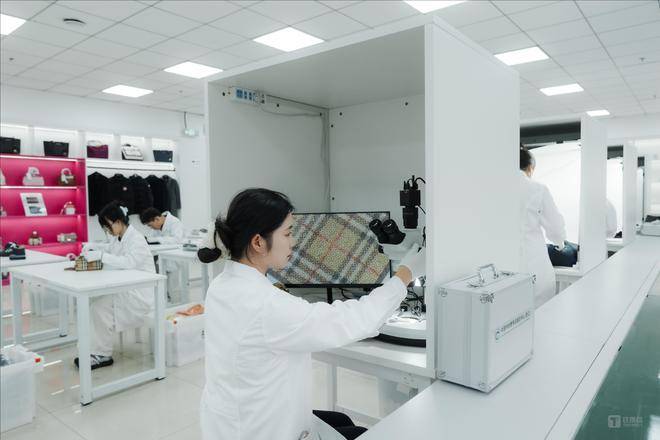
中国中检驻仓全检,“又好又省”或成奢侈品消费主流
Sou Hu Cai Jing· 2025-11-24 13:41
Core Insights - The luxury goods consumption landscape is shifting towards a focus on quality and value, driven by changing consumer preferences and government initiatives to promote quality e-commerce [3][4][5] Group 1: Market Trends - The luxury goods market is experiencing a significant transformation, with a shift in consumption focus from the West to China, which is projected to capture 25% of the global luxury market by 2030 [4] - Discount channels are becoming increasingly popular, with sales in discount luxury goods rising by 30% year-on-year in the first nine months of the year [7][8] - Consumers are prioritizing high cost-performance luxury goods, indicating a move away from the traditional mindset of "brand supremacy" to a more rational evaluation of price, service, quality, and practicality [5][8] Group 2: Quality Assurance Initiatives - The partnership between China Inspection and Testing Institute (CITI) and the discount e-commerce platform Vipshop aims to enhance the quality assurance of luxury goods through independent and comprehensive authentication [3][8] - CITI's involvement includes a rigorous inspection process where each luxury item is evaluated by three independent appraisers, ensuring a high level of trust and credibility in the quality of products sold on e-commerce platforms [8] - The trend towards "good and affordable" luxury goods is expected to become mainstream, as consumers increasingly seek both quality and value in their purchases [8]


下降17 24年奢侈品牌在中国迎来“至暗时刻”
Zhong Guo Jing Ying Bao· 2025-04-18 12:59
Group 1 - The luxury goods industry is experiencing its first pause after years of rapid growth, with the Chinese market facing negative growth for the first time [1][2] - In 2024, the global luxury goods market achieved a 3% growth, reaching a market size of 28,049 billion RMB, while the Chinese luxury market recorded a -3% growth, totaling 10,107 billion RMB [2] - The share of Chinese luxury consumption in the global market decreased from 38% to 36%, indicating a weakening relative influence of Chinese consumers [2][3] Group 2 - The domestic luxury market in China saw a significant decline of 17%, with sales dropping to 5,044 billion RMB, and the online sales decreased by 5% to 2,375 billion RMB, while offline sales fell by 25% to 2,752 billion RMB [2] - The online sales now account for 46% of the total luxury market sales in China, highlighting a clear trend towards online consumption [2] - The proportion of luxury consumption within China decreased from 58% to 51%, while overseas consumption increased from 42% to 49%, indicating a shift in consumer behavior towards international markets [3] Group 3 - The counterfeit luxury goods market in China has surged, reaching approximately 2,000 billion RMB, with the visibility of counterfeit goods being six times that of genuine products [3] - The luxury goods industry is expected to face challenges in 2025, with predictions of continued negative growth in the Chinese market, estimated at around -5% [4] - The online luxury consumption is projected to surpass offline sales for the first time, driven by digitalization and changing consumer preferences [4] Group 4 - The "one city, one store, one network" strategy is becoming a core approach for many luxury brands, especially in emerging and lower-tier markets [5] - The luxury market is expected to see a significant shift, with brands relying on online platforms and experience stores rather than traditional retail [5] - The commercial real estate sector is anticipated to face difficulties, with vacancy rates potentially exceeding 40%, leading to a reevaluation of retail space requirements [5] Group 5 - The VIC group, defined as individuals with a net worth of over 10 million RMB, continues to dominate the luxury goods market, contributing 86% of luxury consumption despite only representing 6% of the consumer base [6] - The average annual luxury consumption per VIC individual is over 194,900 RMB, showing a slight increase from the previous year [6] - There remains significant potential for growth within the VIC group, as 78% of them are not yet heavy consumers of luxury brands, indicating room for market expansion [6] Group 6 - The VIC group also plays a crucial role in other consumption sectors, contributing over 50% of spending in health, education, and high-end tourism [7] - The luxury consumption of the VIC group is entering a phase focused on value for money, with various factors influencing purchasing decisions [7] - The shift towards a more rational assessment of product, service, and brand value is changing the landscape of luxury consumption in China [7] Group 7 - The future of mass consumption is expected to be more regulated, with large platforms becoming tools for social welfare, making it difficult for brands focused on mass markets to thrive [8] - By 2030, high-end consumption is projected to contribute over 45% of total retail sales, becoming a primary source of profit for many industries [8] - Brands aiming for high-end status must adapt to changing consumer demands and focus on delivering higher quality and unique experiences [8] Group 8 - Many luxury brands will prioritize channel penetration to better serve the VIC group, indicating a strategic shift in market approach [9]