存在

Search documents
鲁敏小说集《不可能死去的人》:遮蔽之下,微光闪烁
Xin Lang Cai Jing· 2026-01-27 11:36
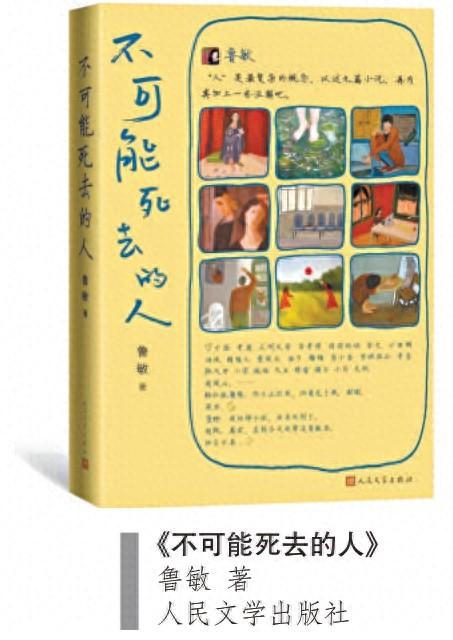
Core Perspective - The article discusses the challenges of writing about contemporary life, emphasizing the difficulty of extracting meaningful narratives from the overwhelming details of daily existence [2] Group 1: Themes in Literature - The collection "The Impossible Dead" by author Lu Min offers insights into contemporary life, capturing the essence of modern experiences through relatable narratives [2] - Lu Min's writing reflects a direct engagement with the present, incorporating elements such as music, literature, and real social events, making her work resonate with both Chinese and international readers [2] Group 2: Exploration of Human Experience - The story "The Seer and His Friends" illustrates the common fascination with fortune-telling, highlighting contemporary individuals' uncertainty about their futures and their desire for certainty [3] - The narrative "Notable Yet Unknown" explores themes of loneliness and hidden connections, depicting a character who receives letters from an anonymous sender, revealing the complexities of human relationships [4] - "Twilight and the Dancing Bear" employs absurdity and metaphor to express the struggles of modern life and the yearning for warmth and connection [4] Group 3: Deeper Reflections on Existence - The titular story "The Impossible Dead" delves into the enduring impact of a deceased friend on the lives of those left behind, illustrating how memories can transcend physical loss [5] - Lu Min's writing avoids grand narratives, focusing instead on the subtle emotional shifts in ordinary people's lives, addressing themes of existence, loneliness, and connection [6] - The narrative emphasizes the importance of understanding individual loneliness and the potential for empathy through shared experiences, suggesting that literature can bridge these gaps [6]

够“狠”的诺奖得主,其实中国人并不陌生
3 6 Ke· 2025-10-10 07:50
Core Viewpoint - The awarding of the 2025 Nobel Prize in Literature to Hungarian author László Krasznahorkai is seen as a recognition of his profound literary contributions that resonate with themes of human existence and the power of art in times of despair [1][3][12]. Group 1: Author Background and Works - László Krasznahorkai is known for significant literary works such as "Satan's Tango" and "The World is Advancing," and has also contributed to screenwriting for films like "The Turin Horse" [3][12]. - His interest in Chinese culture is notable, having traveled to China in the 1990s to retrace the steps of the poet Li Bai, reflecting his appreciation for Eastern classical culture [4][9]. - Krasznahorkai's writing style is characterized by long, complex sentences and a postmodern approach, often exploring dark themes and human flaws [13][26]. Group 2: Themes and Literary Style - His works frequently address the duality of hope and despair, illustrating the cyclical nature of human existence [7][8]. - The overarching theme in Krasznahorkai's literature is the exploration of a "disordered world," with a focus on the essence of existence itself, rather than merely political commentary [14][18]. - Critics describe his style as powerful and bleak, often employing black humor to convey deeper existential questions [16][20]. Group 3: Reception and Impact - The recognition of Krasznahorkai with the Nobel Prize is viewed as a significant endorsement of serious literature, particularly in the context of Eastern European literary contributions [24][25]. - His works have been translated into Chinese, making them accessible to a broader audience, and fostering a connection between Chinese and Eastern European readers [12][14]. - The complexity and depth of his writing present challenges for readers, suggesting that engagement with his work requires a serious commitment [24][30].