
学区房价值

Search documents
出生人口大幅下降,学区房神话将破灭?
Sou Hu Cai Jing· 2026-01-22 21:55
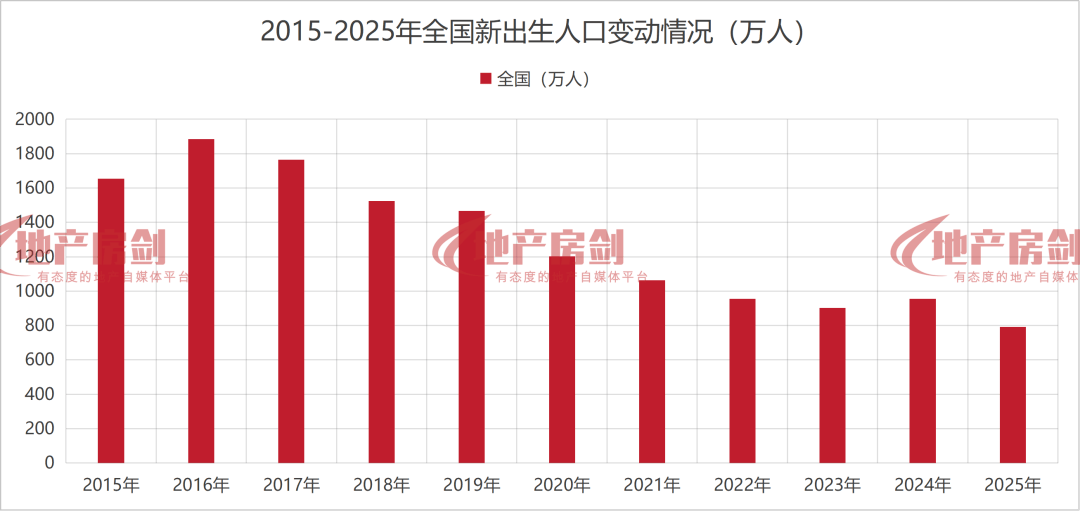
Core Insights - The national birth rate is projected to decline significantly, with 7.92 million births in 2025, a decrease of over 50% compared to the peak of 18.83 million in 2016 [1] - The total population is expected to decrease by 3.39 million in 2025, equivalent to the population of a small city [1] Population Trends - Birth rates are declining, leading to reduced housing demand and a decrease in demand for school district properties [1] - Different cities exhibit varying trends; major cities are experiencing slower declines in birth rates compared to smaller cities [4][7] - Core cities and large cities are still seeing population growth, while smaller cities are facing population declines [4][10] Education Resource Distribution - High-quality educational resources remain scarce in major cities, maintaining the value of school district properties [3][12] - The demand for school placements in major cities continues to grow, while smaller cities see a decrease in demand [12][16] - There is a significant imbalance in the distribution of educational resources, with some schools unable to meet demand while others struggle to fill seats [14][16] Future Outlook - Despite declining birth rates and overall population decreases, the demand for quality education in major cities is expected to remain strong [16] - The trend of population concentration in major cities is likely to continue, reinforcing the value of school district properties in these areas [12][16]

新房卖不动,老破小却被抢破头
盐财经· 2025-11-17 10:40
Core Viewpoint - The article discusses the changing perception of "old and broken small" apartments in the real estate market, highlighting a shift in consumer preference towards these properties as they become more desirable compared to new developments due to various factors including price and location [2][3][8]. Group 1: Market Trends - National statistics show that from January to October this year, the sales area of new residential properties decreased by 6.8% year-on-year, while the transaction area of second-hand homes increased by 4.7%, indicating a growing preference for second-hand properties [5][8]. - In major cities like Shanghai, Shenzhen, and Chongqing, the transaction area of second-hand homes has increased by over 10% year-on-year, reflecting a significant market shift [5][8]. Group 2: Consumer Behavior - Consumers are increasingly opting for "old and broken small" apartments due to their affordability and proximity to urban centers, which offer better access to amenities and reduced commuting times [21][23][50]. - The article highlights individual stories of buyers who prefer "old and broken small" apartments for various reasons, including lower prices, established neighborhoods, and the desire for a more manageable living space [24][30][40][50]. Group 3: Investment Perspective - The article notes that the value logic in real estate is shifting from viewing properties as investment assets to seeing them as durable consumer goods focused on living quality [30]. - The demand for "old and broken small" apartments is partly driven by the scarcity of quality educational resources, making them attractive to families seeking good school districts [32][35].
