
安全与防务伙伴关系

Search documents
印欧突然联手,25%全球GDP要变天?背后博弈太精彩
Sou Hu Cai Jing· 2026-01-28 20:11
Economic Impact - The India-EU free trade agreement is described as the most comprehensive trade liberalization agreement ever signed by India, covering 25% of global GDP and one-third of global trade volume [3] - The agreement will eliminate or reduce tariffs on over 90% of EU goods exports, saving up to €4 billion annually in tariff costs, while over 99% of Indian exports will gain preferential access to the EU market [4] - Specific tariff reductions include a decrease in Indian automobile tariffs from 110% to 10% with a quota of 250,000 vehicles per year, and the near elimination of tariffs on machinery, chemicals, and pharmaceuticals [4] Geopolitical Implications - The agreement is expected to alter the geopolitical landscape in Asia, particularly in the Indo-Pacific region, despite not directly mentioning China [5] - India becomes the third Asian country, after Japan and South Korea, to sign a security and defense partnership with the EU, indicating a strengthening of cooperation in the Indo-Pacific [6] - The language in the agreement regarding a "rules-based international order" and a "free and open Indo-Pacific" subtly contrasts with China's regional cooperation narrative [6] Strategic Negotiations - Indian Prime Minister Modi demonstrated a pragmatic approach during negotiations, balancing market openness with protection for key industries, such as setting quotas for the domestic automobile industry while lowering tariffs [7] - In agriculture, India successfully excluded sensitive products like dairy and grains from market liberalization, showcasing its negotiation strength [8] Comparative Analysis - The breadth of the India-EU agreement surpasses those established by Japan and South Korea, as it encompasses both traditional and non-traditional security areas [9] - The trade complementarity between India and the EU is stronger than that between the EU and Japan or South Korea, with India offering a large consumer market and labor force, while the EU provides advanced technology, capital, and industrial goods [10] - The direct interests in the Indian Ocean region suggest that India-EU cooperation may be more profound and practical compared to EU relations with Japan and South Korea [11] Future Developments - Following the agreement, a series of follow-up actions will commence, including the first round of India-EU security and defense dialogues within a month, and potential Indian participation in EU defense projects [12] - The establishment of an "India-EU Defense Industry Forum" aims to enhance collaboration between military enterprises, alongside deepening cooperation in emerging fields like artificial intelligence and clean technology [12] - The agreement includes provisions to address the EU's carbon border adjustment mechanism, providing more certainty for Indian products entering the EU market [13] - If implemented smoothly, the agreement will create a free trade area covering approximately 2 billion people, fundamentally transforming economic ties across Eurasia [14] - The potential for EU companies to manufacture automobiles in India and for Indian IT professionals to access European markets indicates a forthcoming restructuring of global supply chains [15]

有意“抱团”应对美国,关键领域仍存分歧,印欧今天或敲定自贸协定
Huan Qiu Shi Bao· 2026-01-26 23:09
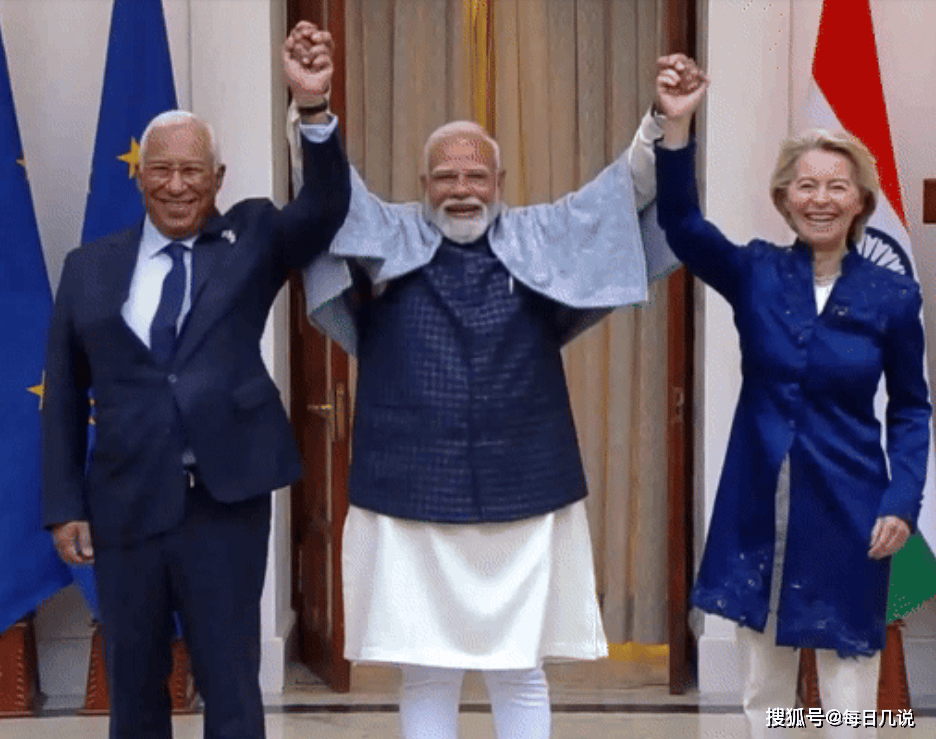
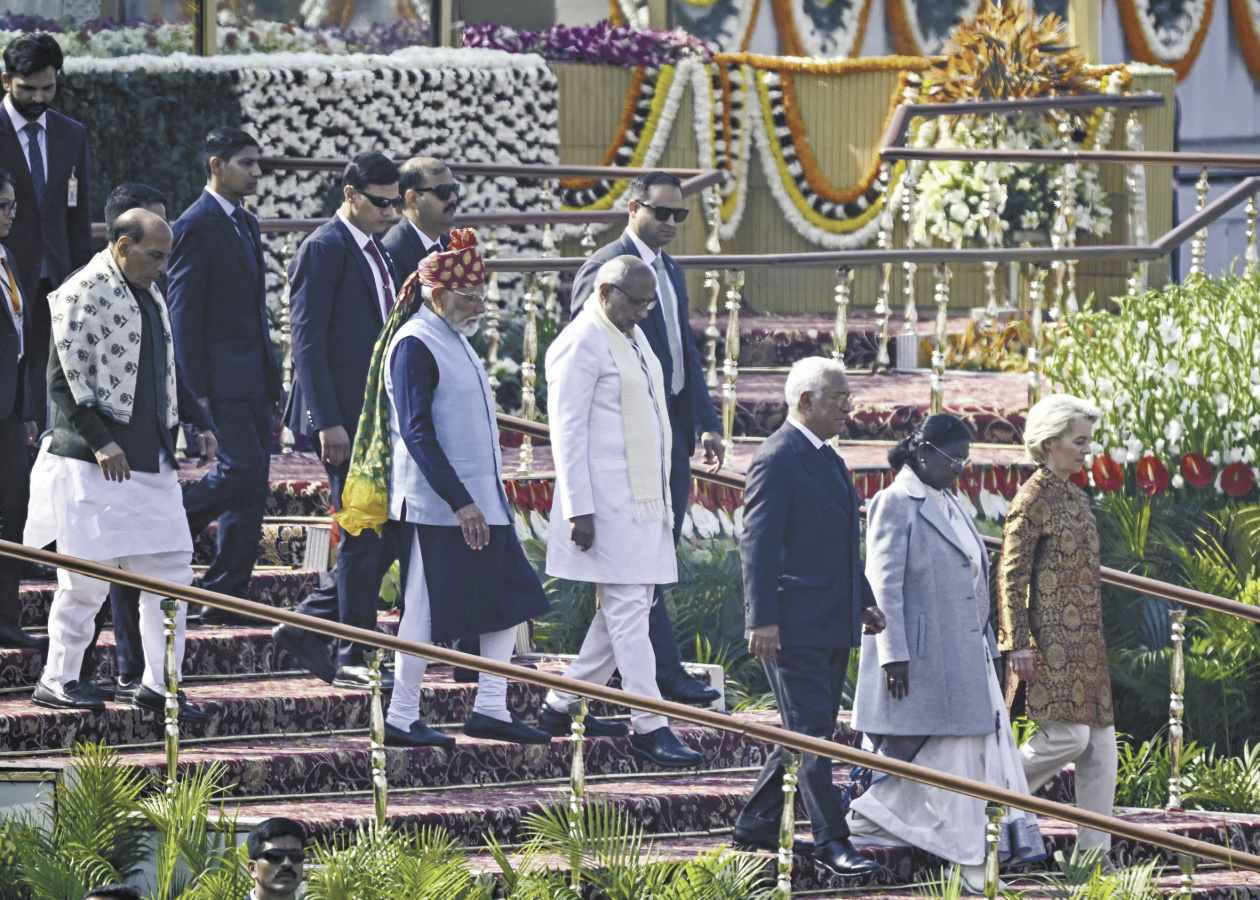
【环球时报驻德国特约记者 青木 环球时报特约记者 余见】据"德国之声"等多家外媒报道,欧盟与印度将于27日在新德里举行峰会,预计将宣布完成长达近 20年的自由贸易协定谈判,并签署一项新的安全与防务伙伴关系协议。欧洲新闻台26日引述欧盟委员会贸易和经济安全委员谢夫乔维奇的话说,这项协定将 创建一个覆盖20亿人口的自由贸易区,它是"有史以来最大的贸易协定"。路透社25日引述消息人士的话披露称,印度计划将欧盟进口汽车关税从最高达 110%的水平削减至40%,这是迄今为止该国开放汽车市场"最激进的举措"。欧盟-印度峰会召开的前一天,欧洲理事会主席科斯塔与欧盟委员会主席冯德莱 恩出席了印度"共和国日"庆祝活动。印度总理莫迪说,这凸显印欧关系日益增强及双方对共同价值观的承诺。而在英国《经济学人》杂志网站看来,印度与 欧盟能够下定决心达成自贸协定,要"归功于"美国政府。 《经济学人》称,印欧自贸协定主要是为了促进长期经济合作。预计双方还将签署一项新的安全与防务伙伴关系协议。"这种伙伴关系显示了更高水平的信 任。"德国马歇尔基金会学者莫汉说。当然,双方依旧存在诸多分歧。俄乌冲突仍在持续,而印度不会削弱与俄罗斯的关系,它同时也 ...
加拿大与欧盟宣布构建未来新型战略伙伴关系 将强化防务合作
Zhong Guo Xin Wen Wang· 2025-06-24 08:59
Group 1 - Canada and the EU announced the establishment of a "future new strategic partnership" and signed a "Security and Defense Partnership" agreement [1][2] - The partnership aims to enhance cooperation in various areas including trade, economic security, digital transformation, and climate change [1][2] - Canada will strengthen its defense relationship with the EU by sending defense representatives and expanding defense capability cooperation [1] Group 2 - The partnership includes commitments to increase trade flow, promote economic security, and enhance cooperation in strategic industries and supply chains [2] - Canada plans to increase military spending to meet NATO's target of 2% of GDP in the current fiscal year [2]