实体商业转型

Search documents
顶奢聚首成风向标,实探三里屯太古里“转身”:零售高端化谋变
Hua Xia Shi Bao· 2026-01-26 06:34
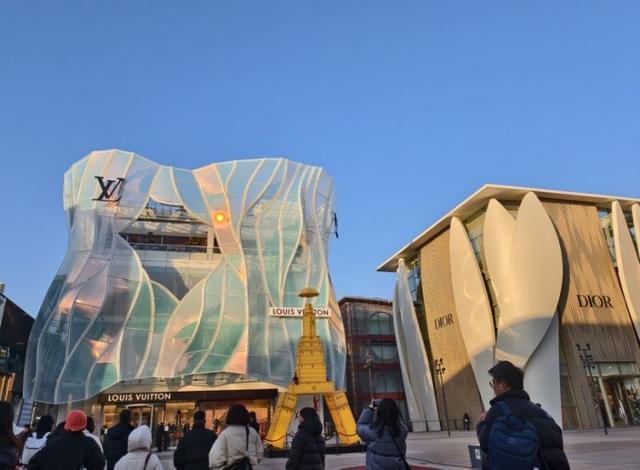
Core Insights - The luxury brand presence in Sanlitun Taikoo Li has significantly increased, with major brands like Dior, Louis Vuitton, and Tiffany & Co. establishing flagship stores, enhancing the area's appeal to younger consumers [2][3] - The strategic upgrade of Sanlitun Taikoo Li, initiated in 2022, aims to optimize brand offerings and improve the overall shopping experience, with nearly half of the commercial space in the North District already renovated [3][4] - The transformation reflects a broader trend in the retail industry, emphasizing the shift from functional consumption to experiential consumption, which is crucial for the survival of physical retail in the face of online competition [5][6] Company Developments - The North District of Sanlitun Taikoo Li is set to feature flagship stores from top luxury brands, with all major openings scheduled for December 2025, indicating a significant investment in high-end retail [3][4] - The ongoing renovations include the reconstruction of the N1 building and enhancements to surrounding community spaces, aiming to solidify Sanlitun Taikoo Li's status as a cultural and shopping landmark [5] - The management emphasizes the need to adapt to changing consumer demographics and preferences, recognizing that the original target audience has evolved over the 17 years since the project's inception [4] Industry Trends - The retail sector is undergoing structural adjustments, with major players like Beijing SKP and Wangfujing also pursuing transformation strategies to remain competitive [5][6] - Experts suggest that the success of Sanlitun Taikoo Li's upgrade serves as a model for other retail spaces, highlighting the importance of lifestyle-oriented transformations and continuous content updates to attract consumers [6] - The shift towards creating experiential environments rather than merely transactional spaces is seen as essential for engaging modern consumers and meeting their emotional and social needs [6]

一周关闭33家店,银座、85°C、永辉持续调整
3 6 Ke· 2025-11-03 12:59
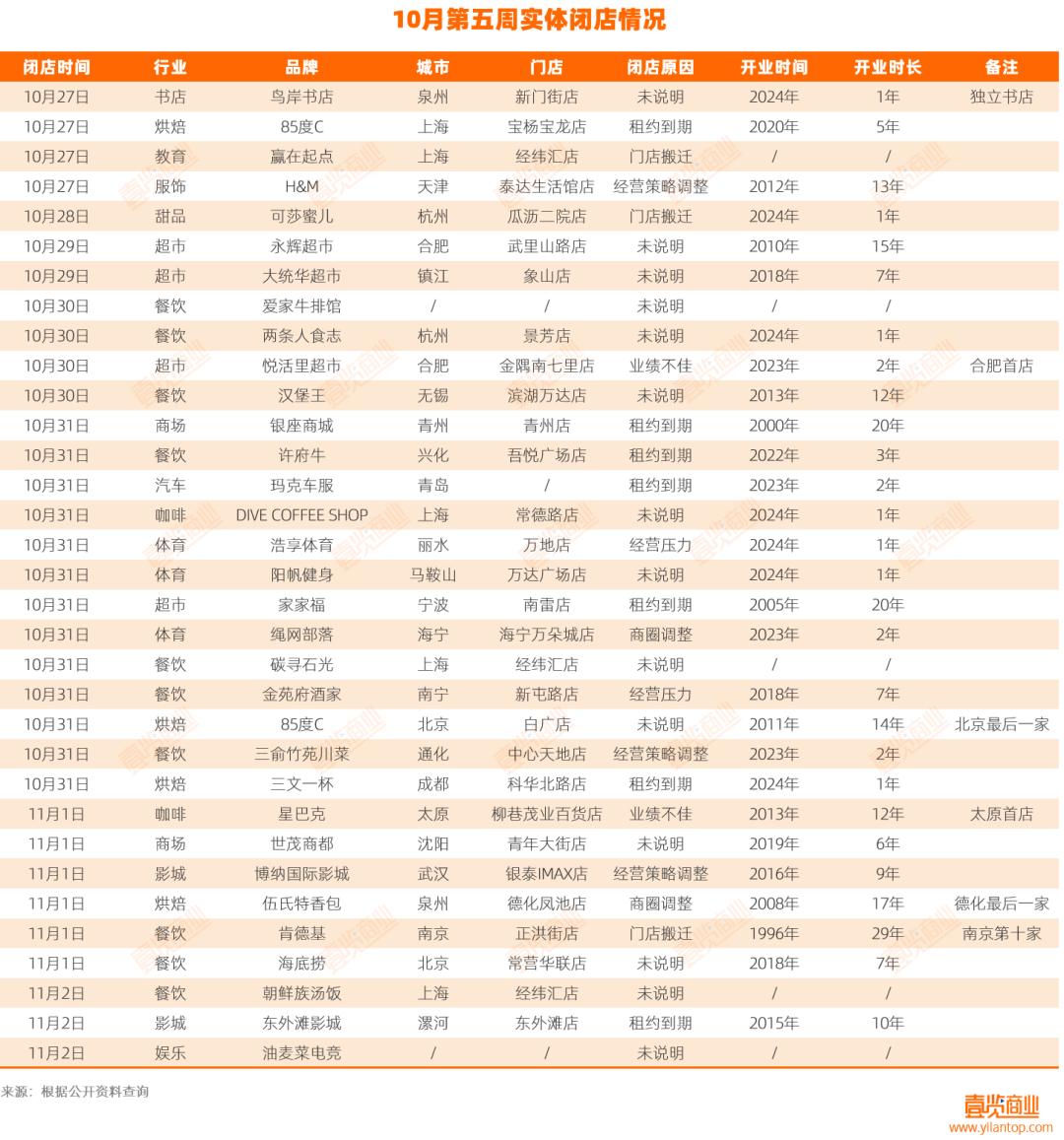
Summary of Key Points Core Viewpoint - The recent wave of store closures has predominantly affected the restaurant sector, with a total of 17 closures, accounting for 51.51% of the total closures reported. This trend highlights the challenges faced by various brands in adapting to changing consumer demands and operational strategies [2]. Group 1: Restaurant Sector - The restaurant category saw the highest number of closures, totaling 10, which includes well-known chains such as KFC, Burger King, and Haidilao [2]. - Burger King has experienced a significant reduction in its store count in China, dropping from 1,474 stores at the end of 2024 to 1,367 by mid-2025, marking a net decrease of 107 stores within six months [3]. - The KFC restaurant in Nanjing, which opened in 1996, has closed after 29 years of operation, indicating a shift in consumer preferences and market dynamics [4]. Group 2: Bakery and Coffee Shops - In the bakery segment, 85°C closed its last store in Beijing, which had been operational for 14 years, while other closures included stores from brands like Sanwen Yibei and Wushi Special Bun [5]. - Starbucks closed its first store in Taiyuan, which had been in operation for over 10 years, attributed to decreased foot traffic and changing consumer behavior in the area [5]. Group 3: Supermarkets and Malls - Four supermarkets, including Yonghui and Daitonghua, announced closures, with Yonghui's store in Hefei marking the 11th closure for the brand in the area [6]. - Two malls, including the Yinzuo Mall in Qingzhou, closed due to lease expirations, reflecting the ongoing challenges faced by physical retail spaces in adapting to market changes [6]. Group 4: Other Industries - Other sectors, including sports, education, apparel, and bookstores, collectively closed 10 stores, indicating a balanced distribution of closures across various industries without a single sector dominating the trend [6].