实时推理

Search documents
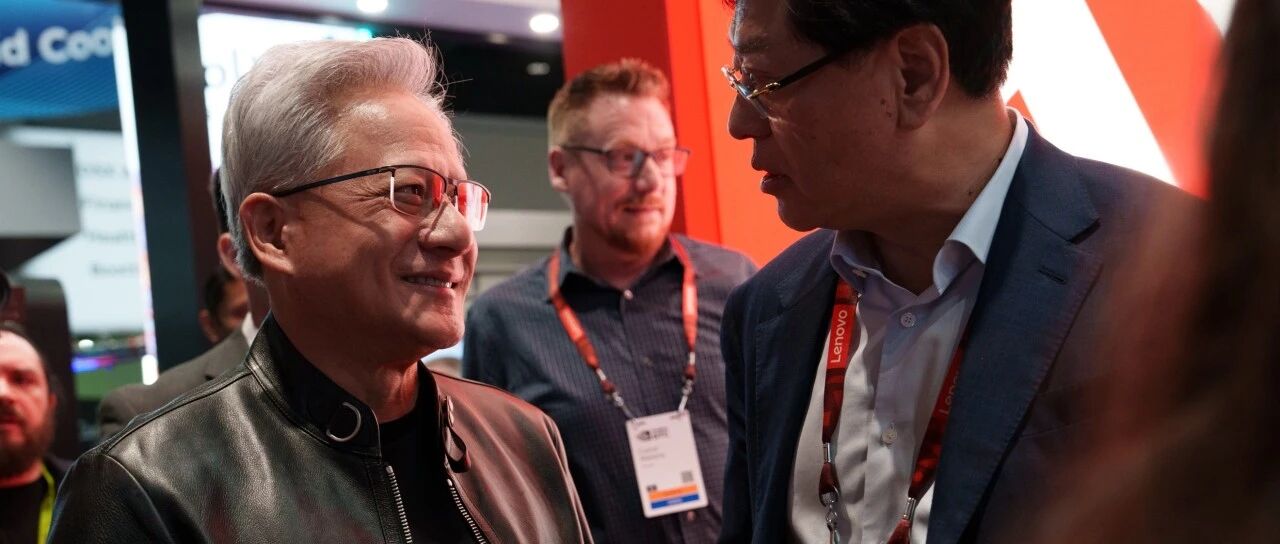
黄仁勋于GTC现场告诉联想杨元庆:“今年将属于你,我感觉到了”
IPO早知道· 2026-03-18 05:15
Core Viewpoint - The collaboration between Lenovo Group and NVIDIA is pivotal as they transition the AI industry from expensive model training to real-time inference and large-scale production, marking a significant shift in the global AI landscape [3][4]. Group 1: Partnership and Innovations - Lenovo Group and NVIDIA jointly launched the new generation of Lenovo Hybrid AI Advantage™ solutions at the GTC 2026 conference, aimed at accelerating AI deployment and reducing time-to-first-token (TTFT) [3][4]. - Lenovo has become the global launch partner for NVIDIA's Vera Rubin NVL72, which boasts a throughput increase of up to 10 times compared to the previous generation, with single-token costs reduced to one-tenth [4][5]. - The introduction of Vera Rubin signifies the arrival of the Agentic AI era and initiates the largest infrastructure build-out in history, as emphasized by NVIDIA's CEO Jensen Huang [4][5]. Group 2: Technological Advancements - Lenovo's Think Station PGX, showcased at GTC, is designed as a dedicated AI developer device capable of supporting AI models with up to 200 billion parameters and providing up to 1 Petaflop of AI computing power [7]. - The company also launched the Lenovo AI Developer full-stack AI development suite and professional design blueprint to assist data scientists and AI developers in building and securing their AI workflows [7]. Group 3: Market Outlook - Huang highlighted that the next turning point in AI will significantly increase the demand for accelerated computing, software, and AI factories, with Lenovo and NVIDIA working together to provide a comprehensive platform for future development [4].


AI芯片公司,拿下OpenAI百亿美元大单
半导体行业观察· 2026-01-15 01:38
Core Insights - OpenAI has entered a multi-billion dollar agreement to purchase computing power from Cerebras Systems, with a commitment to buy up to 750 megawatts of computing capacity over the next three years, valued at over $10 billion [1][5][9] - Cerebras claims its AI chips can process AI models and generate responses faster than industry leader Nvidia, which is a significant factor in OpenAI's decision to partner with them [1][5] - OpenAI is facing a severe shortage of computing resources, with over 900 million weekly users, prompting the need for more efficient and cost-effective alternatives to Nvidia chips [5][6] Summary by Sections Agreement Details - OpenAI will gradually utilize the computing capacity from Cerebras until 2028, enhancing the speed of AI responses and interactions [3][2] - The collaboration aims to integrate low-latency capabilities into OpenAI's inference stack, allowing for real-time AI interactions [2] Market Context - Cerebras is negotiating a $1 billion funding round at a valuation of $22 billion, nearly tripling its previous valuation, indicating strong demand for chips focused on inference tasks [7] - OpenAI's revenue growth has been directly linked to its computing capacity, which has doubled annually over the past two years [6] Competitive Landscape - OpenAI is exploring partnerships beyond Cerebras, including collaborations with Broadcom and AMD for custom chips, as it seeks alternatives to Nvidia [5][8] - Cerebras has previously struggled in the semiconductor market but has secured new partnerships with companies like IBM and Meta [8] Future Outlook - OpenAI is in the early stages of a new funding round to support its growth plans, with a potential valuation of $830 billion before an IPO [9]

Mini-Omni-Reasoner:实时推理,定义下一代端到端对话模型
机器之心· 2025-09-20 04:37
Core Viewpoint - The article introduces Mini-Omni-Reasoner, a new real-time reasoning paradigm designed for dialogue scenarios, which allows models to think and express simultaneously, enhancing interaction quality while maintaining logical depth [4][11][25]. Group 1: Introduction to Mini-Omni-Reasoner - Mini-Omni-Reasoner is inspired by human cognitive processes, where individuals often think and speak simultaneously rather than waiting to complete their thoughts before speaking [7][25]. - The model employs a "Thinking-in-Speaking" paradigm, contrasting with traditional models that follow a "thinking-before-speaking" approach, which can lead to delays in interaction [11][25]. Group 2: Model Architecture and Mechanism - The architecture of Mini-Omni-Reasoner consists of two components: Thinker, responsible for logic and reasoning, and Talker, focused on dialogue, allowing for efficient task execution [12][15]. - The model alternates between generating response tokens and reasoning tokens in a 2:8 ratio, balancing reasoning depth with real-time speech synthesis [13][15]. Group 3: Data and Training Process - A comprehensive data pipeline, including the Spoken-Math-Problems-3M dataset, was developed to address the "Anticipation Drift" issue, ensuring the model does not prematurely reveal conclusions [17][19]. - The training process is divided into five stages, progressively aligning text reasoning capabilities with speech modalities to ensure effective performance [19][20]. Group 4: Experimental Validation - Mini-Omni-Reasoner was tested against various models, demonstrating significant performance improvements over the baseline model Qwen2.5-Omni-3B [21][24]. - The model's ability to maintain natural and concise responses while ensuring high-quality reasoning was validated through comparative analysis [24]. Group 5: Future Directions - The article emphasizes that Mini-Omni-Reasoner is a starting point for further exploration into reasoning capabilities in dialogue systems, encouraging ongoing research in this area [26][28].