家居出海

Search documents
家居业“冰火两重天”,“出海”寻求新出路?
3 6 Ke· 2025-11-10 03:31
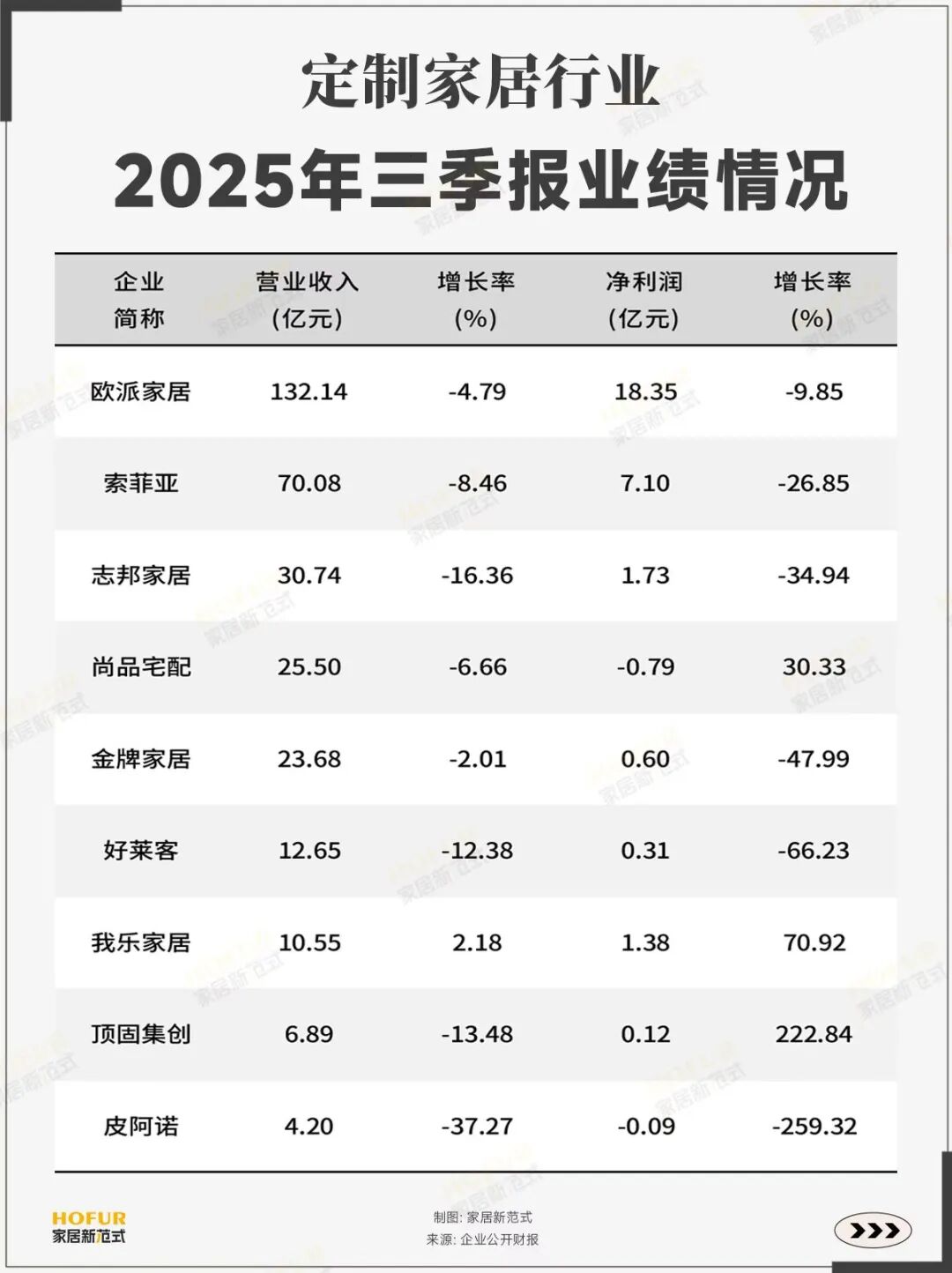
Core Viewpoint - The home furnishing industry is undergoing a significant transformation characterized by a stark performance divide among companies, with increasing market competition and revenue pressures across various segments [1][2]. Revenue Decline - In Q3 2025, all segments of the home furnishing industry faced revenue declines, including custom furniture, soft furniture, and building materials [2]. - Notable revenue figures include: - Oppein Home: 13.214 billion, down 4.79% - ZBOM Home: 3.074 billion, down 16.36% - Sofia: 7.008 billion, down 8.46% [3][5]. Performance Metrics - Key performance metrics for various companies in Q3 include: - Oppein Home: Revenue 13.214 billion, Net Profit 1.835 billion, both down - ZBOM Home: Revenue 3.074 billion, Net Profit 0.173 billion, both down - Rabbit Baby: Revenue 6.319 billion, down 2.25%, Net Profit 0.635 billion, up 29.02% [3][5][6]. Market Trends - The home furnishing market is shifting towards higher quality-price ratios, personalized designs, and comprehensive space solutions, demanding enhanced product development and service capabilities from companies [9]. - Leading companies are adopting a "one-stop" model and utilizing AI design tools to improve customer engagement and sales conversion rates [9][10]. Channel Structure Adjustment - The online channel has evolved into a core platform for brand promotion, lead generation, and precise marketing, with some stores incorporating live streaming to enhance customer interaction [10]. - Consumer expectations for product quality, environmental sustainability, and personalization are rising, influencing company strategies [10]. International Expansion - Many home furnishing companies are increasingly looking to international markets for growth, transitioning from light asset trials to heavy asset investments [11]. - Companies like Gold Medal Home and ZBOM Home are expanding their overseas presence, establishing subsidiaries and local production bases to reduce costs [11][12][14]. Strategic Adjustments - Companies capable of "going global" are encouraged to adjust their market strategies, focusing on precise, specialized, and targeted market development [14].


出海巨头美克家居陷欠薪风波,过半收入依赖海外难掩亏损之困
Nan Fang Du Shi Bao· 2025-10-27 03:45
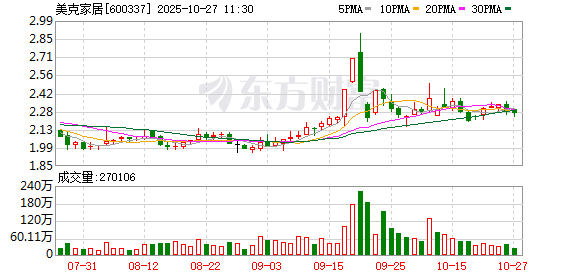
Core Insights - Meike Home, a leading player in the domestic home furnishing industry, is currently facing multiple crises, including employee salary delays and significant financial losses in its recent financial report [2][3][4] Group 1: Financial Performance - In the first half of 2025, Meike Home reported a loss of approximately 88 million yuan, despite overseas business contributing over 50% of its revenue [2][4] - Since 2022, the company has accumulated losses exceeding 1.6 billion yuan, indicating ongoing financial struggles [4][5] - The company's revenue for the first half of 2025 was 1.5 billion yuan, with domestic retail and international wholesale businesses being key revenue sources [4] Group 2: Employee Issues - Reports indicate that some employees have experienced delayed salary payments, raising concerns about the company's operational stability [3] - A group of over 400 employees has formed a "Meike National Rights Protection" WeChat group to address salary issues, highlighting the widespread nature of the problem [3] - Legal disputes involving Meike Home have increased, with multiple companies filing lawsuits related to contract disputes since 2025 [3] Group 3: Market Position and Strategy - Meike Home has historically relied on its overseas market presence, but recent challenges in international trade and tariffs have pressured its export business [5] - The company is attempting to stabilize its workforce and improve domestic business performance while reducing reliance on overseas markets [6] - Opportunities exist for Meike Home to capitalize on the rising demand for high-quality, personalized home products in the domestic market, as well as potential growth in emerging international markets [6]

2025年中国家居出海:新兴市场需谨慎探索,北美市场仍是首选
Mei Ri Jing Ji Xin Wen· 2025-09-03 22:59
Core Insights - The Chinese home furnishing industry is transitioning from "opportunistic exploration" to "strategic deepening" in overseas markets, with a projected global furniture retail market size of nearly $800 billion by 2025, growing at an annual rate of over 12% [1] - Companies face challenges such as fluctuating tariffs, global supply chain adjustments, and rising shipping and raw material costs, making traditional price-driven competition unsustainable [1] - North America remains a primary target for Chinese cross-border home furnishing companies due to its large market size and stable consumer demand, while emerging markets are being cautiously explored [1][2] Market Positioning - Companies like Hangzhou Lingsheng Home and Wanbao Technology are focusing on the North American market from the design stage, ensuring that products meet U.S. and Canadian standards [2][3] - The consensus among industry players is to maintain core capabilities while deeply engaging with target markets, emphasizing long-term business goals [3] Consumer Insights - Understanding consumer needs is crucial for success in overseas markets, with data-driven strategies being essential for adapting to market demands [4] - The demand for outdoor furniture remains stable, and companies are encouraged to leverage consumer insights to identify growth opportunities [4] Emerging Market Strategies - Companies are adopting a cautious approach to exploring emerging markets, with specific strategies tailored to product characteristics and market conditions [5][6] - Wanbao Technology has been exploring the Middle East for two years, while Hangzhou Lingsheng Home is focusing on logistics capabilities in different regions [5][6] Integration of Trade and Manufacturing - The integration of trade and manufacturing is seen as a key strategy for enhancing resilience and overcoming growth bottlenecks in the competitive global landscape [7] - Companies are focusing on product positioning and consumer needs, ensuring close communication between product development and sales teams [7] Logistics and Brand Development - Logistics costs are significant for large furniture items, and companies are encouraged to utilize Amazon's logistics solutions or seek overseas warehouse partnerships [8] - Brand development is a challenge, with companies needing to shift from merely selling products to building strong brands that extend product lifecycles and enhance consumer trust [9]
欧洲金属家具市场悄然崛起:“感谢”特朗普?
3 6 Ke· 2025-05-19 10:11
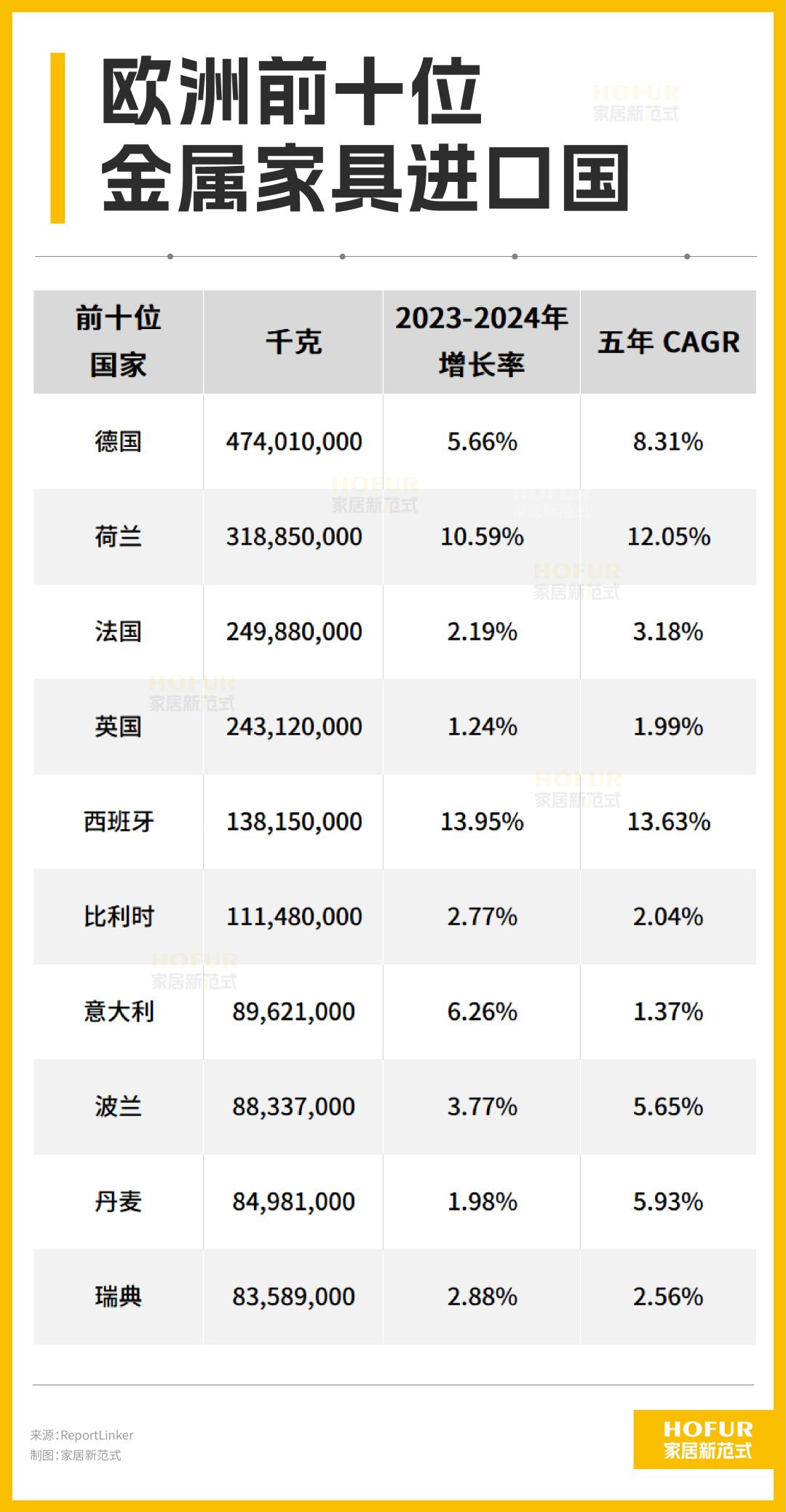
Group 1 - The article highlights the increasing demand for metal furniture in Europe due to climate change and other factors such as tariffs and wars [1][2] - China's metal furniture export to the US has shrunk significantly, with 2021 exports valued at approximately $12.96 million, making the US the largest market prior to the trade war [2] - The European market is identified as the second-largest overseas market for Chinese metal furniture, with a projected compound annual growth rate (CAGR) of 7.2% for outdoor metal furniture [3][4] Group 2 - The demand for metal furniture in Europe is driven by environmental considerations and government policies, with Germany, the Netherlands, and France being the top three countries for demand in 2024 [4][6] - The article suggests that to enhance exports to Europe, companies should focus on product planning for e-commerce channels, localizing branding, targeting specific events for sales, and maintaining a stable mid-range market position [7][8] - The article emphasizes that despite the challenges posed by North American trade issues, the growth opportunities and diversity in the European market should be a focal point for industry players [8]