
家庭金融

Search documents
多家银行密集出手,盯上孩子“压岁钱”
Xin Lang Cai Jing· 2026-02-21 13:08
Core Viewpoint - The competition among banks to attract children's "lucky money" during the Spring Festival has intensified, with various financial products and services being launched to convert this influx of funds into long-term customer assets [1][5]. Group 1: Product Offerings - Banks are focusing on three main types of products related to "lucky money": exclusive savings or card accounts for minors, short-term fixed deposits with enhanced interest rates or incentives, and "managed" funds linked to parent accounts for comprehensive family asset management [1][3]. - Examples include Guangfa Bank's "Free Card" which allows for independent accounts for children, and China Merchants Bank's "Golden Little Aui Housekeeper Service" that includes features for managing children's bank cards and educational accounts [1][2]. Group 2: Interest Rates and Terms - China Merchants Bank offers a one-year deposit annualized interest rate of 1.3% and a two-year rate of 1.4%, both higher than standard rates. Beijing Rural Commercial Bank's "Sunshine Baby Card" has rates of 1.5%, 1.6%, and 1.75% for one, two, and three-year terms, respectively [2]. - Zhejiang Jiaxing Pinghu Rural Commercial Bank's "Children's Savings Book" requires a minimum deposit of 10,000 yuan, with one-year and three-year rates at 1.5% and 1.65% [2]. Group 3: Strategic Focus - Banks emphasize that these products are not merely aimed at short-term deposit growth but are part of a strategy to engage with customers over their lifecycle, fostering savings habits and financial literacy among children [3]. - The influx of "lucky money" is seen as a low-cost funding source and a way to attract young families, with potential for cross-selling in areas like education funds and insurance [3][5]. Group 4: Regulatory Considerations - The design of products targeting "lucky money" must balance compliance with long-term value, as regulations govern account management, risk warnings, and fund usage permissions for minors [4]. - Banks must ensure that marketing does not undermine trust in their professionalism, maintaining a balance between helping parents manage money and establishing rules for children [4]. Group 5: Market Trends - The focus on "lucky money" reflects a broader trend in retail finance from simply "grabbing deposits" to "grabbing relationships" and "long-term customers," indicating a shift in the industry [5].
单笔金额不高的压岁钱,银行为何纷纷开“抢”?
Xin Lang Cai Jing· 2026-02-21 11:53
Core Viewpoint - The competition among banks to attract children's "lucky money" during the Spring Festival has intensified, with various financial products and services being launched to convert this influx of funds into long-term customer assets [1][5]. Group 1: Product Offerings - Banks are focusing on three main types of products related to "lucky money": exclusive savings or card accounts for minors, short-term fixed deposits with enhanced interest rates or incentives, and "managed" funds linked to parent accounts for comprehensive family asset management [1][3]. - Examples include Guangfa Bank's "Free Card" which allows for independent accounts for children, and China Merchants Bank's "Golden Little Aui Housekeeper Service" that includes features for managing children's bank cards and educational accounts [1][2]. Group 2: Interest Rates and Terms - China Merchants Bank offers a one-year deposit annualized interest rate of 1.3% and a two-year rate of 1.4%, both higher than standard rates. Beijing Rural Commercial Bank's "Sunshine Baby Card" has rates of 1.5%, 1.6%, and 1.75% for one, two, and three-year terms, respectively [2]. - Zhejiang Jiaxing Pinghu Rural Commercial Bank's "Children's Savings Book" requires a minimum deposit of 10,000 yuan, with one-year and three-year rates of 1.5% and 1.65% [2]. Group 3: Strategic Focus - Banks emphasize that these products are not just about short-term deposit growth but aim to cultivate savings habits and financial literacy among children, positioning themselves as integral to family financial planning [3][5]. - The influx of "lucky money" is seen as a low-cost funding source and a gateway to acquiring young family customers, with potential for cross-selling in education funds, insurance, and consumer finance [3]. Group 4: Regulatory Considerations - The design of products targeting "lucky money" must balance compliance with long-term value, as regulations govern account management, risk warnings, and fund usage for minors [4]. - Banks must ensure that marketing does not undermine trust in their professionalism, maintaining a balance between helping parents manage money and establishing rules for children [4]. Group 5: Market Trends - The focus on "lucky money" reflects a broader trend in retail finance from "competing for deposits" to "competing for relationships" and "long-term customers," indicating growth potential in this niche market as family financial needs evolve [5].
孩子存1000元,比你存20万利息高!咋回事?
凤凰网财经· 2026-02-18 11:08
Core Viewpoint - The article discusses how banks are marketing specialized savings products for children's New Year's money, reflecting a trend towards financial education and long-term customer relationships with families [3][10]. Group 1: Bank Marketing Strategies - Many banks are launching marketing campaigns targeting children's New Year's money, offering specialized savings accounts and financial management tools for parents [5][8]. - For example, China Merchants Bank has introduced a service called "Golden Little Aster" that includes features for managing children's bank accounts and educational funds [5]. - Beijing Rural Commercial Bank offers a "Sunshine Baby Card" with higher interest rates than standard deposits, indicating a competitive approach to attract young savers [8]. Group 2: Investment Trends - As interest rates decline, parents are increasingly turning to investment products like wealth management and insurance instead of traditional savings accounts for managing their children's money [11][12]. - Some parents report difficulty finding savings products with interest rates above 2%, prompting a shift towards low-risk investment options that offer better returns [11]. - For instance, one parent mentioned investing in index funds, which have yielded returns of approximately 40% [11]. Group 3: Financial Education and Long-term Planning - Experts suggest that banks are focusing on children's financial products to cultivate long-term relationships with families and instill financial habits in children [10][17]. - The article emphasizes the importance of safety and long-term growth in managing children's savings, recommending options like stable wealth management products and educational insurance [17]. - Parents are encouraged to allocate some funds for children's personal spending to help develop their financial literacy [17].

乐享家庭卡,引领家庭金融新生态
Feng Huang Wang Cai Jing· 2026-01-27 01:49
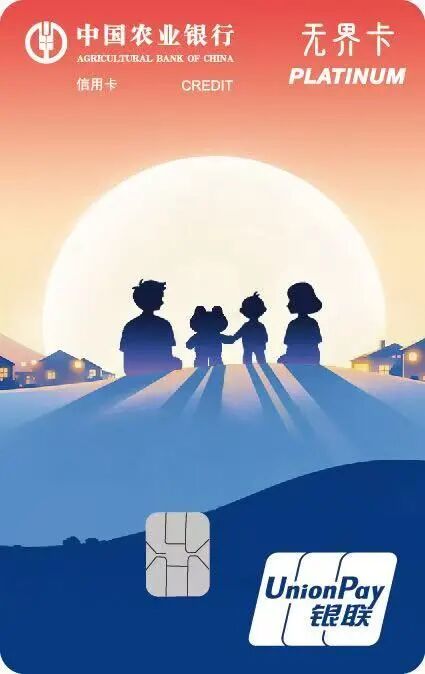
Core Insights - The financial services industry is evolving from meeting individual needs to supporting the entire family lifecycle, with Agricultural Bank of China launching the "Leisure Family Card" to promote a comprehensive financial ecosystem centered around families [1][3] Group 1: Industry Perspective - Family finance is seen as the next strategic frontier, connecting various aspects such as consumption, education, health, and retirement, while traditional financial products often fail to integrate individual and family needs [3] - Agricultural Bank aims to break this limitation by using the Leisure Family Card as a new model for family services [3] Group 2: Leisure Family Card Innovation - The Leisure Family Card promotes inclusive finance by offering packages for couples and families, along with a points-sharing feature that allows cardholders to share points with family members, enhancing resource integration [4] - It constructs a new industry model of "finance + lifestyle," covering travel, health, and consumption, and collaborates with quality partners to create an open benefits platform [5] - Data intelligence is utilized to analyze family consumption behaviors, creating detailed customer profiles that enhance service precision [5] Group 3: Future Industry Collaboration - Family finance is recognized as a burgeoning market that requires industry consensus and standards for healthy development, with the Leisure Family Card serving as a practical example for establishing service standards [6] - The deeper value of financial services lies not only in transaction efficiency but also in the ongoing support for family stability and growth, marking a significant attempt by the bank in a niche market [6]

乐享家庭卡,引领家庭金融新生态
凤凰网财经· 2026-01-26 13:00
Core Viewpoint - The financial services industry is evolving from meeting individual needs to supporting the entire growth cycle of families, with Agricultural Bank of China launching the "Leisure Family Card" to promote a comprehensive financial ecosystem centered around families [1][3]. Group 1: Industry Insights - Retail finance is shifting from competition for traffic to deepening customer engagement, with families being the core node connecting various consumption, education, health, and retirement scenarios [3]. - Traditional financial products often fail to integrate individual and family relationships, leading Agricultural Bank to break this limitation with the Leisure Family Card as a new service model [3]. Group 2: Leisure Family Card Innovations - The Leisure Family Card promotes inclusive finance by offering packages for couples and families, along with a points-sharing feature that allows cardholders to share points with family members, enhancing resource integration [4]. - It constructs a new industry model of "finance + lifestyle," covering travel, health, and consumption, and collaborates with quality partners to create an open benefits platform [4]. - Data intelligence drives deep customer engagement by analyzing family consumption behaviors, providing a more comprehensive customer profile to enhance service precision [4]. Group 3: Future Industry Collaboration - Family finance is an emerging blue ocean market that requires industry consensus and standards for healthy development, with Agricultural Bank's Leisure Family Card serving as a practical example to promote service standardization [5]. - The deeper value of financial services lies not only in transaction efficiency but also in the ongoing support for family stability and growth, making the Leisure Family Card a significant attempt in a niche market [5].

这位南开人成为总理座谈会“座上宾”
Xin Lang Cai Jing· 2026-01-20 13:39
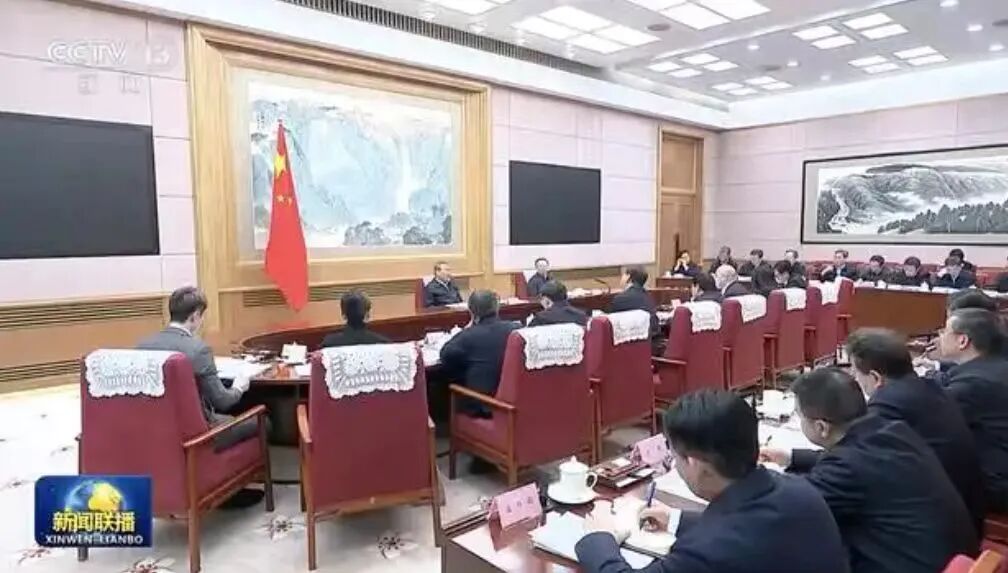
Group 1 - The meeting was chaired by Li Qiang, a member of the Standing Committee of the Political Bureau of the CPC Central Committee and Premier of the State Council, to gather opinions on the "Government Work Report" and the draft of the "14th Five-Year Plan" [1][4] - The meeting included experts, entrepreneurs, and representatives from various fields such as education, culture, and health [1][4] - Among the nine speakers at the meeting was He Jia, a professor and vice dean at Nankai University's Finance School, who is also a doctoral supervisor [5][8] Group 2 - He Jia has an academic background that includes a bachelor's degree from Nankai University and a PhD from the National University of Singapore, specializing in real estate finance, household finance, and consumer finance [3][7] - She has published multiple papers in prestigious journals and has received several academic awards, including the PWC3535 Best Paper Award and the Global Social Science Institute Best Paper Award [3][7] - He Jia is recognized as a national-level young talent by the Ministry of Education and has been awarded the Tianjin Youth May Fourth Medal [3][7]
港大经管学院上海中心启用
Jie Fang Ri Bao· 2025-12-08 01:40
Core Insights - The establishment of the Shanghai Center of the Hong Kong University (HKU) Business School marks a significant milestone in higher education cooperation between Hong Kong and Shanghai, with over 7,000 alumni resources from the East China Alumni Association [1] - The new center operates under a development model of "one school, three platforms, and two engines," focusing on international academic exchange, industry transformation services, and technology incubation services, particularly in digital intelligence and financial technology research [1] - The ongoing collaboration between HKU and Fudan University aims to leverage both institutions' resources to cultivate scarce management talents for the country, integrating economics, management, and technology [1] Event Highlights - The Shanghai-Hong Kong Forum will be held annually, with notable attendance from influential figures such as Zhou Hanmin, a member of the National Committee of the Chinese People's Political Consultative Conference and president of the Shanghai Public Diplomacy Association [2]
银行如何聚焦“一米高度”做好金融服务
Jin Rong Shi Bao· 2025-05-29 03:22
Group 1 - The core viewpoint is that children's financial education is gaining traction, with banks increasingly focusing on this segment as a new competitive arena in retail finance [1][2] - Various children's financial services have been launched, such as "Little Jing's Lucky Money," "Baby Piggy Bank," and "Wealth Little Manager," which not only provide savings channels but also serve as important vehicles for financial education [1] - Banks have taken on the role of guiding children's financial education, transforming into experimental fields for children to actively participate in financial practices [1] Group 2 - The introduction of children's savings accounts, children's bank cards, and parent-child cards has become standard among banks, but the application process is often criticized for being cumbersome [2] - Many banks require multiple documents for minors under 16 to open accounts, which adds to the burden of proof for customers [2] - The children's bank cards typically offer basic functions like deposits and withdrawals but lack features for purchasing investment products, leading to a "hot opening, cold deposit" phenomenon [2] Group 3 - Banks need to enhance the user experience for children and parents by simplifying the application and usage processes while ensuring financial security [3] - A tailored, differentiated operational strategy for different child demographics should be a focus for future development in children's financial services [3] - There is significant potential for expanding family financial services linked to children's financial services, creating a comprehensive financial ecosystem that includes parent-child accounts and family wealth management [3]