家庭风险防御指数模型

Search documents
北大教授亲自为您支招,家庭保险配置“三步法”助您快上手
Qi Lu Wan Bao· 2025-10-02 09:13
Core Viewpoint - The white paper titled "White Paper on the Risk Protection System for Chinese Families in the Context of High-Quality Development of the Insurance Industry" provides a new choice for insurance consumers, offering a "three-step method" for family insurance configuration to effectively manage risks [1][3]. Group 1: Research Collaboration - The research was conducted by Great Wall Life Insurance Co., Ltd. in collaboration with Peking University's School of Economics and Ipsos (China) Consulting Co., Ltd., with academic guidance from experts at the China Insurance Society and Peking University's School of Psychology and Cognitive Science [3]. Group 2: Family Risk Analysis - The white paper innovatively deconstructs family risks, identifying "family lifecycle" and "wealth level" as primary factors, categorizing family lifecycle into five stages: single, startup, development, maturity, and sunset [4]. - It classifies family risks into basic risks (disease, accidents, death), retirement risks, wealth preservation and appreciation risks, and wealth security risks [4]. Group 3: Risk Characteristics and Insurance Models - Different wealth levels and life stages have distinct risk characteristics and insurance priorities, with 20 typical family risk configuration models summarized for quick identification of risks and necessary insurance types [4][5]. Group 4: Family Risk Defense Index Model - The white paper introduces a "Family Risk Defense Index Model" to help families determine the optimal insurance expenditure ratio, balancing consumption, savings, and insurance spending [6]. - This model uses random dynamic simulations to predict income fluctuations and investment returns, allowing families to proactively plan their insurance strategies [6]. Group 5: Insurance Coverage Needs - The white paper outlines a logical framework for calculating insurance coverage needs, addressing gaps in life, health, and retirement insurance, and providing clear guidelines for determining necessary coverage amounts [8][9]. - It emphasizes the importance of maintaining living standards for dependents in the event of a primary earner's death, and similarly for health and retirement coverage [9][10]. Group 6: Comprehensive Service Framework - Great Wall Life Insurance aims to provide a comprehensive service framework, focusing on risk recognition, assessment, resolution, and long-term management, utilizing tools like the "Customer Knowledge System" and "Family Risk Defense Index Model" [10]. - The company also integrates health management, retirement planning, and lifestyle services into its offerings, ensuring a holistic approach to family risk management [10].

长城人寿白皮书:构建家庭风险保障体系 破局保险业供需“四大错配”
Zheng Quan Ri Bao Wang· 2025-09-21 08:54
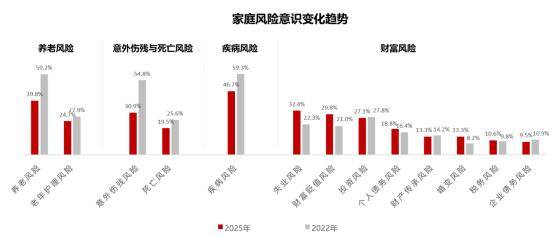
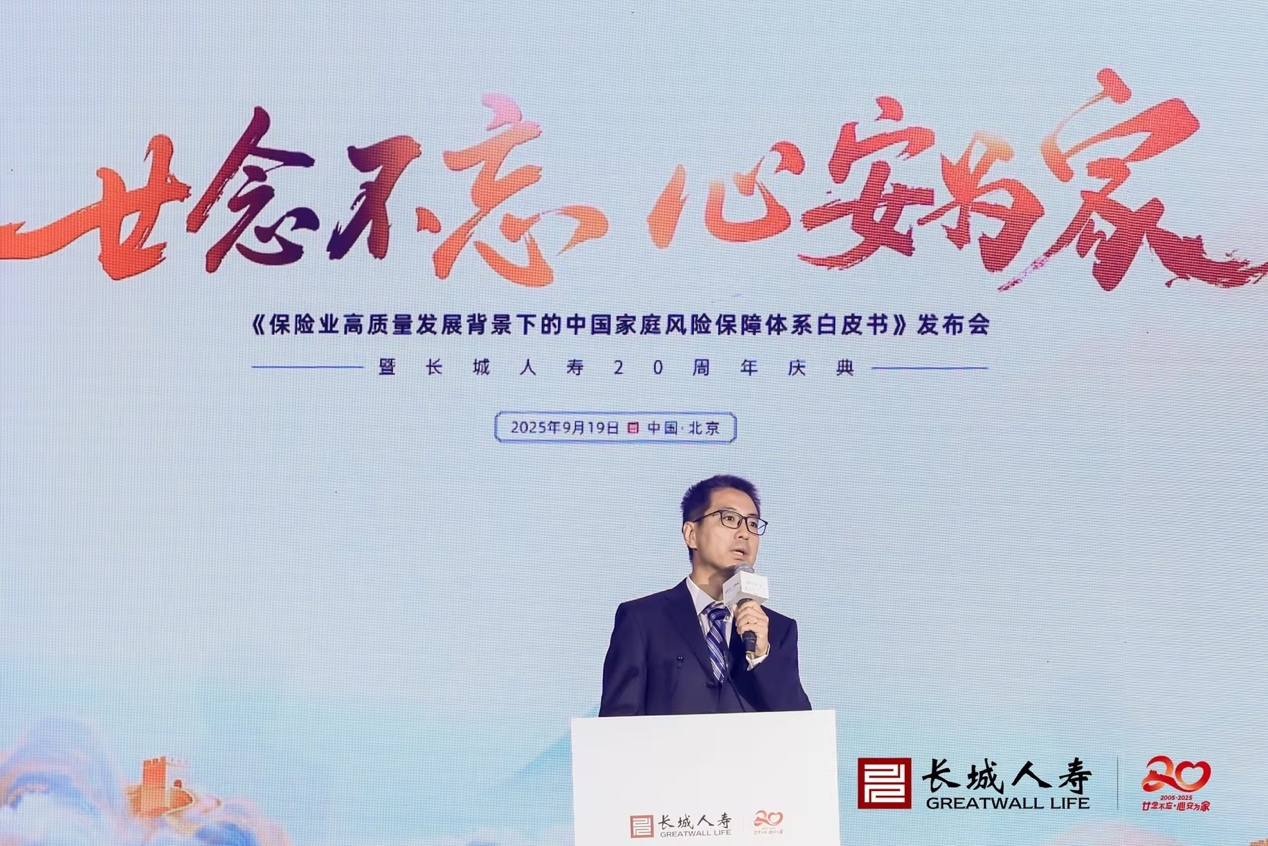
Core Insights - The report titled "White Paper on the Risk Protection System of Chinese Families under the Background of High-Quality Development of the Insurance Industry" was jointly released by Great Wall Life Insurance Co., Ltd., Peking University, and Ipsos (China) Consulting Co., Ltd. on September 19 [1] - The research highlights a shift in risk perception among Chinese families, indicating a decrease in anxiety over traditional survival risks and a significant increase in awareness of wealth-related risks [1] Supply-Demand Mismatches - There are four major mismatches identified between insurance supply and consumer demand: - Mismatch between personalized needs and standardized supply, with 28% of respondents citing that insurance plans do not meet their needs as the primary reason for policy failure [1] - Mismatch between the need for adequate health coverage and low supply, as the median cost for major illness treatment has reached 300,000 yuan, while the average claim amount for critical illness insurance is below 100,000 yuan [1] - Mismatch between cross-cycle wealth needs and short-term supply, indicating insufficient long-term wealth management products for child-rearing and personal retirement [2] - Mismatch between diversified retirement needs and weak collaborative supply, with a growing demand for integrated solutions in "retirement + healthcare + caregiving" not being adequately met by the insurance industry [2] Recommendations for Improvement - The white paper suggests a comprehensive construction of the family risk protection system in China to address the identified mismatches: - Precise risk identification should shift from a "one-size-fits-all" approach to a "family needs-oriented" strategy, dynamically assessing risks at different life stages [3] - Scientific risk assessment through quantitative tools to balance adequate coverage with cost, including the establishment of a "Family Risk Defense Index Model" [3] - Efficient risk management by creating a product system that aligns with customer needs throughout their life cycle, continuously optimizing based on changing risks and responsibilities [3] - Long-term risk reduction management by integrating resources to build a high-quality service ecosystem, moving beyond traditional "post-compensation" business models [3] Company Initiatives - Great Wall Life aims to provide risk protection services that ensure consumer peace of mind through three key areas: - "Peace of Mind in Protection" by releasing the "White Paper on the Family Risk Protection System" every two years to track changes in family risk perception and responses [4] - "Peace of Mind in Enjoyment" by developing the "AI Home" service system, offering a range of services including health management and retirement planning [4] - "Peace of Mind in Investment" by focusing on asset-liability management and adhering to a long-term investment philosophy to create stable investment portfolios [4]
白皮书:中国家庭生存型风险焦虑下降,财富风险感知提升
2 1 Shi Ji Jing Ji Bao Dao· 2025-09-20 02:07
Core Insights - The article emphasizes the importance of a comprehensive family risk protection system in China, especially in the context of ongoing economic transformations and changing family risk perceptions [1][3]. Group 1: Macro Environment Impact on Family Risk - Family risk awareness is influenced by multiple factors, including macroeconomic confidence, regional and industry outlooks, and household income stability [3]. - Key challenges faced by families include slowing income growth, increasing employment and debt risks, currency asset depreciation, and reduced investment returns [3]. - The white paper identifies six major impacts of macroeconomic changes on family risk, including income and debt risks, purchasing power risks due to inflation, wealth risk restructuring from low interest rates, and increased social security pressures from an aging population [3][4]. Group 2: Family Risk Protection Framework - A systematic risk management framework is proposed, considering the dynamic changes in family responsibilities and risk needs across different wealth levels [4]. - The family risk defense index model aims to maximize household utility by balancing consumption, savings, and insurance expenditures, providing a scientific basis for family risk management [4]. Group 3: Supply-Demand Mismatch in the Insurance Industry - The white paper's survey of nearly 10,000 families reveals that concerns primarily focus on healthcare, retirement planning, children's education, wealth security, and wealth inheritance [5]. - The findings indicate a shift in family risk awareness, with a decline in traditional survival risk anxiety and an increase in wealth risk perception [6]. - The insurance industry exhibits a supply-demand mismatch characterized by four phenomena: personalized needs versus standardized supply, adequate health coverage needs versus low supply, cross-cycle wealth needs versus short-term supply, and diverse retirement needs versus weak collaborative supply [6][7]. Group 4: Recommendations for the Insurance Industry - To address new family risk management needs, the insurance industry is encouraged to enhance compliance management, innovate product offerings, improve customer service, leverage technology, support national strategies, and strengthen talent development [7].
好看又好用!新时代家庭保险配置指南助您“心安为家”
Sou Hu Cai Jing· 2025-09-19 08:51
Core Insights - The white paper titled "White Paper on the Risk Protection System for Chinese Families under the Background of High-Quality Development of the Insurance Industry" was officially released, providing guidance for the scientific allocation of insurance for Chinese families in the new era [1][2] - The research emphasizes the evolving risk perceptions of families, highlighting a significant increase in awareness of wealth-related risks compared to traditional survival risks [3][4] Group 1: Family Risk Perception and Management - Chinese families are facing multiple challenges such as slowing income growth, increasing employment and debt risks, currency depreciation, and declining investment returns [3] - The study indicates a shift in focus from traditional risks like health and accidents to wealth management and security, with a notable rise in concern over unemployment and wealth depreciation risks [4][6] - The white paper identifies six major impacts of macroeconomic changes on family risks, including income and debt risks, purchasing power risks, and the effects of an aging population [3][4] Group 2: Consumer Preferences and Risk Management Solutions - Modern families are increasingly seeking comprehensive risk management solutions that combine products and services, moving beyond traditional insurance compensation [10][11] - The primary concerns of families include health issues, retirement planning, children's education, wealth security, and wealth inheritance, reflecting a strong demand for certainty and sustainability [10][11] - High-net-worth families show a growing interest in specialized services such as tax consultation and wealth inheritance planning, indicating a shift towards personalized insurance solutions [12][13] Group 3: Recommendations for Insurance Allocation - The white paper proposes a framework for analyzing income, assets, and liabilities to guide insurance allocation based on family lifecycle stages and wealth levels [17] - It suggests that families should adjust their insurance products according to their lifecycle stage, with specific recommendations for different income levels [17][18] - The introduction of the "Family Risk Defense Index Model" aims to assist families in optimizing their insurance strategies and improving financial security [14][15] Group 4: Strategic Opportunities for the Insurance Industry - The insurance industry is positioned at a critical strategic opportunity, with companies like Great Wall Life Insurance aiming to transition from serving individuals to serving families [18] - The company emphasizes the importance of understanding changing family needs and has developed various intelligent tools to help consumers identify risks and allocate insurance effectively [18][19] - Great Wall Life Insurance is committed to providing comprehensive risk protection services, enhancing customer trust through a focus on both product and service quality [18][19]