对华脱钩断链

Search documents
高市早苗挑衅背后:日本右翼“基因”激活,政治光谱加速右移 | 国际识局
Zhong Guo Xin Wen Wang· 2025-11-21 01:48
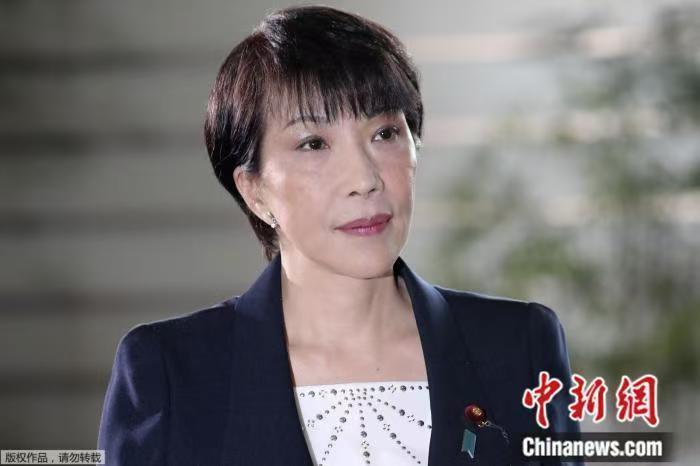
Core Viewpoint - The provocative remarks made by Japanese Prime Minister Sanae Takaichi regarding Taiwan signify a significant shift in Japan's political spectrum towards the right, revealing the resurgence of long-suppressed right-wing conservatism in Japan's political landscape [1][4]. Group 1: Right-Wing Ideology - Takaichi's strong right-wing stance is driven by a revival of Japanese nationalism, rooted in pre-war ideologies that reject the acknowledgment of Japan's wartime aggression and seek to restore national pride and military normalization [4][6]. - The political landscape has shifted since the 1980s, with the decline of the "55-year system" leading to a rise in right-wing conservatism, particularly under the leadership of figures like Shinzo Abe [4][5]. Group 2: Political Dynamics - Takaichi's political alignment closely mirrors that of Abe, characterized by historical revisionism, a push for constitutional amendments, and a hawkish stance towards China [5][6]. - The current political environment in Japan is marked by a rightward shift within the ruling Liberal Democratic Party (LDP), where hardline positions on defense and foreign policy have become the norm [9]. Group 3: External Threat Perception - The perception of external threats, particularly from China, has overshadowed traditional pacifist sentiments in Japan, leading to a fundamental change in political narratives and policies [8]. - The 2022 security policy changes, including the commitment to increase defense spending to 2% of GDP, reflect a significant departure from post-war security principles [8]. Group 4: Populism and Political Mobilization - Takaichi's remarks resonate with a growing populist sentiment in Japan, leveraging anti-China rhetoric to galvanize support among nationalist factions [10][11]. - The rise of online right-wing movements has amplified exclusionary nationalist sentiments, allowing Takaichi and similar politicians to bypass traditional media and directly engage with their base [10][11]. Group 5: Implications for Japan's Future - The combination of resurgent right-wing ideology, a shifting political landscape, and rising populism poses significant challenges for Japan's political stability and international relations [12]. - Takaichi's provocative stance on Taiwan is seen as a manifestation of deeper issues within Japan's political fabric, potentially leading to increased tensions in the region [12].

对华加500%关税,收到钱都给乌克兰,特朗普见泽连斯基前喝多了?
Sou Hu Cai Jing· 2025-10-21 19:35
Core Viewpoint - The article discusses Trump's proposal to establish a "Ukraine Victory Fund" funded by imposing tariffs of up to 500% on Chinese goods, with the intention of using the revenue for military aid to Ukraine. This proposal has been met with skepticism and rejection from European allies [3][5][10]. Group 1: Proposal Details - Trump plans to impose tariffs of up to 500% on Chinese goods, with all proceeds directed towards military assistance for Ukraine [3]. - The proposal is framed as a way to support Ukraine while also encouraging European allies to adopt similar measures against China [5][10]. Group 2: Reactions and Implications - The European Parliament has rejected the idea of imposing tariffs on China, indicating that Europe is unwilling to be drawn into a trade conflict with China based on U.S. proposals [8][10]. - Trump's approach is seen as an attempt to leverage European concerns over the Russia-Ukraine conflict to gain support for a broader anti-China stance, but it underestimates Europe's strategic autonomy [10]. - The suggestion of a 500% tariff is viewed as a political stunt rather than a feasible policy, highlighting the unpredictability of U.S. foreign policy under Trump's leadership [10].