对等原则

Search documents
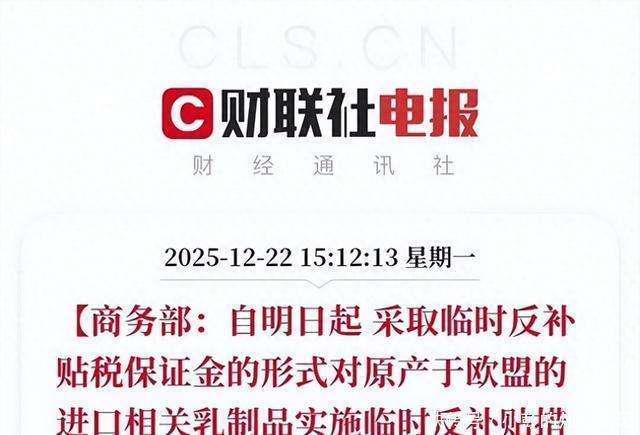
中国对欧盟精准征税,荷兰头大。欧盟不服,法国想拉27国打响反击
Sou Hu Cai Jing· 2025-12-31 07:25
Group 1 - The trade friction between China and the EU has intensified, with China imposing temporary tariffs on dairy products imported from the EU, ranging from 21.9% to 42.7% [1] - The tariffs target EU cheese, milk, and cream, justified by China as a response to excessive subsidies from the EU that harm local industries [1] - The conflict originated from the EU's imposition of tariffs on Chinese electric vehicles, prompting China to retaliate with targeted measures against various EU products [1][6] Group 2 - The Netherlands is particularly affected, especially Nexperia, a subsidiary of China's Wingtech Technology, which faced asset freezes and leadership changes by the Dutch government citing national security [2] - China's countermeasures included banning exports from Nexperia's Chinese factories, leading to significant disruptions in global supply chains, particularly in the automotive and electronics sectors [2] - The Dutch government’s actions were based on Cold War-era laws, and the swift response from China has put pressure on Dutch businesses [2][10] Group 3 - France has expressed strong dissatisfaction with China's tariff measures, calling for a united EU response, including potential investigations or lawsuits at the WTO [4] - The French agricultural sector, particularly cheese and cream exports, stands to suffer significantly from the increased tariffs, prompting protests from farmers [4] - The French government emphasizes the need for a coordinated action to protect agricultural interests and prevent internal chaos within the EU [4][8] Group 4 - The investigation into EU dairy subsidies began in August last year, with preliminary findings indicating excessive subsidies leading to low-priced dumping in China [6] - The situation reflects a broader pattern of retaliatory measures, with China emphasizing that the Netherlands must bear the consequences of its actions [6] - The ongoing trade tensions highlight the complexities of international trade, where both sides are urged to seek dialogue and avoid escalation [11] Group 5 - The EU's internal divisions are evident, with countries like Germany preferring negotiation over confrontation due to their significant investments in China [8] - The Dutch government has paused some intervention measures, but the core issues remain unresolved, with Nexperia's new CEO threatening legal action for $8 billion [8] - The trade conflict serves as a warning for the EU to engage in negotiations to prevent mutual economic losses, as both sides explore potential solutions [10][11]

反制!一国对美国公民停发签证
Xin Lang Cai Jing· 2025-12-26 04:43
Core Viewpoint - Niger has implemented a reciprocal measure by permanently halting the issuance of visas to all U.S. citizens and indefinitely banning their entry, in response to the U.S. expanding its entry restrictions on Nigerien citizens [1][3]. Group 1: Diplomatic Relations - The decision by the Nigerien government reflects a diplomatic policy aimed at maintaining sovereignty and is based on the principle of reciprocity [3]. - This action follows the announcement by U.S. President Trump, which increased the number of countries under full and partial entry restrictions from 19 to 40, affecting Nigerien citizens [3].

巴西总统卢拉:但关键在于对等原则,如果美国对我们征收50%的关税,我们也将对其征收50%的关税。
news flash· 2025-07-10 17:57
Group 1 - The core viewpoint is that Brazil's President Lula emphasizes the principle of reciprocity in trade tariffs, indicating that if the U.S. imposes a 50% tariff on Brazilian goods, Brazil will respond with a 50% tariff on U.S. goods [1]
中美经贸会谈为世界注入稳定性
Zhong Guo Xin Wen Wang· 2025-05-13 08:55
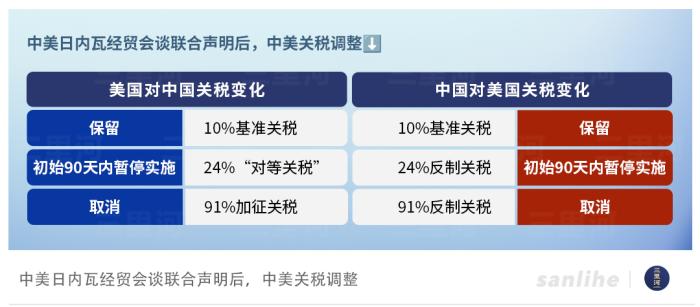
Core Viewpoint - The recent US-China Geneva trade talks resulted in significant progress, with both sides agreeing to substantially lower bilateral tariff levels [1][2]. Group 1: Key Highlights - The talks were characterized by pragmatism and efficiency, achieving substantial results in the first round, which is rare in global trade negotiations [3]. - The urgency from the US side was noted, as high tariffs were causing significant impacts, prompting a desire for a resolution [3]. - The principle of reciprocity was emphasized, with both sides canceling 91% of tariffs and agreeing to a 90-day suspension of 24% tariffs on contentious issues [5][6]. Group 2: Rational Understanding - The interdependence of US-China economic relations was highlighted, countering claims from certain US politicians about the feasibility of decoupling the two economies [6]. - The joint statement from the talks serves to reinforce the deep integration of supply chains and economic interests between the two nations [6]. - A mechanism for ongoing discussions was agreed upon, signaling a commitment to continued dialogue on trade relations [7].