中美经贸关系

Search documents
恒指低开低走,收跌479点
Guodu Securities Hongkong· 2026-03-27 01:40
Group 1: Market Overview - The Hang Seng Index closed at 24,856.43, down 479 points or 1.89% after a decline from an intraday high of 25,278 points [3] - The market saw a total turnover of 261.66 billion, with a net inflow of 3.34 billion from northbound trading [3] - Among 90 blue-chip stocks, 76 experienced declines, indicating a bearish market sentiment [4] Group 2: Economic Indicators - Hong Kong's exports rose by 24.7% year-on-year in February, reaching 408.8 billion, surpassing market expectations of a 22.3% increase [7] - Imports also increased by 29.9% year-on-year, totaling 472.9 billion, leading to a tangible trade deficit of 64.2 billion [7] - The overall export value for the first two months of the year increased by 29.6%, while imports rose by 34.1% [7] Group 3: Company Performance - Qingdao Beer reported a profit of 4.588 billion, a year-on-year increase of 5.6%, with a focus on expanding market share through brand and quality advantages [12] - Shandong Gold's profit surged by 60.57% to 4.739 billion, with total revenue increasing by 26.38% [13] - Air China reported a loss of 1.788 billion, with a revenue increase of 2.87% to 171.485 billion, emphasizing a focus on becoming a globally competitive airline [14] - Jiangxi Copper's profit rose by 6.84% to 7.373 billion, with revenue increasing by 5.39% [15] Group 4: Financial Center Stability - The Global Financial Centers Index ranked Hong Kong third globally, with a score of 765, highlighting its stability and connectivity advantages [8] - The Financial Development Bureau noted that recent reforms in the listing system will enhance Hong Kong's attractiveness to international issuers [8]
政策周度观察:生猪产能调控力度加强,央行或加大对金融市场维护力度-20260322
East Money Securities· 2026-03-22 02:34
1. Report Industry Investment Rating No relevant content provided. 2. Core Viewpoints of the Report - The policy focus this week includes strengthened regulation of pig production capacity and the central bank's potential increased efforts to maintain the financial market [1][9]. 3. Summary by Relevant Catalogs 3.1 Policy Weekly Observation 3.1.1 This Week's Policy Highlights - Strengthened regulation of pig production capacity and the central bank may increase efforts to maintain the financial market [1][9]. 3.1.2 Specific Policy Review - **Trade Policy**: On March 16, 2026, China and the US held economic and trade consultations in Paris, France, and agreed to study the establishment of a cooperation mechanism. China opposes the US's imposition of unilateral tariffs and urges the US to completely cancel such restrictions. The two sides aim to promote the healthy, stable, and sustainable development of bilateral economic and trade relations [4][10]. - **Monetary Policy**: The Party Committee of the People's Bank of China held an enlarged meeting, emphasizing the firm maintenance of the stable operation of financial markets such as stocks, bonds, and foreign exchange. It will continue to implement a moderately loose monetary policy, use various policy tools to maintain liquidity, and study the establishment of a liquidity support mechanism for non - bank financial institutions in specific scenarios [4][10]. - **Agricultural Policy**: The National Development and Reform Commission and the Ministry of Agriculture and Rural Affairs held a symposium for pig - breeding enterprises. Due to factors such as the decline in post - festival consumer demand, pig prices have entered the first - level early - warning range of excessive decline. The state has started the purchase and storage of central frozen pork reserves and will continue to strengthen the comprehensive regulation of pig production capacity [4][10]. - **Macro - economic Policy**: Li Qiang chaired the 11th plenary meeting of the State Council, emphasizing the implementation of strategic deployments for economic and social development in 2026 and the "15th Five - Year Plan," including promoting the construction of a unified national market, developing new - generation intelligent manufacturing, and investing more in people and serving people's livelihoods [12]. - **Fiscal Policy**: The Ministry of Finance released the report on the implementation of China's fiscal policy in 2025, including supporting the construction of a strong domestic market, implementing a package of fiscal and financial policies to promote domestic demand, and improving the management of special bonds [12]. - **Industrial Policy**: The National Development and Reform Commission organized the application for national - level landmark major application scenario projects, and the Ministry of Commerce issued policies to promote travel service exports and expand inbound consumption. The National Development and Reform Commission also plans to accelerate the formulation of an action plan for the expansion and quality improvement of the service industry [12]. - **Financial Work**: The China Securities Regulatory Commission held a meeting to deploy key tasks for 2026, focusing on anti - corruption in key areas and strengthening the supervision of public power. Five departments, including the Ministry of Justice, solicited public opinions on the "Law of the People's Republic of China on Finance (Draft)" [14]. - **Real Estate Policy**: Nanjing issued policies to stabilize the real estate market, including supporting "help - selling" services, providing loan interest subsidies for "selling old and buying new" homebuyers, and adjusting the minimum down - payment ratio for commercial housing loans [14].
王文涛会见苹果公司首席执行官蒂姆·库克
Zhong Guo Xin Wen Wang· 2026-03-20 13:35
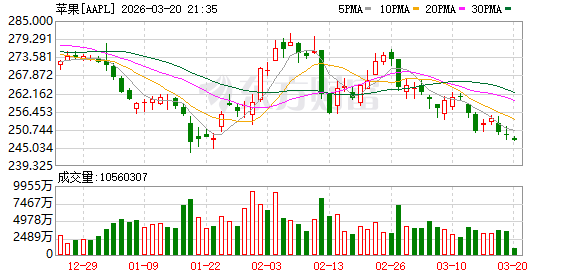
Core Viewpoint - The meeting between China's Minister of Commerce Wang Wentao and Apple CEO Tim Cook highlights the importance of stable and sustainable US-China economic relations, which are beneficial for both countries and the global economy [2] Group 1: US-China Economic Relations - Wang Wentao emphasized that under the strategic guidance of the leaders of both countries, six rounds of dialogue have led to significant consensus on economic cooperation [2] - Both parties agree that a healthy and stable US-China economic relationship is crucial for the interests of both nations and has a significant impact on global economic stability and development [2] Group 2: Apple's Operations in China - Wang noted that China is committed to building an open world economy and that its economic development provides stability and certainty in a turbulent world [2] - Cook stated that China is Apple's most important production base and primary source of supply chain, indicating the deepening of innovation cooperation and green development in China [2] - Apple aims to align its operations with China's 14th Five-Year Plan, reflecting a commitment to sustainable development and industrial chain collaboration [2]


王文涛部长会见苹果公司(AAPL.US)首席执行官蒂姆·库克
智通财经网· 2026-03-20 13:21
Core Insights - The meeting between Wang Wentao, the Minister of Commerce, and Tim Cook, the CEO of Apple Inc., focused on Sino-U.S. economic and trade relations and Apple's operations in China [1][3] - Both parties emphasized the importance of a healthy, stable, and sustainable economic relationship between China and the U.S., which is beneficial for both nations and has significant implications for global economic stability [3] Group 1: Economic Relations - Wang highlighted China's commitment to building an open world economy, stating that China's economic development provides stability and certainty in a turbulent world [3] - The Chinese government is advancing high-level opening-up policies and aims to construct a stable, resilient, green, and innovative industrial supply chain [3] Group 2: Apple's Position in China - Cook reaffirmed that China is Apple's most important production base and primary source of supply chain [3] - Apple is deepening its innovation cooperation, green development, and supply chain collaboration in China, aligning with China's 14th Five-Year Plan [3] - Apple expressed a desire for stable development in Sino-U.S. economic relations [3]
王文涛部长会见苹果公司首席执行官蒂姆·库克
Xin Lang Cai Jing· 2026-03-20 12:41
Core Viewpoint - The meeting between China's Minister of Commerce Wang Wentao and Apple's CEO Tim Cook emphasized the importance of a healthy, stable, and sustainable China-U.S. economic relationship, which is beneficial for both countries and the global economy [1] Group 1: China-U.S. Economic Relations - Wang Wentao highlighted that under the strategic guidance of the leaders of both countries, six rounds of dialogue have taken place, resulting in significant consensus [1] - Both parties agreed that a stable economic relationship is crucial for global economic stability and development [1] Group 2: Apple's Operations in China - Wang Wentao expressed China's commitment to building an open world economy and noted that China's economic development provides stability and certainty in a turbulent world [1] - Cook acknowledged that China is Apple's most important production base and primary source of supply chain [1] - Apple aims to deepen innovation cooperation, green development, and supply chain collaboration in China, aligning with China's 14th Five-Year Plan [1]
商务部:继续发挥好中美经贸磋商机制作用加强对话沟通
券商中国· 2026-03-19 08:08
Group 1 - The core viewpoint of the article emphasizes the constructive dialogue and consensus reached between China and the United States regarding trade and economic cooperation, guided by the important consensus of the two countries' leaders [1] - Both parties have agreed to explore the establishment of a working mechanism to expand economic and trade cooperation, enhancing dialogue and communication to manage differences and promote practical cooperation [1] - The discussions focused on tariff arrangements, promoting bilateral trade and investment, and maintaining existing negotiation agreements, indicating a commitment to stabilize and improve bilateral economic relations [1]
资讯早班车-2026-03-17-20260317
Bao Cheng Qi Huo· 2026-03-17 02:08
1. Report Industry Investment Rating No information provided in the report. 2. Core Views of the Report - The Chinese economy showed a mixed performance in the first two months of 2026. Some indicators such as industrial added - value and service production index improved, while real - estate related indicators remained weak [2][18]. - The situation in the Middle East, especially the blockade of the Strait of Hormuz, has had a significant impact on the global energy and commodity markets, leading to supply disruptions and price fluctuations [11]. - The Sino - US economic and trade consultations are ongoing, and both sides are working towards promoting bilateral economic and trade relations [4][15]. 3. Summary by Directory 3.1 Macro Data - GDP growth in Q4 2025 was 4.5% year - on - year, lower than the previous quarter and the same period last year [1]. - In February 2026, the manufacturing PMI was 49.0%, and the non - manufacturing PMI for business activities was 49.5%, both lower than the same period last year [1]. - Social financing scale in February 2026 was 2385.5 billion yuan, with M0, M1, and M2 showing year - on - year growth [1]. - CPI in February 2026 increased by 1.3% year - on - year, and PPI decreased by 0.9% year - on - year [1]. - Fixed - asset investment from January to February 2026 increased by 1.8% year - on - year, and social consumer goods retail sales increased by 2.8% year - on - year [1][2]. 3.2 Commodity Investment Reference 3.2.1 Comprehensive - China's economic data for the first two months of 2026 showed that fixed - asset investment increased by 1.8% year - on - year, industrial added - value increased by 6.3% year - on - year, and service production index increased by 5.2% year - on - year. However, real - estate investment and sales declined [2]. - Many banks tightened or exited the agency business of personal precious metals on the Shanghai Gold Exchange [2]. - The US launched a 301 investigation against 60 economies including China, and Sino - US economic and trade consultations are ongoing [3][4]. - Morgan Stanley maintains the prediction that the Fed will restart interest rate cuts in June and cut rates again in September [5]. - Indonesia is considering imposing a "windfall tax" on commodities [5]. 3.2.2 Metals - The price of refined indium in China has been rising rapidly since 2026, more than doubling compared to the beginning of 2025 [6]. - Guinea is discussing controlling the supply of bauxite to protect against price drops [6]. - Bahrain Aluminium is shutting down 3 electrolytic aluminium production lines, accounting for 19% of its total annual capacity [6]. - The blockade of the Strait of Hormuz has affected the aluminium industry chain, and the aluminium price may rise due to supply contraction [7]. - The holdings of major gold and silver ETFs decreased on March 16, 2026 [8]. - Metal inventories in the London Metal Exchange showed different trends on March 13, 2026 [8]. 3.2.3 Coal, Coke, Steel and Minerals - India's JSW Steel Company obtained a coking coal mining project in Mozambique [9]. - From January to February 2026, the production of raw coal was stable, and the production of crude oil increased year - on - year [9]. 3.2.4 Energy and Chemicals - The "15th Five - Year Plan" aims to have over 100 million kilowatts of installed capacity for offshore wind power, and the installed capacity will double compared to the end of 2025 [10][24]. - International oil prices fluctuated after the US attack on Iran, and the blockade of the Strait of Hormuz has led to supply disruptions and price increases [10][11]. - The EU plans to gradually phase out Russian oil [11]. 3.2.5 Agricultural Products - Zhejiang issued a plan for precise fertilization of grain and oil crops to improve yields and efficiency [12]. - The quota for cotton import under the sliding - scale duty for processing trade in 2026 is 300,000 tons [12]. - Indonesia may impose additional tariffs on some commodities such as palm oil [13]. - The blockade of the Strait of Hormuz has affected the global fertilizer supply chain, and urea prices have risen by about 30% [13]. 3.3 Financial News Compilation 3.3.1 Open Market - On March 16, 2026, the central bank conducted 137.3 billion yuan of 7 - day reverse repurchase operations, with a net injection of 88.8 billion yuan [14]. - The Ministry of Finance and the People's Bank of China will conduct treasury cash management commercial bank time - deposit tenders on March 19, 2026, with an operation volume of 70 billion yuan for 21 - day and 180 billion yuan for 3 - month terms [14]. 3.3.2 Important News - Sino - US economic and trade consultations in Paris aimed to promote bilateral economic and trade relations [15][19]. - The State Council emphasized key tasks for economic and social development in 2026 and the "15th Five - Year Plan" [16]. - Shanghai adjusted the minimum down - payment ratio for commercial housing loans to no less than 30% [16]. - The National Financial Regulatory Administration focused on risk resolution in key areas [17]. - China's economic indicators in the first two months of 2026 showed an overall positive trend [18]. - Many A - share companies' 2025 annual reports showed that emerging industries performed well [20]. - The Ministry of Natural Resources proposed to use existing land resources for real - estate development [20]. - China's foreign exchange market was generally stable in February 2026 [21]. - Many banks redeemed high - interest preferred stocks, causing difficulties in asset substitution [22]. - The wind power sector in the A - share market performed well [24]. 3.3.3 Bond Market Review - The Chinese bond market weakened, with yields of major interest - rate bonds rising and bond futures falling [27]. - The exchange - traded bond market had mixed performance, with some bonds rising and some falling [27]. - The convertible bond index declined, and different convertible bonds had different price changes [28]. - Money market interest rates showed mixed trends [28]. - The yields of US Treasury bonds declined [30]. 3.3.4 Foreign Exchange Market - On March 16, 2026, the on - shore RMB against the US dollar rose 33 points at the 16:30 close, and the RMB central parity rate against the US dollar was depreciated by 50 points [31]. - The US dollar index fell, and non - US currencies generally rose [31]. 3.3.5 Research Report Highlights - Huatai Fixed - income suggested a cautious attitude towards convertible bonds, waiting for opportunities, and focusing on certain sectors [32]. - Huatai Fixed - income also analyzed the transformation of land resources and the situation of the bond market [32]. - CITIC Construction Investment pointed out that government bonds continued to play an important role in social financing growth, and the credit growth rate was expected to be around 7% - 8% in 2026 [33]. - Xingzheng Fixed - income analyzed the situation of convertible bonds, emphasizing the importance of equity judgment [33]. 3.3.6 Today's Reminders - On March 17, 2026, 251 bonds will be listed, 178 bonds will be issued, 91 bonds will be paid, and 266 bonds will pay principal and interest [34]. 3.4 Stock Market News - The A - share market recovered after a decline, with some sectors performing well and some performing poorly [35]. - The Hong Kong stock market rebounded strongly, with chip and pharmaceutical stocks leading the rise [35].
李成钢:中美就一些议题取得初步共识
财联社· 2026-03-16 23:22
Core Viewpoint - The article discusses the recent economic and trade negotiations between China and the United States held in Paris, highlighting the constructive dialogue and preliminary agreements reached on various issues, including tariff levels and trade restrictions [1] Summary by Relevant Sections Negotiation Outcomes - Chinese Vice Minister of Commerce Li Chenggang stated that the discussions were candid, in-depth, and constructive, with both sides achieving preliminary consensus on several topics [1] - The negotiations included discussions on bilateral tariff levels and potential further extensions of related non-tariff measures [1] U.S. Tariff Adjustments - The U.S. side presented updates on their latest tariff measures and considerations for future actions, which raised concerns from the Chinese side regarding the uncertainties these measures could create [1] Commitment to Stability - Both parties agreed to work towards maintaining a stable economic and trade relationship, discussing the establishment of a mechanism to promote bilateral trade and investment cooperation [1] Concerns Over Investigations - Li Chenggang expressed serious concerns regarding the U.S. initiation of two Section 301 investigations against China, emphasizing the potential disruption these investigations could cause to the fragile U.S.-China economic relationship [1] - China is closely monitoring the developments of these investigations and is prepared to take appropriate measures to protect its legitimate rights [1] Call for Cooperation - Li Chenggang urged the U.S. to honor its commitments and work collaboratively with China to ensure a stable and beneficial economic relationship for both countries and the world [1]

中美在法国巴黎举行经贸磋商
证券时报· 2026-03-16 23:01
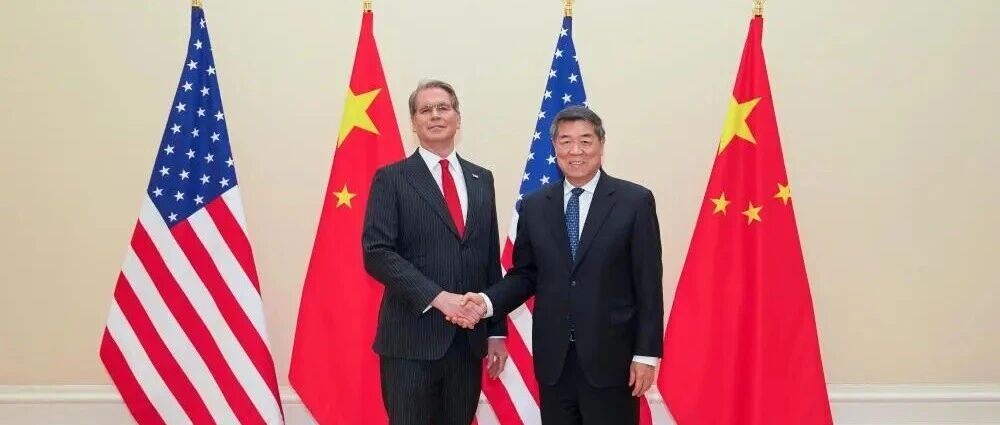
Core Viewpoint - The recent China-U.S. economic and trade consultations in Paris led to constructive discussions on tariffs, bilateral trade, and investment, resulting in new consensus and a commitment to continue negotiations [2][3]. Group 1: Consultation Outcomes - The consultations were guided by the important consensus reached by the leaders of both countries, with significant results from previous rounds of discussions injecting more certainty and stability into the economic relationship [3]. - Both sides agreed to establish a cooperation mechanism to promote bilateral trade and investment, enhancing dialogue and managing differences effectively [4]. Group 2: Positions on Tariffs - China maintains a consistent stance against unilateral tariffs imposed by the U.S. and urges the complete removal of such measures, emphasizing the need to protect its legitimate rights and interests [3]. - The U.S. acknowledges the importance of a stable economic relationship with China for global economic growth and aims to reduce friction and resolve differences through consultations [3].
中美在法国巴黎举行经贸磋商
券商中国· 2026-03-16 15:58
Core Viewpoint - The recent economic discussions between China and the U.S. in Paris have led to new agreements aimed at stabilizing bilateral trade relations and addressing mutual concerns regarding tariffs and trade practices [1][2]. Group 1: Economic Discussions - Chinese Vice Premier He Lifeng and U.S. Treasury Secretary Janet Yellen, along with U.S. Trade Representative Katherine Tai, engaged in constructive talks focusing on tariff arrangements and promoting bilateral trade and investment [1]. - The discussions were framed by the important consensus reached by the leaders of both nations, emphasizing the need for ongoing dialogue to enhance cooperation and reduce friction [2]. Group 2: Tariff and Trade Issues - He Lifeng highlighted that previous negotiations resulted in significant outcomes that provided more certainty and stability to the economic relationship between the two countries [1]. - The U.S. Supreme Court ruled that tariffs imposed under the International Emergency Economic Powers Act were illegal, leading to further tariffs being applied under the Trade Act of 1974 [1]. - China maintains a consistent opposition to unilateral tariffs imposed by the U.S. and urges the complete removal of such measures to protect its legitimate rights and interests [1]. Group 3: Future Cooperation - Both sides agreed to explore the establishment of a cooperation mechanism to promote bilateral trade and investment, aiming to manage differences and expand practical cooperation [2]. - The discussions underscored the importance of a stable U.S.-China economic relationship for global economic growth, supply chain security, and financial stability [2].