小众年味儿

Search documents
炸酱面吃了12万碗、吃小龙虾等4小时 春节北京餐饮热度超预期
Xin Jing Bao· 2026-02-24 05:28
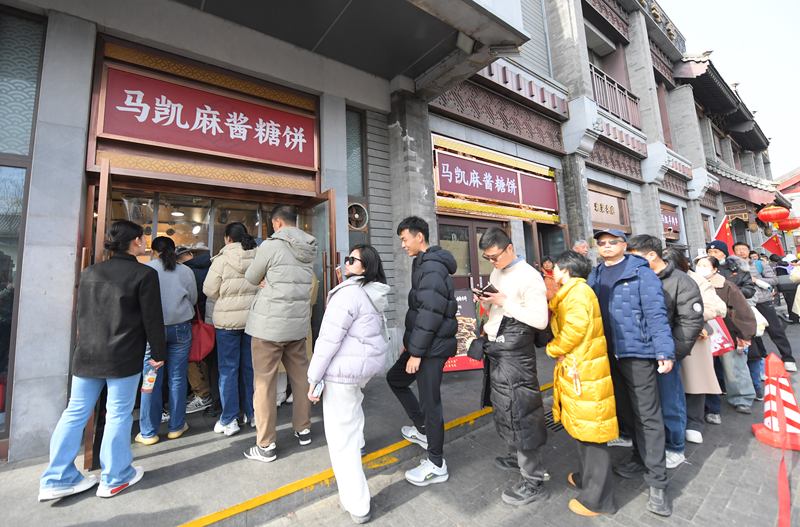
Core Insights - The Beijing dining market experienced a significant surge during the 9-day Spring Festival holiday, with traditional brands becoming essential tourist attractions and long queues becoming the norm [1][2]. Group 1: Revenue and Customer Flow - Many well-known dining enterprises reported a multiple increase in revenue and customer flow during the Spring Festival, with "exceeding expectations" being a common theme among interviewees [1][2]. - The average waiting time for dining at popular restaurants exceeded 1 hour, with some locations seeing order volumes increase by nearly 40% compared to the previous year [2][4]. - Specific restaurants like Hu Da and Fei Da Chu reported customer flow increases of 113% and over 2000 daily customers, respectively, during peak days of the holiday [7][8]. Group 2: Popular Dining Trends - Traditional restaurants near tourist attractions saw a notable increase in customer traffic, with some locations selling out of popular dishes like the "dry-fried big yellow fish" and "sugar pancakes" [2][4]. - The trend of "reverse reunion" led to urban areas becoming new destinations for families during the holiday, while "niche flavors" in smaller towns also gained popularity [8][11]. - Brands like Hai Di Lao reported over 700 million customer visits during the holiday, with significant growth in customer flow in cities like Beijing and Shenzhen [9][11]. Group 3: Operational Adjustments - Many restaurants extended their operating hours and increased staff to accommodate the surge in customers, with some opening earlier than usual to manage the high demand [2][7]. - Innovative service methods, such as using robots for customer interaction, were implemented to enhance the dining experience during peak times [7].