炸鸡腿

Search documents
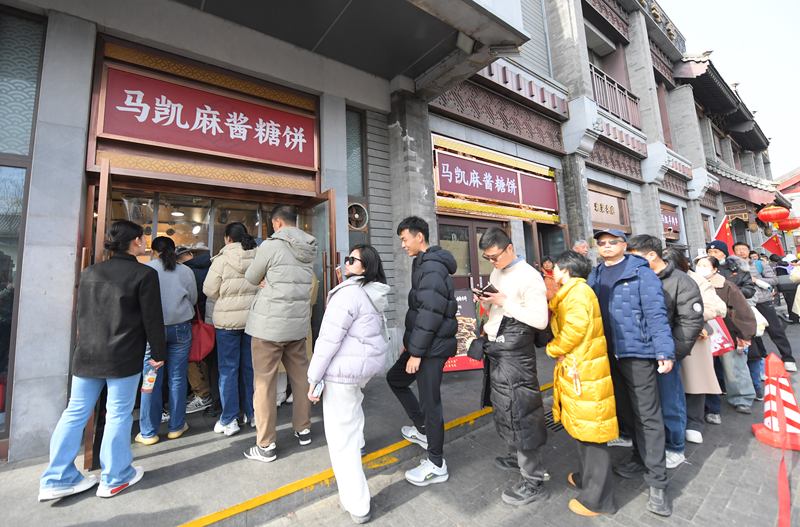
炸酱面吃了12万碗、吃小龙虾等4小时 春节北京餐饮热度超预期
Xin Jing Bao· 2026-02-24 05:28
Core Insights - The Beijing dining market experienced a significant surge during the 9-day Spring Festival holiday, with traditional brands becoming essential tourist attractions and long queues becoming the norm [1][2]. Group 1: Revenue and Customer Flow - Many well-known dining enterprises reported a multiple increase in revenue and customer flow during the Spring Festival, with "exceeding expectations" being a common theme among interviewees [1][2]. - The average waiting time for dining at popular restaurants exceeded 1 hour, with some locations seeing order volumes increase by nearly 40% compared to the previous year [2][4]. - Specific restaurants like Hu Da and Fei Da Chu reported customer flow increases of 113% and over 2000 daily customers, respectively, during peak days of the holiday [7][8]. Group 2: Popular Dining Trends - Traditional restaurants near tourist attractions saw a notable increase in customer traffic, with some locations selling out of popular dishes like the "dry-fried big yellow fish" and "sugar pancakes" [2][4]. - The trend of "reverse reunion" led to urban areas becoming new destinations for families during the holiday, while "niche flavors" in smaller towns also gained popularity [8][11]. - Brands like Hai Di Lao reported over 700 million customer visits during the holiday, with significant growth in customer flow in cities like Beijing and Shenzhen [9][11]. Group 3: Operational Adjustments - Many restaurants extended their operating hours and increased staff to accommodate the surge in customers, with some opening earlier than usual to manage the high demand [2][7]. - Innovative service methods, such as using robots for customer interaction, were implemented to enhance the dining experience during peak times [7].

红餐:炸鸡品类发展报告2025
Xin Lang Cai Jing· 2025-12-24 10:33
Core Insights - The fried chicken market in China is experiencing rapid growth, with the market size expected to reach 105 billion yuan by 2025, up from 60 billion yuan in 2019, reflecting a compound annual growth rate (CAGR) of 9.4% [11][13] - The market is characterized by a fragmented landscape, with nearly 90% of fried chicken brands operating 50 stores or fewer, indicating significant room for consolidation and growth in chain operations [16][19] - The primary consumer demographic for fried chicken is young adults aged 18-35, who account for 79% of the market, highlighting the importance of targeting this age group in marketing strategies [26][29] Market Overview - The fried chicken market is projected to exceed 100 billion yuan by 2025, driven primarily by the young consumer base [3] - The number of fried chicken outlets in China is expected to reach 164,000 by November 2025 [13] - The market's growth is supported by a low investment threshold, attracting many individual operators, which contributes to a lower chain rate compared to other countries [19] Development Highlights - Brands are innovating through fresh frying techniques and regional flavors to differentiate themselves in a competitive market [28][30] - The fried chicken sector is increasingly leveraging social media and cultural elements in branding to appeal to younger consumers [56] Consumer Behavior - The average frequency of fried chicken purchases among consumers is high, with 32.8% purchasing at least once a week, indicating strong market penetration [29] - Fried chicken is popular across various consumption scenarios, including late-night snacks, social gatherings, and casual dining [29] Brand Innovation - Brands are focusing on product innovation by exploring different chicken parts and flavors, including local and regional specialties [41][42] - The trend of "freshly fried" offerings is becoming a key selling point, with many brands adopting transparent cooking processes to enhance consumer trust [37][38] Supply Chain and Investment - The fried chicken supply chain is becoming more mature, with established suppliers for chicken and seasonings, facilitating standardization and quality control [57][59] - The rise of street food and night markets is providing new growth opportunities for fried chicken brands, particularly in lower-tier cities [9] Market Segmentation - The fried chicken market is diversifying, with various styles including American, Korean, and Chinese fried chicken catering to different consumer preferences [7] - The majority of fried chicken brands operate small outlets, typically ranging from 10 to 30 square meters, optimizing for high foot traffic locations [50][51] Marketing Strategies - Brands are employing diverse marketing strategies, including social media engagement, celebrity endorsements, and cultural events to enhance brand visibility and consumer connection [56] - The use of data analytics to optimize product offerings and promotional strategies is becoming increasingly common among fried chicken brands [55]
创新还是噱头,餐饮跨界边在哪?
Qi Lu Wan Bao· 2025-12-04 22:02
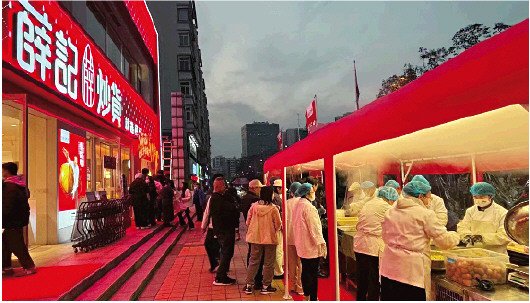
Core Viewpoint - The article discusses the trend of food and beverage brands diversifying their product offerings by entering new categories, such as breakfast items and snacks, to enhance customer engagement and drive sales growth [2][4][5]. Group 1: New Product Launches - Recently, customers reported that Mixue Ice City has introduced a breakfast series in its app, featuring items priced at 5 yuan each, although the rollout is currently limited to select cities like Dalian and Xi'an [2]. - Xueji Snack has also ventured into the snack market by selling fried items such as chicken legs and meatballs, with prices ranging from 10 yuan for a chicken leg to 19.8-39.8 yuan per pound for other snacks [3]. Group 2: Industry Trends - The restaurant industry is shifting from expansion to deepening existing markets, with brands focusing on creating diverse consumption experiences to attract a wider customer base and increase purchase frequency [4]. - The "fast food economy" is becoming a key area for many brands, with examples including M Stand's breakfast sets and Tims' lunch boxes, indicating a growing trend towards all-day dining options [4]. Group 3: Consumer Reactions - Social media users have expressed mixed feelings about the cross-industry innovations, with some appreciating the new combinations while others emphasize the importance of taste and service over novelty [5]. - The cross-industry attempts have helped brands attract younger consumers, expanding their traditional customer base, which primarily consisted of individuals aged 30-60 [5]. Group 4: Challenges and Opportunities - Despite having a "stock advantage," brands face challenges in maintaining product quality and pricing strategies when entering new markets, as seen with brands like Heytea and others that struggled to establish sustainable consumption habits [6]. - Experts suggest that brands with established store networks can leverage their existing resources to minimize costs while introducing new product lines, but they must also ensure staff are adequately trained to maintain quality [6][7].

过油不及 餐桌控油指南来啦
Bei Jing Qing Nian Bao· 2025-08-26 01:12
Core Viewpoint - Controlling oil intake is essential for maintaining health while still enjoying delicious food. The article provides practical tips for reducing oil consumption in daily cooking and eating habits [1]. Group 1: Controlling Cooking Oil Intake - Healthy adults should limit daily cooking oil intake to 25-30 grams, distributing it across three meals [2]. - Using a graduated oil dispenser can help manage the total amount of cooking oil used daily [2]. Group 2: Cooking Methods - Prefer cooking methods that require little or no oil, such as steaming, boiling, braising, and quick frying, while minimizing frying techniques [3]. - Utilizing non-stick pans, ovens, electric griddles, and air fryers can significantly reduce oil usage [3]. Group 3: Reducing Fried Foods - It is advisable to limit or avoid fried foods like fried chicken, French fries, and fried dough products. When dining out, request less oil in dishes and avoid fried options [4]. Group 4: Reducing Animal Fats - Decrease the frequency and quantity of animal fats used, opting for plant-based oils instead. It is recommended to alternate between different types of plant oils [5]. Group 5: Understanding Nutrition Labels - Learning to read nutrition labels is crucial for selecting foods with lower fat content and no trans fats. Trans fats are commonly found in processed foods like margarine, baked goods, and fried items [6]. Group 6: Cooking Tips to Reduce Oil - For oil-absorbing vegetables like eggplant, pre-steaming or dry frying before adding oil can minimize oil absorption. For fatty meats, pre-cooking to render fat before adding other ingredients can also help [7]. - Allowing cooked dishes to rest in a tilted pan can help drain excess oil before serving. Using oil-absorbing paper can further reduce oil content in dishes [7].
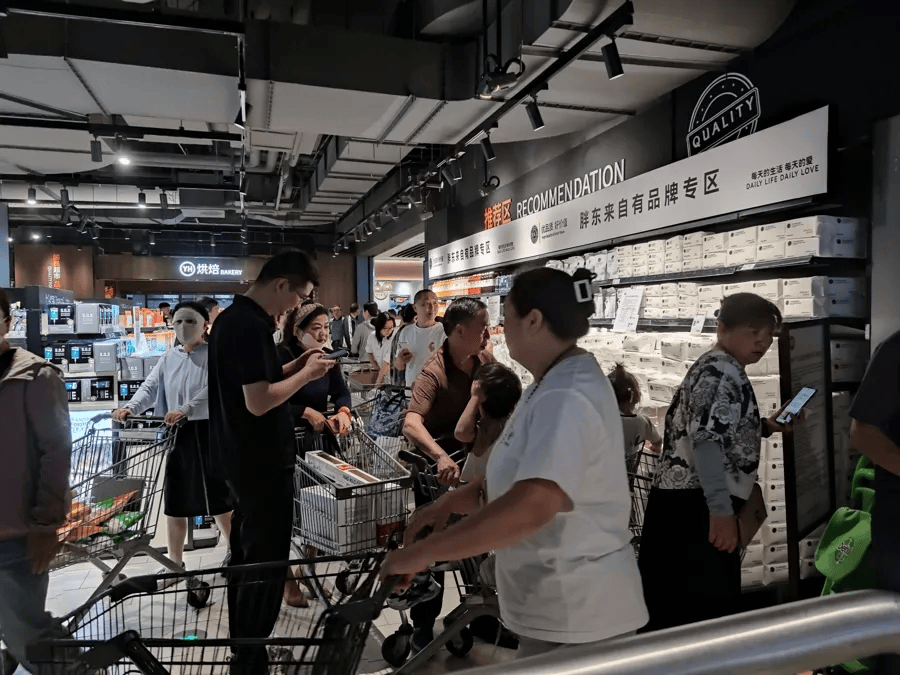
突然人山人海!上海市中心20岁老牌商超宣布回归!第六家“学习胖东来”嘉定开业,市民抢空货架
Sou Hu Cai Jing· 2025-06-05 01:45
Core Insights - The opening of Yonghui Supermarket's Jiading Baolong store marks the sixth location in Shanghai adopting the "Pang Donglai" model, resulting in a significant increase in customer traffic and sales [1][5][35] - The store experienced a 318% year-on-year increase in customer flow and a 716% increase in sales during the first three days of operation [5][34] - The transformation of traditional supermarkets in Shanghai, such as the Century Lianhua Luban store, has also led to a resurgence in customer interest, indicating a broader trend in the retail sector [34][40] Group 1 - Yonghui's Jiading Baolong store has implemented a product structure that aligns with the "Pang Donglai" model, reducing the number of standard products from over 10,000 to around 8,000, with over 80% of the product structure now reflecting the "Pang Donglai" model [14][35] - The store introduced 67 self-owned brand products from "Pang Donglai," with a total of 8,868 items available after restructuring [11][14] - The bakery and ready-to-eat food sections have become particularly popular, with significant customer engagement observed in these areas [17][31] Group 2 - The store has adopted a limit purchase policy for certain "Pang Donglai" products, requiring customers to show an electronic membership code from the Yonghui app to make purchases [11][13] - The service quality at the Jiading store has been noted as a strong point, with various customer-friendly features implemented, although some staff members are still in training [24][28] - The store's layout has been optimized to enhance customer flow, separating high-traffic areas like the bakery and ready-to-eat food sections to improve shopping experience [14][31] Group 3 - The success of Yonghui's transformation is part of a larger trend in Shanghai's retail landscape, with other stores like Century Lianhua also reporting increased customer traffic following similar renovations [34][40] - The focus on community engagement and tailored services, such as the "潮银俱乐部" (潮银 Club) for the elderly, reflects a strategic shift towards meeting specific consumer needs [40][42] - The overall strategy involves reducing the number of low-efficiency, homogeneous products while enhancing the quality and variety of offerings, aiming to create a more engaging shopping experience [34][40]