嵌入式磁存储器应用到MCU

Search documents
被“吹爆”的MRAM,走向MCU
3 6 Ke· 2025-10-24 11:29
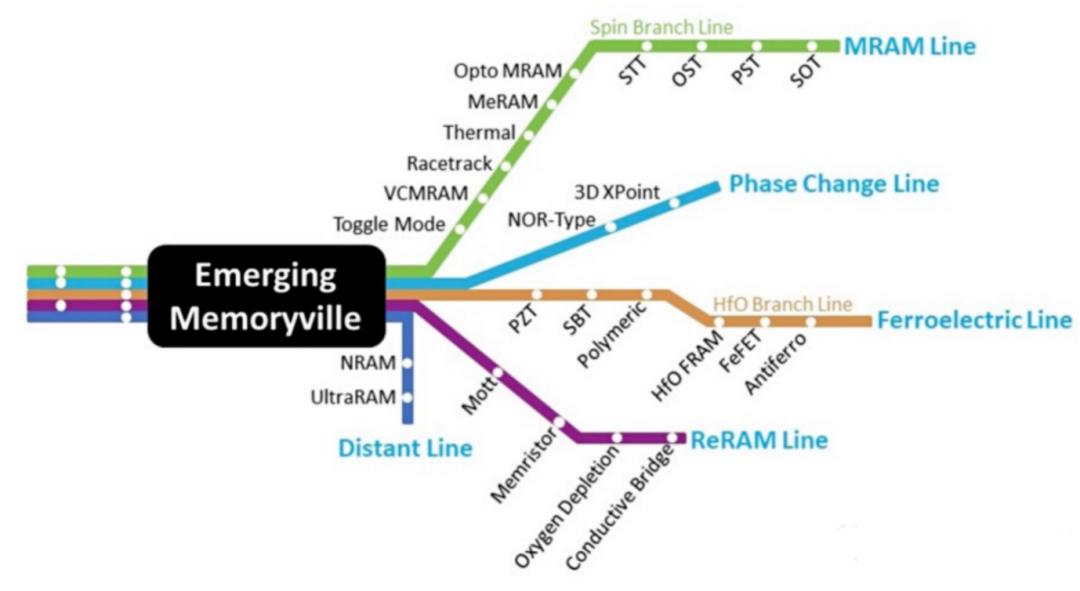
Core Insights - The article discusses the shift in memory technology for Microcontroller Units (MCUs) as embedded flash memory (eFlash) reaches its limits at 28nm, prompting manufacturers to explore new storage types like MRAM, PCM, RRAM, and FRAM [1][3][6]. Group 1: Industry Trends - The industry is moving towards new types of memory to enhance MCU performance, with MRAM being particularly favored due to its diverse types and broad application prospects [1][6]. - Major companies such as Huawei, TSMC, Samsung, Intel, and NXP are investing in MRAM technology, indicating strong industry interest and potential growth [1][6][19]. Group 2: Technical Advantages of MRAM - MRAM offers a combination of speed, low power consumption, and high durability, making it suitable for various applications, including automotive and AI accelerators [10][15][20]. - The technology allows for word-level erase and program capabilities, providing an energy-efficient non-volatile memory solution [15][16]. Group 3: Product Developments - Infineon has launched the AURIX TC4x series MCU using RRAM technology, while STMicroelectronics has introduced the xMemory Stellar series MCU with PCM [5][6]. - NXP's S32K5 MCU, the first 16nm FinFET+MRAM MCU, features high performance and low power consumption, integrating multiple ECUs into a single system [19][20]. - Renesas has released the RA8P1 series MCU with MRAM, emphasizing high performance and durability compared to traditional flash memory [22][28]. Group 4: Future Outlook - The article suggests that MRAM's integration into MCUs is accelerating, with TSMC making strides in the industrialization of third-generation SOT-MRAM technology [33]. - While MRAM presents significant advantages, it also faces challenges such as material complexity and sensitivity to strong magnetic fields, which may limit its application in certain environments [18][33].