新型存储技术

Search documents
英特尔开发的一种新内存,旨在替代HBM
半导体行业观察· 2026-02-06 01:33
Core Viewpoint - Intel is collaborating with SoftBank's subsidiary SAIMEMORY to commercialize Z-axis memory (ZAM), an advanced DRAM technology that could potentially replace high-bandwidth memory (HBM) in the future, despite ZAM not being available for at least three years [2]. Group 1: ZAM Technology - ZAM memory technology utilizes vertical stacking along the Z-axis, similar to HBM, but offers 2 to 3 times the capacity, higher bandwidth, and significantly lower energy consumption and costs compared to HBM [2]. - The demand for memory bandwidth is a major bottleneck in AI processing, as organizations seek to transfer increasing amounts of data between memory and GPUs [2]. Group 2: NGDB Project - The Next Generation DRAM Bonding (NGDB) project is part of the Advanced Memory Technology (AMT) initiative, which aims to develop new storage technologies, including ZAM and HBM, in collaboration with various suppliers and U.S. government laboratories [4]. - The NGDB project has entered its third year, focusing on productization after two years of research and development [4]. Group 3: Strategic Partnerships and Investments - SoftBank is investing 3 billion yen (approximately 19 million USD) in SAIMEMORY to develop ZAM chips, with prototypes expected by 2027 and commercialization by 2029 [7]. - The ZAM initiative strengthens the strategic technology partnership between the U.S. and Japan, as highlighted by recent collaborations involving the U.S. Department of Energy and various technology firms [7]. Group 4: Future Implications - The development of ZAM and similar technologies aligns with the goals of the Genesis Mission, which aims to accelerate scientific discovery and engineering progress through AI [8]. - Intel's advancements in memory architecture and assembly methods are expected to significantly enhance DRAM performance, reduce power consumption, and optimize memory costs, addressing the needs of AI applications [5].


带宽战争前夜,“中国版Groq”浮出水面
半导体芯闻· 2026-01-16 10:27
Core Viewpoint - NVIDIA is transitioning from a "computing powerhouse" to a "king of inference" by acquiring Groq's core technology for $20 billion, aiming to dominate the AI inference market [2] Group 1: NVIDIA's Strategy and Market Position - NVIDIA has established a strong technical barrier in AI training with its GPU architectures like Hopper and Blackwell, but faces challenges in low-batch, high-frequency inference tasks due to traditional GPU latency issues [1] - The acquisition of Groq's technology signifies NVIDIA's intent to enhance its capabilities in AI inference, particularly addressing bandwidth and latency bottlenecks [2][4] - NVIDIA plans to launch the new Feynman architecture GPU by 2028, integrating Groq's language processing unit (LPU) to improve inference performance [2] Group 2: Industry Trends and Competitors - The competition in the AI industry is shifting from pure computing power to maximizing bandwidth per unit area, aligning with NVIDIA's findings that data movement causes significant latency [4] - Companies like AMD and emerging AI inference chip firms are focusing on stream execution and on-chip bandwidth to build their competitive edge [4] Group 3: Domestic Developments in China - The AI wave in China has led to a surge in domestic AI chip companies, with significant IPO activity and a focus on addressing the "bandwidth wall" problem [6] - ICY Technology, a Beijing-based AI chip company, is emerging as a potential "Chinese version of Groq," focusing on ultra-high bandwidth inference chips [6][7] - ICY Technology's SpinPU-E chips aim to achieve bandwidth densities of 0.1-0.3 TB/mm²·s, significantly surpassing NVIDIA's H100 [12] Group 4: MRAM Technology and Its Advantages - ICY Technology is leveraging MRAM technology, which offers advantages such as higher storage density and lower costs compared to traditional SRAM solutions [11][20] - MRAM's unique physical structure allows it to achieve high bandwidth without relying on advanced packaging, making it a viable alternative to HBM and SRAM [20][21] - The strategic value of MRAM is increasing, especially in light of export restrictions on high-bandwidth memory technologies, positioning it as a key player in the AI inference landscape [21][22] Group 5: Future Outlook and Market Potential - The global MRAM market is projected to grow significantly, with estimates reaching $8.477 billion by 2034, reflecting a compound annual growth rate of 34.99% [30] - The successful commercialization of MRAM technology will require collaboration across the industry to build a supportive ecosystem [32] - The emergence of ICY Technology and its focus on magnetic computing could position it as a leader in the next generation of inference chips, potentially mirroring Groq's trajectory [36]


被“吹爆”的MRAM,走向MCU
3 6 Ke· 2025-10-24 11:29
Core Insights - The article discusses the shift in memory technology for Microcontroller Units (MCUs) as embedded flash memory (eFlash) reaches its limits at 28nm, prompting manufacturers to explore new storage types like MRAM, PCM, RRAM, and FRAM [1][3][6]. Group 1: Industry Trends - The industry is moving towards new types of memory to enhance MCU performance, with MRAM being particularly favored due to its diverse types and broad application prospects [1][6]. - Major companies such as Huawei, TSMC, Samsung, Intel, and NXP are investing in MRAM technology, indicating strong industry interest and potential growth [1][6][19]. Group 2: Technical Advantages of MRAM - MRAM offers a combination of speed, low power consumption, and high durability, making it suitable for various applications, including automotive and AI accelerators [10][15][20]. - The technology allows for word-level erase and program capabilities, providing an energy-efficient non-volatile memory solution [15][16]. Group 3: Product Developments - Infineon has launched the AURIX TC4x series MCU using RRAM technology, while STMicroelectronics has introduced the xMemory Stellar series MCU with PCM [5][6]. - NXP's S32K5 MCU, the first 16nm FinFET+MRAM MCU, features high performance and low power consumption, integrating multiple ECUs into a single system [19][20]. - Renesas has released the RA8P1 series MCU with MRAM, emphasizing high performance and durability compared to traditional flash memory [22][28]. Group 4: Future Outlook - The article suggests that MRAM's integration into MCUs is accelerating, with TSMC making strides in the industrialization of third-generation SOT-MRAM technology [33]. - While MRAM presents significant advantages, it also faces challenges such as material complexity and sensitivity to strong magnetic fields, which may limit its application in certain environments [18][33].


驰拓科技MRAM将重磅亮相2025深圳国际电子展
半导体行业观察· 2025-08-13 01:38
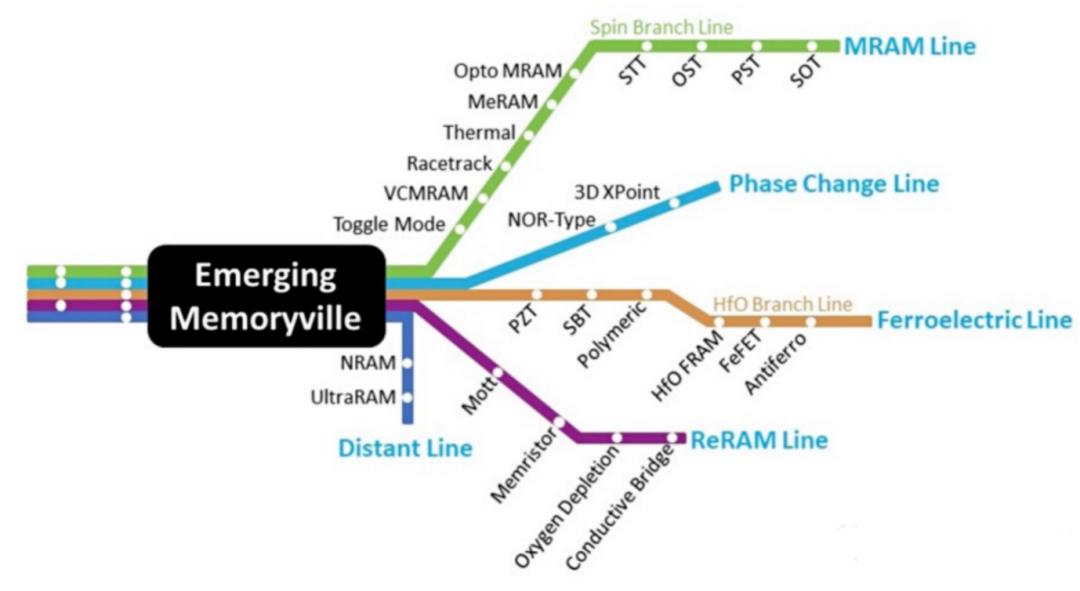
Core Viewpoint - MRAM technology is emerging as a new generation of storage solutions, with Zhejiang Chituo Technology leading the development and manufacturing of MRAM chips in China, showcasing its latest products at the 2025 Shenzhen International Electronics Exhibition [1][9]. Group 1: MRAM Technology Advantages - MRAM utilizes magnetic materials to represent binary data, offering advantages such as high speed, low power consumption, high endurance, radiation resistance, and reliability [1]. - Chituo's MRAM products maintain data integrity for over ten years at 125°C, operate in a temperature range of -40 to +125°C, support over one trillion write cycles, and achieve a yield rate of 95% for large capacity arrays with sub-ppm failure rates [1]. Group 2: Embedded and Standalone MRAM - The embedded eMRAM can replace eFlash in MCU/SoC applications, with industry consensus indicating that 28/22nm will be the last cost-effective nodes for eFlash, while eMRAM can extend to 28nm and beyond [2]. - Chituo's eMRAM combines DRAM-like read/write speeds, non-volatility of flash memory, and SRAM-compatible interface characteristics, making it suitable for high-performance applications in industrial control, automotive electronics, identity authentication, and smart wearables [2]. Group 3: Product Series and Applications - Chituo's standalone MRAM is categorized into multiple series based on capacity, interface, and packaging, and has been adopted by leading users in various industries such as industrial control, power, and metering [5]. - The company is also at the forefront of research on the next generation of MRAM, specifically Spin-Orbit Torque MRAM (SOT-MRAM), and has proposed a groundbreaking device structure suitable for large-scale manufacturing [7]. Group 4: Company Overview - Zhejiang Chituo Technology is the first company in China to achieve mass production of MRAM, with a 12-inch MRAM pilot production line and a comprehensive platform for the research and industrialization of new storage chips [8].
后eFlash时代:MCU产业格局重塑
半导体芯闻· 2025-05-14 10:10
Core Viewpoint - The semiconductor industry is shifting from a singular focus on process miniaturization to diversified innovation, with advanced packaging technologies and specialty processes driving performance optimization and differentiation in the market [1][2]. Group 1: Market Trends and Growth - The global specialty process market has surpassed $50 billion, with a compound annual growth rate (CAGR) of 15%, significantly outpacing the average growth rate of the semiconductor industry [1]. - Companies like TSMC, UMC, and SMIC are accelerating their investments in specialty processes, with TSMC establishing itself as a global benchmark through its extensive technology portfolio [2][4]. Group 2: TSMC's Specialty Process Landscape - TSMC offers a comprehensive range of specialty processes, including automotive, ultra-low power (ULP)/IoT, RF, embedded non-volatile memory (eNVM), high-voltage display, and CMOS image sensors (CIS) [4]. - TSMC's automotive-grade processes are designed for high reliability and long lifecycle, supporting advanced driver-assistance systems (ADAS) and smart cockpit applications [4]. - The N4e process is optimized for ultra-low power IoT AI devices, balancing performance and cost effectively [4]. Group 3: Innovations in Non-Volatile Memory (NVM) - TSMC is addressing the limitations of traditional eFlash technology by advancing embedded NVM technologies such as RRAM and MRAM, which are expected to replace eFlash in automotive and IoT applications [6][7]. - RRAM technology is being commercialized, with TSMC's 22nm RRAM already certified for automotive applications, and 12nm RRAM expected to follow suit [6][7]. - MRAM technology is also being developed for automotive applications, with NXP and TSMC collaborating on 16nm embedded MRAM for high-end automotive MCUs [20][21]. Group 4: Competitive Landscape and Future Directions - Major MCU manufacturers are exploring various new storage technologies, including eRRAM, eMRAM, ePCM, and eFeRAM, to enhance performance and reduce power consumption [16][31]. - The market for embedded NVM is projected to grow significantly, with wafer production expected to increase from approximately 3 KWPM in 2023 to about 110 KWPM by 2029, indicating a CAGR of around 80% [29]. - TSMC plans to integrate advanced processes with specialty technologies to support the evolution of chip architecture from "functional integration" to "system reconstruction" [8][34].
特色工艺,台积电怎么看?
半导体行业观察· 2025-05-13 01:12
Core Viewpoint - The semiconductor industry is shifting from a singular focus on process miniaturization to diversified innovation, with advanced packaging and specialty processes becoming key drivers for performance optimization and differentiation [1][2]. Group 1: Specialty Processes and Market Growth - The global specialty process market has surpassed $50 billion, with a compound annual growth rate (CAGR) of 15%, significantly outpacing the average growth rate of the semiconductor industry [1]. - Specialty processes focus on customized and diverse process optimizations, achieving a precise balance of performance, power consumption, and cost, particularly in demanding fields like automotive electronics and IoT [1]. Group 2: TSMC's Leadership in Specialty Processes - TSMC is establishing itself as a global benchmark in specialty processes through a combination of technological breadth and ecosystem depth, expanding its capabilities across various domains including automotive and RF technologies [2][4]. - TSMC's advanced logic technologies, such as N7A, N5A, and N3A, are specifically designed for automotive applications, ensuring high reliability and long lifecycle [4]. Group 3: Innovations in Embedded Non-Volatile Memory (eNVM) - TSMC is addressing the limitations of traditional eFlash memory by advancing RRAM and MRAM technologies, which are expected to replace eFlash in automotive and IoT applications [6][8]. - The introduction of RRAM and MRAM technologies allows for significant improvements in performance, reliability, and power efficiency, with TSMC's RRAM already in mass production at 40, 28, and 22 nm nodes [7][8]. Group 4: Competitive Landscape and Future Trends - Major MCU manufacturers are collaborating with foundries to leverage specialty processes, with companies like Infineon and NXP adopting eNVM technologies to enhance their product offerings [9][16]. - The market for embedded NVM is projected to grow rapidly, with wafer production expected to increase from approximately 3 KWPM in 2023 to about 110 KWPM by 2029, indicating a strong shift towards new storage technologies [26]. Group 5: Diverse Storage Technologies - Various new storage technologies, including eRRAM, eMRAM, and ePCM, are being explored by different manufacturers, each offering unique advantages in terms of speed, power consumption, and integration capabilities [30][32]. - The trend indicates a move towards a multi-storage technology ecosystem rather than a single dominant solution, reshaping the MCU landscape in the post-eFlash era [32].