工业发展走廊

Search documents
柬埔寨西港特区已吸引超200家企业入驻、提供3.5万个就业岗位 “带动当地经济发展、改善人民生活的关键力量”(共建“一带一路”·第一现场)
Ren Min Ri Bao· 2026-01-17 22:19
Core Insights - The Sihanoukville Special Economic Zone (SSEZ) has transformed from a barren area 18 years ago to a bustling industrial hub with over 200 enterprises, significantly contributing to local economic development and improving living standards [1] - The SSEZ is a model for the China-Cambodia Belt and Road Initiative, showcasing successful infrastructure development and industrial diversification [1] Company Development - 3L Medical Products (Cambodia) has grown to employ around 600 staff, with over 90% being Cambodian nationals, and has expanded its product range to over 20 categories [2] - The company has implemented a training program for local employees, sending them to China for six months to enhance their skills in both language and technical expertise [2] - The company has established a promotion system requiring employees to complete a three-month training program before advancing, ensuring a skilled workforce [3] Employee Life Improvement - Employees have transitioned from living in makeshift housing to brick houses, reflecting the positive impact of industrial growth on their quality of life [4][5] - The introduction of modern transportation options has improved daily commutes, with many employees now using motorcycles instead of crowded buses [4] Industry Transformation - The logistics sector has seen significant upgrades, with companies like Jialida Logistics adopting advanced equipment and digital management systems to enhance efficiency and safety [6] - The introduction of a digital management platform has streamlined operations, allowing for real-time tracking and improved customer service [6] Economic Impact - The SSEZ has diversified Cambodia's industrial landscape, promoting local production and reducing reliance on imports, particularly in the plastics sector [7] - The establishment of direct shipping routes between China and Cambodia has lowered freight costs, further stimulating business growth in the region [6][7]
上合组织天津峰会|习近平会见柬埔寨首相洪玛奈
证监会发布· 2025-08-30 13:58
Core Views - The meeting between Chinese President Xi Jinping and Cambodian Prime Minister Hun Manet emphasizes the long-standing friendship and cooperation between China and Cambodia, highlighting the importance of mutual support and collaboration for regional peace and prosperity [2][3][5] Summary by Sections - **Bilateral Relations**: Xi Jinping reaffirmed the strong and tested friendship between China and Cambodia, urging both nations to continue along the path of cooperation established by their predecessors [2][5] - **Support for Stability and Development**: China expressed support for Cambodia's efforts to maintain national stability and pursue independent development, aiming to enhance Cambodia's self-development capabilities through initiatives like the "Diamond Six Corners" cooperation [3][5] - **Trade and Investment Cooperation**: Both leaders discussed expanding trade and investment, as well as infrastructure cooperation, to deepen their bilateral ties and enhance mutual benefits [5] - **Security Cooperation**: The two countries agreed to combat cross-border crimes, including online gambling and fraud, to ensure the safety and security of their citizens [3][5]

(上合天津峰会)习近平会见柬埔寨首相洪玛奈
Zhong Guo Xin Wen Wang· 2025-08-30 12:08
Group 1 - The core viewpoint emphasizes the long-standing friendship between China and Cambodia, highlighting the importance of mutual support and cooperation for regional peace and prosperity [1][2] - Xi Jinping expressed China's support for Cambodia in maintaining national stability and achieving development, indicating a commitment to deepen cooperation in various sectors, including trade and infrastructure [1] - The meeting underscored the need to combat cross-border crimes, such as online gambling and fraud, to ensure the safety of citizens and their property [1] Group 2 - Cambodian Prime Minister Hun Manet acknowledged the historical significance of China's contributions to peace and expressed gratitude for China's support, reaffirming Cambodia's commitment to a friendly policy towards China [2] - The discussion included plans to implement important agreements reached during Xi Jinping's state visit to Cambodia, focusing on expanding trade, investment, and infrastructure cooperation [2] - Both leaders emphasized the importance of mutual support on core interests and major concerns, aiming to enhance the construction of a comprehensive strategic partnership [2]
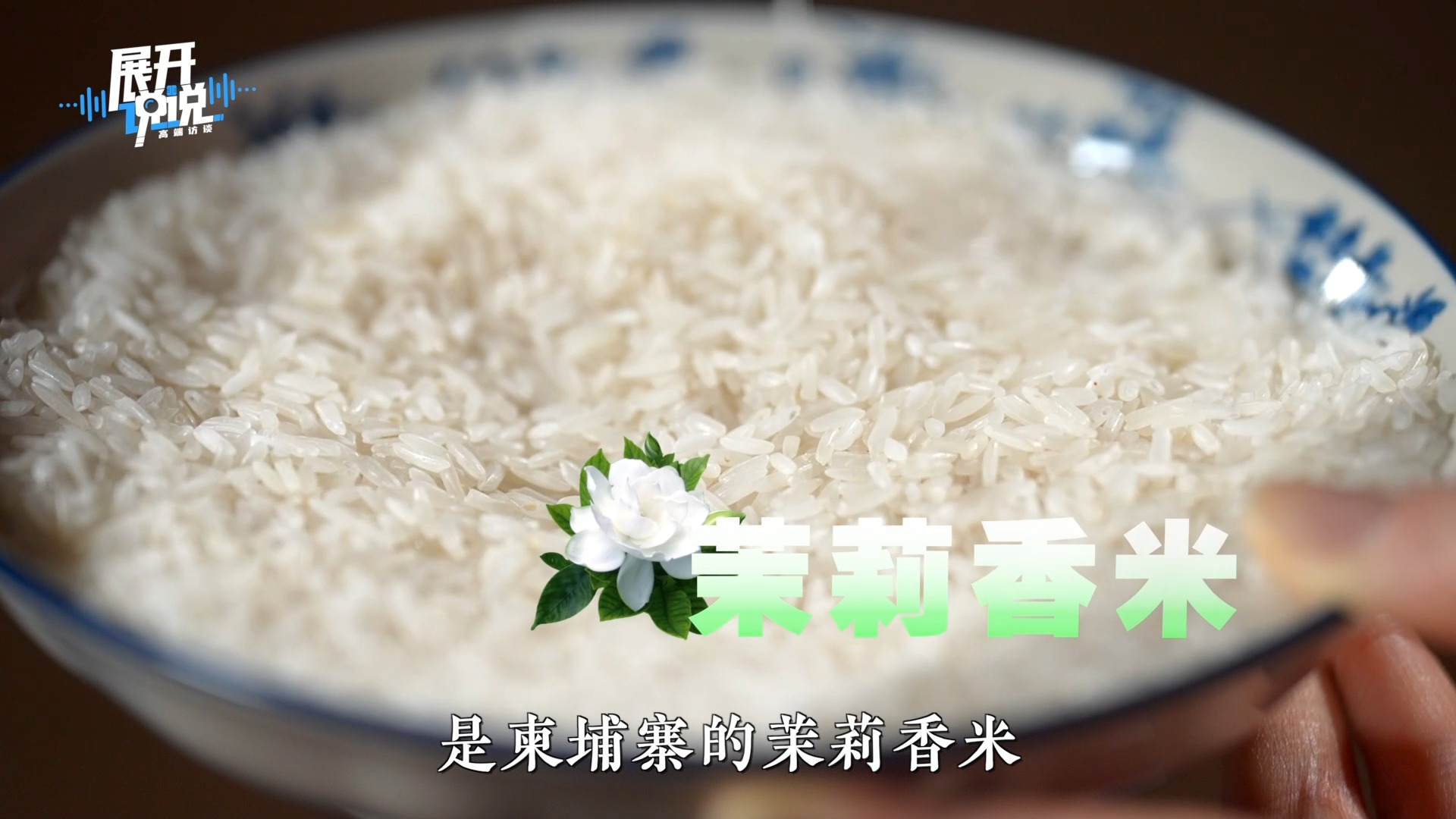
柬埔寨的“稻花香”怎么飘到了中国?
Yang Shi Xin Wen Ke Hu Duan· 2025-04-21 02:19
Core Viewpoint - Cambodian jasmine rice is gaining popularity in China, showcased at the 5th China International Consumer Products Expo, highlighting the collaboration between Cambodia and China in agricultural trade [2][4]. Group 1: Agricultural Trade - In 2022, Cambodia exported nearly 640,000 tons of rice to international markets, with approximately 300,000 tons (almost half) going to China [4]. - The demand for Cambodian rice in China is driven by consumer preferences for diverse flavors, despite China's significant rice reserves [6]. - Advanced agricultural technology from China has helped Cambodian farmers increase their rice yield by nearly double per acre [7]. Group 2: Market Access and Trade Agreements - Various trade platforms, such as the China-ASEAN Expo and the China International Import Expo, facilitate the entry of Cambodian rice into the Chinese market [9]. - The implementation of the China-Cambodia Free Trade Agreement and RCEP has led to an influx of Cambodian specialty agricultural products into China, including longan [9]. Group 3: Infrastructure Development - Recent infrastructure projects, such as the opening of the 71C National Road, enhance trade efficiency between Cambodia and China, allowing for increased transportation frequency [15][17]. - The development of key infrastructure, including highways and airports, supports the growth of tourism and trade, with the Angkor International Airport opening routes to 17 destinations in 8 countries [21]. Group 4: Bilateral Relations - The relationship between Cambodia and China is characterized by mutual cooperation in various sectors, with agriculture being a significant aspect [15][24]. - Cambodian leaders emphasize the importance of adapting trade relations to global trends such as climate change and digitalization, recognizing China as ASEAN's largest trading partner [23].