
工业竞争力

Search documents
欧盟如何应对中国在电池领域的统治地位?钠离子电池的全新战略
Sou Hu Cai Jing· 2026-02-26 03:47
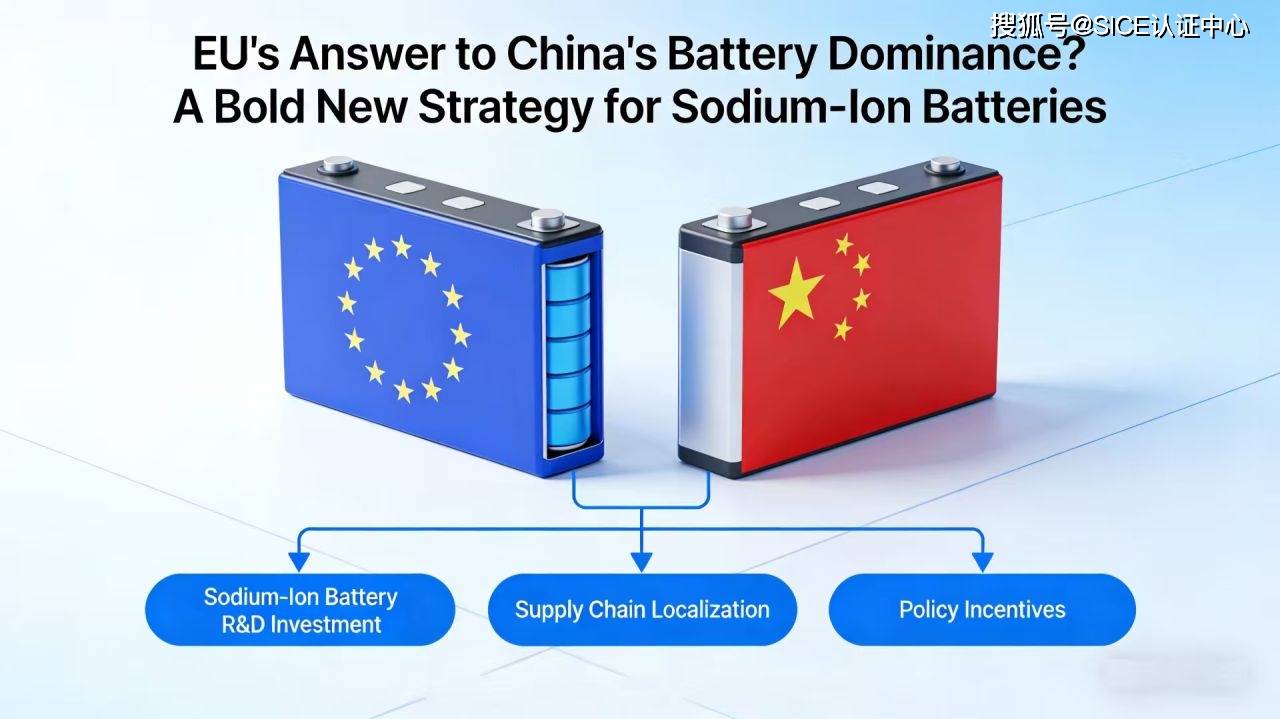
Core Viewpoint - The European Union (EU) has officially prioritized sodium-ion batteries in its energy and competitiveness agenda, marking a significant strategic shift to enhance its industrial base and reduce dependency on imported materials [3][4]. Group 1: Strategic Shift - The European Economic and Social Committee (EESC) has declared sodium-ion battery technology as a strategic priority, emphasizing the need for the EU to act swiftly to avoid falling behind global leaders [3]. - EESC Chairman Seamus Boland highlighted the critical importance of sodium-ion batteries for the EU's competitive advantage and urged for dedicated funding in the upcoming long-term budget (2028-2034) [3]. Group 2: Reasons for Choosing Sodium-Ion Batteries - Sodium is abundant in Europe and can be sourced from desalination processes, significantly reducing reliance on imported critical minerals compared to lithium [3]. - Sodium-ion batteries are more cost-effective and environmentally friendly, aligning well with the EU's green agreements [4]. Group 3: Urgency and Competitive Landscape - The strategic shift is driven by the recognition of the challenges posed by China, which has invested €1.2 billion in battery technology R&D over the past decade [5]. - The EESC calls for a coordinated action plan that includes equal strategic positioning for sodium and lithium in EU policies [5]. Group 4: Support and Infrastructure - Flexible public support is needed, encompassing subsidies, tax incentives, and public-private partnerships for R&D projects [6]. - There is a proposal to revitalize idle facilities into sodium-ion battery super factories to boost production capabilities [7]. Group 5: Vision for the Future - The ambition is to transition from being mere consumers to becoming one of the largest suppliers of sodium-based batteries [8]. - EESC's Industrial Transformation Committee Chairman Alain Coheur emphasized that developing a competitive sodium battery industry in Europe requires political will, coordinated action, and strong investment [8]. - The strategic transition to sodium-ion batteries indicates the end of an era solely reliant on lithium-ion technology, positioning sodium-ion batteries as a cornerstone for future energy independence and industrial competitiveness in Europe [8].

颠覆自贸理念?欧盟要推“含欧量”标签
Huan Qiu Shi Bao· 2026-01-18 22:58
Group 1 - The European Commission is preparing to unveil a proposal called the "Industrial Accelerator Act," which may disrupt decades of free trade policies by imposing strict conditions on foreign investments exceeding 100 million euros, including technology sharing, local hiring, and joint ventures with European companies [1] - The act aims to promote decarbonization in energy-intensive industries while maintaining Europe's production competitiveness, as the region faces ongoing industrial slowdowns, with EU industrial output projected to decline by 2025 and significant job losses in manufacturing sectors in Germany, France, and Italy [1] - High fuel prices resulting from the Russia-Ukraine conflict and supply chain disruptions have increased costs for some energy-intensive industries in the EU, while Chinese advancements in clean technology are putting EU companies at a competitive disadvantage [1] Group 2 - The draft legislation establishes a "Made in Europe" label for products meeting EU production standards, prioritizing companies for public procurement contracts worth billions of euros annually, with a proposed minimum of 60% to 80% of components being "Made in Europe" [2] - The proposal includes the potential establishment of "reserve centers" for critical raw materials to better prepare the EU for future supply shocks, as well as expedited project approvals and the creation of a new "green label" for the steel industry [2] - The plan has sparked internal disputes within the EU, with supporters arguing it could significantly enhance industrial competitiveness, while critics warn of excessive protectionism that could undermine the EU's single market competitiveness [2]
德国工业新订单连续第3个月下降
Sou Hu Cai Jing· 2025-09-05 13:55
Core Points - Germany's industrial new orders fell by 2.9% month-on-month in July, marking the third consecutive month of decline [1] - Domestic new orders decreased by 2.5%, while foreign orders dropped by 3.1%, with orders from the Eurozone and outside the Eurozone declining by 3.8% and 2.8% respectively [1] - The significant decline in new orders was primarily driven by a 38.6% drop in the transportation equipment manufacturing sector, which includes aircraft, ships, and trains [1] - The automotive sector, however, saw a month-on-month increase in new orders of 6.5% [1] - Year-on-year, industrial new orders in Germany decreased by 3.4% after seasonal adjustment [1] - The German Minister of Economic Affairs, Katrin Göring-Eckardt, indicated that the continuous decline in industrial new orders necessitates a focus on restoring industrial competitiveness, including reducing energy and labor costs [1] - Economic forecasts from major research institutions suggest that Germany's economic growth for 2025 will only be between 0.1% and 0.2%, lower than previous summer predictions, influenced by factors such as U.S. tariff policies [1]
【环球财经】德国工业新订单连续第3个月下降
Xin Hua She· 2025-09-05 13:42
Core Insights - Germany's industrial new orders fell by 2.9% month-on-month in July, marking the third consecutive month of decline [1][2] - Domestic new orders decreased by 2.5%, while foreign new orders dropped by 3.1%, with orders from the Eurozone and outside the Eurozone declining by 3.8% and 2.8% respectively [1] - The significant decline in new orders was primarily driven by a 38.6% drop in the transportation equipment manufacturing sector, which includes aircraft, ships, and trains [1] - In contrast, the automotive sector saw a month-on-month increase in new orders of 6.5% [1] Economic Outlook - Year-on-year, Germany's industrial new orders decreased by 3.4% in July [2] - The German Minister of Economic Affairs, Katrin Göring-Eckardt, indicated that the continuous decline in industrial new orders has led several major economic research institutions to revise down their growth forecasts for Germany's economy this year [2] - According to forecasts from institutions like the Munich Institute for Economic Research, Germany's economic growth is expected to be only 0.1% to 0.2% in 2025, which is lower than previous summer predictions [2]