
市场布局多元化

Search documents
宠物行业上市公司半年报出炉 多家头部企业表现亮眼
Sou Hu Cai Jing· 2025-09-03 09:04
Core Insights - The domestic pet industry is transitioning from scale expansion to quality competition, with brand building and diversified market layouts becoming key drivers of profitability [1][9] Group 1: Performance of Leading Companies - Several leading companies in the pet industry reported positive growth in their half-year results, with companies like Guibao Pet and Zhongchong Co. showing significant revenue and net profit increases [2][3] - Guibao Pet led with a revenue of 3.221 billion yuan, a year-on-year increase of 32.72%, and a net profit growth of 22.55% to 378 million yuan [2] - Zhongchong Co. achieved a net profit growth rate of 42.56%, reaching 203 million yuan, with revenue also increasing by 24.32% to 2.432 billion yuan [2] Group 2: Growth in Pet Food Segment - The pet food segment remains the core revenue growth area for leading companies, with Guibao Pet's pet food revenue reaching 1.883 billion yuan, a year-on-year increase of 57.09% [3] - Zhongchong Co.'s pet food revenue surged by 85.79% to 783 million yuan, while Yuanfei Pet reported a total revenue of 791 million yuan, with pet food business revenue growing by 55.39% [3] Group 3: Brand Building and Market Diversification - Companies are increasingly focusing on brand building, particularly their own brands, reflecting growing recognition of domestic pet brands among consumers [4] - Guibao Pet's self-owned brand business significantly contributed to its revenue growth, with its main brand "Maifudi" increasing market share from 2.4% to 6.2% from 2015 to 2024 [4] - Lusi Co. launched a new brand "Miaoguan" targeting high cost-performance products, while also enhancing its existing brand through innovation [4] Group 4: International Market Expansion - Leading companies are diversifying their market layouts by expanding into overseas markets to mitigate risks associated with single market fluctuations [5][6] - Zhongchong Co. reported a 17.61% year-on-year increase in overseas revenue to 1.575 billion yuan, accounting for 64.75% of total revenue [5] - Lusi Co. also saw overseas revenue growth of 19.25% to 246 million yuan, with plans to optimize production capacity and expand into international markets [6] Group 5: Performance Declines in Some Companies - Not all companies experienced growth; Petty Co. reported a revenue decline of 13.94% to 728 million yuan and a net profit drop of 19.23% to 79.1 million yuan [7] - Lusi Co. experienced revenue growth of 11.32% to 391 million yuan but saw a net profit decrease of 12.07% to 30.5 million yuan, attributed to declining sales prices [7] - Despite the decline, Petty Co. noted improvements in operational quality, with a focus on long-term advantages in product development and international supply chains [8]



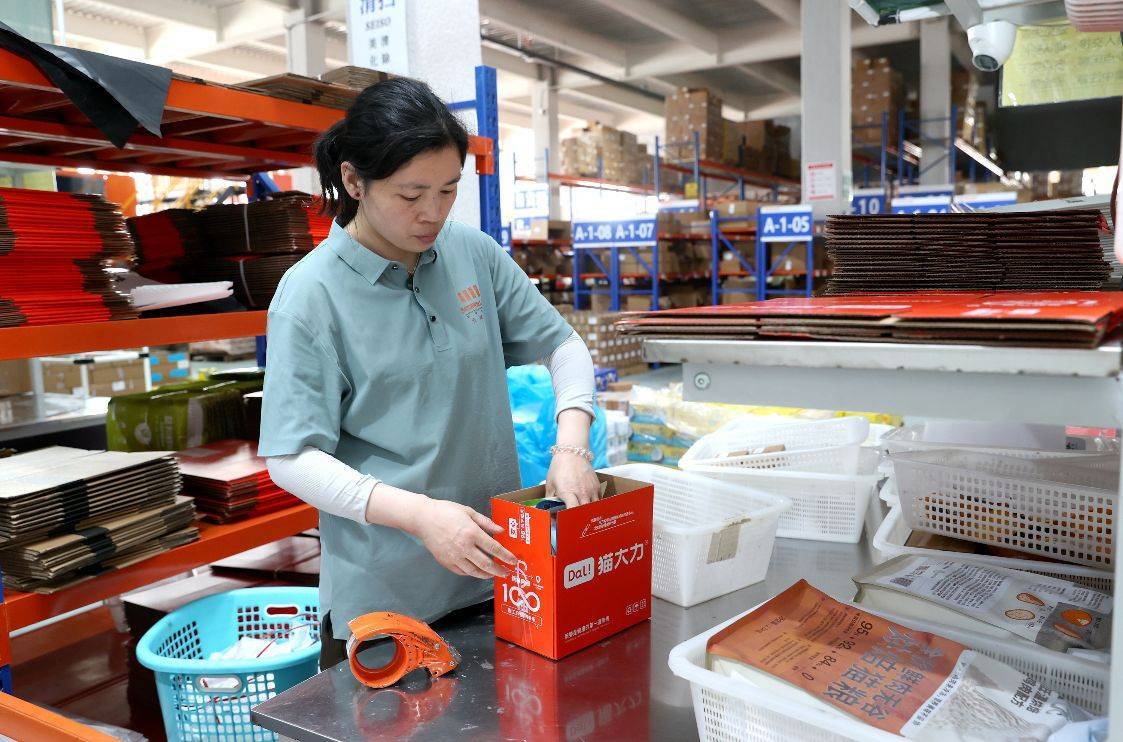
新关税政策生效前夜,跨境电商卖家紧急应对
2 1 Shi Ji Jing Ji Bao Dao· 2025-04-09 07:58
Core Viewpoint - The new tariff policy implemented by the U.S. on April 9 has created urgency among Chinese cross-border e-commerce sellers, prompting them to rapidly adjust their strategies to mitigate potential impacts on their businesses [1][2]. Group 1: Impact of Tariff Policy - The U.S. has imposed a 34% reciprocal tariff on Chinese goods, effective April 9, which has forced companies to rethink their market strategies and risk diversification paths [1][2]. - There has been a noticeable decrease in the volume of goods shipped to the U.S. as sellers become more cautious amid uncertainty, with many customers opting to withdraw their orders just before the tariff took effect [1][2]. - The time lag in shipping (15-30 days) poses significant operational risks for companies, as they must deal with goods already in transit under the new tariff regime [2]. Group 2: Pricing and Cost Adjustments - Companies like Ningbo Linglingqi Cross-Border E-commerce Co. have already raised prices by 20% to 30% on their products to offset the anticipated cost increases due to tariffs [3]. - The adjustment of prices is expected to ultimately be passed on to consumers, leading to higher retail prices in the U.S. market [3]. Group 3: Strategic Adjustments - Companies are focusing on refining their product selections to include essential goods that are less price-sensitive, ensuring that they remain attractive to consumers despite potential price increases [5][8]. - There is a growing urgency for businesses to diversify their market presence beyond the U.S. to mitigate risks associated with over-reliance on a single market [6][8]. - Companies are actively exploring new markets such as Europe, the Middle East, and Latin America, adjusting their team structures and core product categories accordingly [6][8]. Group 4: Market Dynamics and Consumer Behavior - The U.S. market has seen an increase in order volumes in the days leading up to the tariff implementation, indicating a rush among consumers to stock up before prices rise [4]. - Different regions exhibit significant market differences, such as consumer preferences in the Middle East, which are narrower compared to the U.S. market [7]. Group 5: Industry Outlook - The cross-border e-commerce industry is undergoing a profound strategic adjustment, with a focus on proactive measures rather than reactive responses to uncertainties [8]. - The ongoing changes in the industry will not only affect current survival but will also determine future growth potential and competitive strength [8].