干细胞与再生医学

Search documents
有奖竞猜:「2026国自然」哪些生物医药方向将引爆新一轮研究热潮?参与赢小米照片打印机!
生物世界· 2025-12-29 04:16
Core Insights - The article discusses the anticipated hot research areas for the National Natural Science Foundation of China (NSFC) funding in 2026, emphasizing the importance of understanding these trends for project design [4][5]. Group 1: Core Mechanisms - Key focus areas include immune regulation (macrophage polarization, neutrophil function, T-cell exhaustion), mitochondrial function and homeostasis, novel cell death mechanisms (ferroptosis, pyroptosis), metabolic reprogramming (glycolysis, lactylation), and post-translational modifications of proteins (ubiquitination, SUMOylation) [4]. Group 2: Frontier Interdisciplinary Areas - Emerging fields highlighted are epitranscriptomics (RNA modifications like m6A, m7G), intercellular communication (exosomes), host-microbiome interactions (gut microbiota), and stem cells with regenerative medicine [5]. Group 3: Key Technologies - Important technological advancements include single-cell and spatial multi-omics, organoids and disease models, and AI/machine learning-driven target discovery and data analysis [5]. Group 4: Research Case Studies - The article presents several research cases that exemplify how researchers are engaging with these hot topics, including: - Neutrophils and their role in thrombosis, published in the European Heart Journal [12]. - Immune evasion mechanisms in tumors, published in Cell [13]. - Gut microbiota's role in Crohn's disease, published in Gut [14]. - Glycolysis and its implications in cancer, published in Signal Transduction and Targeted Therapy [14]. - Development of organoids for bone repair, published in Advanced Materials [14].


豪掷3.1亿元,增资两家公司,金达莱“跨界”大健康
Xin Lang Cai Jing· 2025-12-22 11:19
Core Viewpoint - Jiangxi Jindalai Environmental Protection Co., Ltd. is making significant moves towards diversification by investing in the healthcare sector, specifically in stem cell technology and medical robotics, to optimize its industrial structure and cultivate new profit growth points [2][3][21]. Investment in Healthcare - On December 19, Jindalai announced an investment of 280 million yuan in Yunnan Jici Medical Technology Co., Ltd., acquiring a 34% stake, making it the second-largest shareholder [2][21]. - On December 21, the company announced an additional investment of 30 million yuan in Beijing Zhongke Hongtai Medical Technology Co., Ltd., acquiring a 10% stake [3][21]. - Both investments target the "big health industry," with Jici Medical focusing on proprietary stem cell technology and Zhongke Hongtai excelling in medical artificial intelligence [3][21]. Rationale for Investment - Jindalai aims to respond to national calls for investment in biomanufacturing and healthcare sectors, enhancing its risk resistance and creating new profit avenues [3][21]. - The company believes that the aging population and the maturation of the industry in China present ample investment opportunities in the big health sector [3][21]. Financial Overview of Jici Medical - As of September 30, Jici Medical reported total assets of 10.01 million yuan, with revenues and net profits of 11.23 million yuan and 1.15 million yuan, respectively, for the first nine months of 2025 [6][26]. - Despite not being particularly strong financially, Jici Medical's ability to generate initial self-sustaining revenue is notable in the capital-intensive biomanufacturing sector [6][26]. Financial Overview of Zhongke Hongtai - Zhongke Hongtai reported total assets of 61.58 million yuan and a net loss of 5.51 million yuan for the first nine months of 2025 [10][31]. - The company is recognized for its innovative medical robotics and has completed 16 clinical trials for its products, which are currently in the regulatory approval process [10][31]. Jindalai's Current Position - Jindalai has a strong financial position, with a debt ratio of only 10.2% and cash reserves exceeding 1.898 billion yuan, allowing it to fund these investments entirely with its own capital [12][33]. - However, the company has experienced a decline in its main business, with a 23.5% drop in total revenue and a 30.14% decrease in net profit for the first nine months of 2025 [13][33]. Strategic Shift - The investments in Jici Medical and Zhongke Hongtai mark Jindalai's formal entry into the biomanufacturing and big health sectors, aligning with national policies that support these industries as emerging growth areas [16][36]. - The company is part of a broader trend among environmental firms diversifying into non-environmental sectors, with nearly half of the listed environmental companies exploring such opportunities [17][38].


复星健康与沙特Fakeeh Care Group达成战略合作
Huan Qiu Wang· 2025-12-04 09:48
Core Insights - Fosun Health and Fakeeh Care Group signed a strategic cooperation memorandum in Jeddah, Saudi Arabia, focusing on four core areas: specialty construction and academic exchange, IT and digital hospital solutions, preventive medicine and wearable devices, and stem cell and regenerative medicine [1][2] Group 1: Strategic Cooperation - The cooperation aims to establish a regular academic exchange mechanism in disciplines such as oncology, cardiovascular, and pediatrics, utilizing remote consultations, personnel visits, and thematic seminars to enhance clinical capabilities and hospital management experience [1] - Both parties will collaborate on digital hospital upgrades and local practices, leveraging Fosun Health's mature smart hospital management system to explore smart healthcare solutions tailored to the Gulf Cooperation Council (GCC) market [1][2] Group 2: Innovation and Research - A new integrated chronic disease management service model will be developed, combining device monitoring, AI early warning, and insurance payment [1] - The partnership will also focus on building a research transformation platform in the field of stem cell and regenerative medicine to support the localization strategy of biotechnology in Saudi Arabia [1][2] Group 3: Market Potential and Collaboration - This collaboration marks a significant step in Fosun Health's internationalization strategy in the Middle East and aims to deepen strategic synergy with Fakeeh Care Group [2] - Both companies will leverage their complementary resources to accelerate medical technology sharing, joint talent cultivation, and industrial innovation transformation [2]
全球首个同种异体人工再生血小板临床研究取得成功
Yang Shi Wang· 2025-09-05 07:14
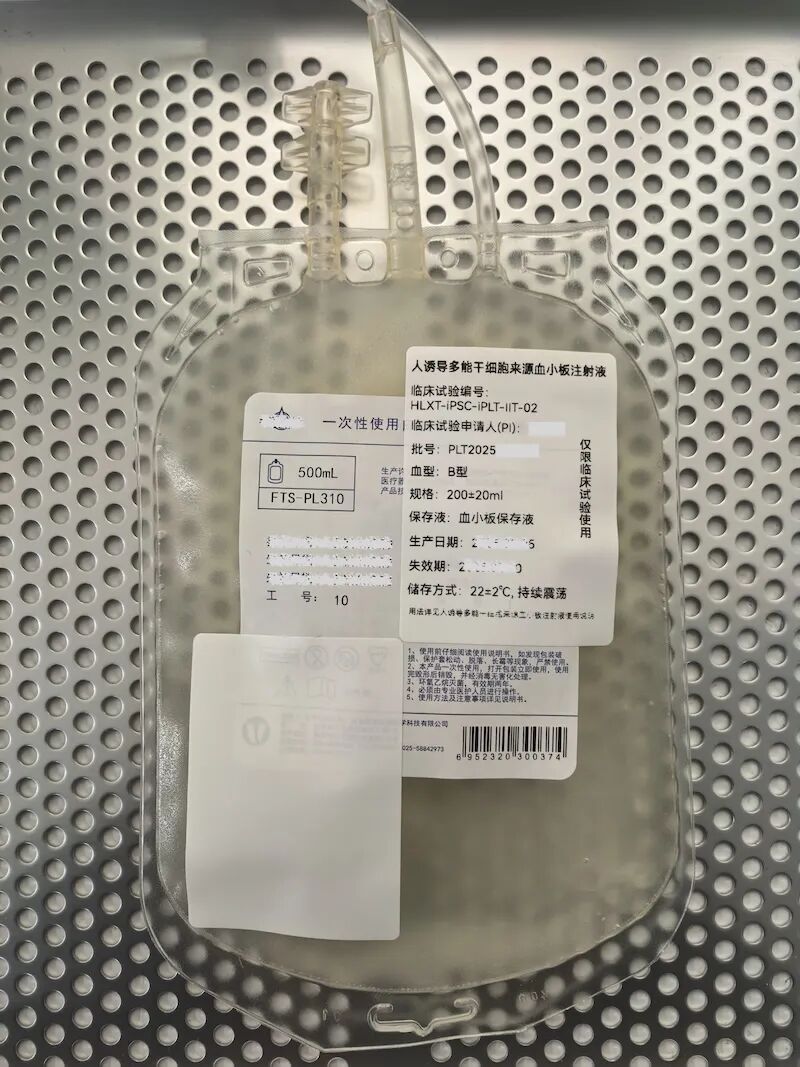
Core Insights - The world's first clinical study on allogeneic artificial platelet regeneration has been successfully conducted in Shanghai, confirming good safety in the first three patients [1][4] Group 1: Clinical Research and Development - The study was led by Professor Shen Shuhong's team at Shanghai Children's Medical Center, in collaboration with multidisciplinary teams from oncology and thoracic surgery [1][4] - The research involved the infusion of "induced pluripotent stem cell-derived platelets (iPLT)" in patients with acute leukemia, aplastic anemia, and complex congenital heart disease, demonstrating initial safety and tolerability [1][4] - The clinical trial aims to address the global issue of platelet shortages, which are exacerbated by the short shelf life of traditional platelets and strict matching requirements [4][5] Group 2: Implications for Healthcare - The successful conversion of artificial platelet technology and initial safety validation provide a new direction for addressing platelet supply shortages and safety concerns [5] - The study has laid a solid foundation for further research, with plans to explore higher doses and efficacy assessments to provide safe and effective platelet transfusion alternatives for more patients [5] - Shanghai Children's Medical Center continues to focus on cutting-edge medical technology and has made significant progress in gene therapy for various diseases, indicating a commitment to innovation in pediatric care [5]
突破!济医附院首次获批山东省重点研发计划项目
Qi Lu Wan Bao Wang· 2025-08-08 07:34
Core Viewpoint - The Shandong Provincial Department of Science and Technology has approved the "Stem Cell sEV for Regenerative Repair of Key Organs and Clinical Industrial Transformation" project from Jinan Medical University Affiliated Hospital, marking a significant breakthrough in the hospital's pharmaceutical product development and recognition at the provincial level [1][3]. Group 1: Project Approval and Significance - The project is part of the Shandong Provincial Key R&D Program (Competitive Innovation Platform), aimed at gathering innovative resources and tackling key technologies [3]. - The approval signifies Jinan Medical University Affiliated Hospital's strong development momentum in cell therapy research and clinical industrial transformation [3]. Group 2: Project Focus and Goals - The project, led by Professor Zhang Bin, will focus on key scientific issues and industrial bottlenecks related to stem cell extracellular vesicles (sEV) in tissue regeneration and repair [3]. - The aim is to analyze the secretion regulation mechanisms of sEV, optimize engineering modification technologies, and establish standardized production systems, creating a complete industrial chain from basic research to clinical transformation [3]. Group 3: Future Development and Impact - The establishment and operation of this platform will significantly enhance innovation in the field of stem cells and regenerative medicine, improving the hospital's core competitiveness in biotherapy technology and product development [4]. - The hospital plans to leverage this opportunity to advance platform construction, focus on core technology breakthroughs, deepen industry-academia-research cooperation, and accelerate the transformation of research outcomes [4].