
年夜饭文化

Search documents
父亲的冲菜
Xin Lang Cai Jing· 2026-02-24 18:21
Core Viewpoint - The tradition of making "Chongcai" (冲菜) has been a significant part of family gatherings during the New Year, symbolizing both nostalgia and the continuity of family heritage through generations [1][2][3][4] Group 1: Tradition and Family Heritage - "Chongcai" has been a staple in the family’s New Year celebrations, remaining present even as the overall meal has become more abundant over the years [2] - The preparation of "Chongcai" has been passed down through generations, with the father initially teaching the children the specific techniques required for its preparation [2][3] - The act of making "Chongcai" is imbued with memories of family bonding and the father's guidance, highlighting the emotional connection to this culinary tradition [3][4] Group 2: Preparation Process - The preparation of "Chongcai" involves selecting the freshest vegetables, ensuring they are properly dried, and cooking them at the right temperature to maintain their unique flavor [2][3] - A critical step in the process is the fermentation of the cooked vegetables with fresh greens, which enhances the flavor and is essential for achieving the desired "Chong" taste [2][3] - The author reflects on past mistakes in the preparation process, emphasizing the importance of attention to detail in achieving the perfect "Chongcai" [3]
当“00后”掌管年夜饭,画风彻底变了……来晒晒你家的年夜饭!
Xin Lang Cai Jing· 2026-02-18 03:55
Group 1 - The article discusses the evolving nature of Chinese New Year dinners, highlighting how younger generations are taking charge of meal preparations and introducing new dishes, referred to as the "ninth cuisine" [1] - Traditional dishes are being complemented with modern twists, such as spicy noodle dumplings and fusion cuisine like Italian pasta with Chinese flavors [4][9] - The essence of family reunion remains unchanged despite the changing flavors and forms of the New Year dinner [9] Group 2 - Regional specialties are emphasized, showcasing unique dishes from various provinces, such as Shanxi's flower steamed buns and yellow millet cakes, and Northeast China's chicken stewed with mushrooms [10][14] - The article highlights the significance of fish in Jiangsu's New Year meals, where it is prepared in multiple ways, symbolizing abundance [19][20] - The culinary traditions from different regions, including Hubei's fish cakes and Guangxi's white-cut chicken, reflect the diverse cultural heritage of Chinese New Year celebrations [37][41][45]


团圆年夜饭 寻味中国年
Xin Lang Cai Jing· 2026-02-16 23:39
Core Viewpoint - The demand for traditional Chinese New Year dinners, known as "年夜饭," has surged, with consumers seeking unique culinary experiences and cultural immersion during the festive season [4][7][9] Group 1: Market Trends - The market for New Year's Eve dinners is experiencing robust growth, with high consumer expectations for both taste and immersive experiences [4][7] - Many tourists are opting for local specialties, such as the unique "黎苗年夜饭" in Hainan, which features fresh and authentic local ingredients [4][6] - The trend of family gatherings during the New Year is prominent, with many families choosing to dine in hotels and rural guesthouses to enhance their festive experience [5][6] Group 2: Cultural Integration - Businesses are integrating local customs and intangible cultural heritage into their New Year's Eve dinner offerings, enhancing the dining experience with cultural activities [7][8] - In Jiangxi's Wuyuan, traditional dishes are being highlighted to evoke nostalgia among returning travelers, with a focus on local flavors [7] - Various accommodations are offering hands-on cultural experiences, such as making traditional crafts, to deepen guests' understanding of local customs [8] Group 3: Service Quality and Sustainability - Operators are enhancing service quality through staff training and optimizing booking processes to ensure a smooth dining experience [9] - Emphasis is placed on food safety and quality control, with many establishments sourcing ingredients locally to promote sustainability [9] - The concept of "green dining" is gaining traction, with a focus on minimizing waste and promoting fresh, locally sourced ingredients [9]
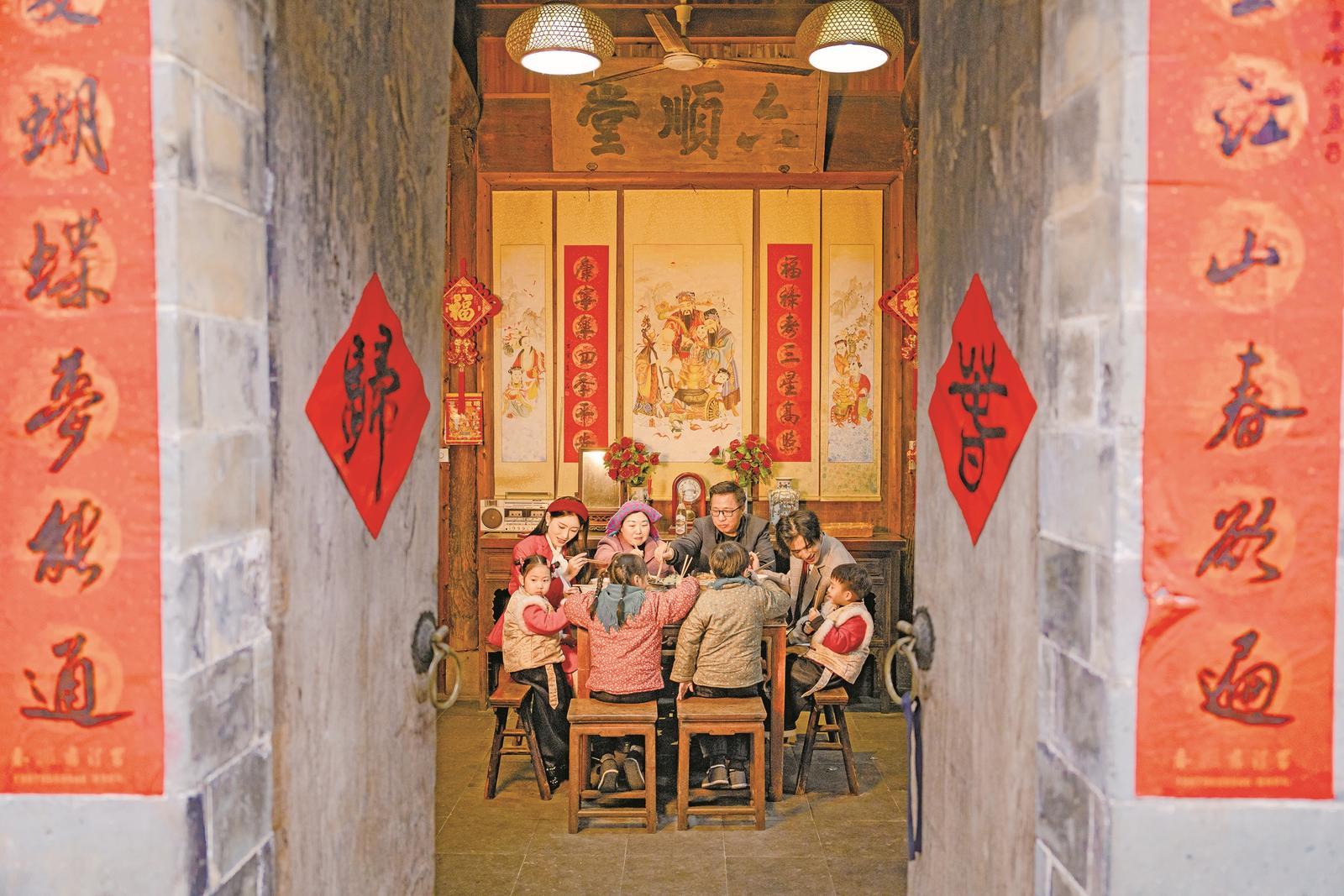
(新春见闻)寻味台胞年夜饭 “拼”出两岸团圆味
Xin Lang Cai Jing· 2026-02-16 13:00
Group 1 - The article highlights the cultural fusion in the New Year's Eve dinner of Taiwanese and mainland Chinese families, showcasing the blending of culinary traditions [1][2] - The character Cao Jingwen represents a new generation of Taiwanese youth who are embracing and promoting traditional Chinese culture through innovative means, such as her guqin studio [1] - The significance of traditional dishes like "润饼" (runbing) and "龙井虾仁" (Longjing shrimp) reflects the deep-rooted cultural connections and the importance of family reunions during the Spring Festival [2] Group 2 - The article emphasizes the role of food in expressing cultural identity and familial bonds, particularly during significant celebrations like the Lunar New Year [1][2] - The integration of Taiwanese and Zhejiang culinary elements in family meals symbolizes the broader theme of unity and shared heritage among Chinese communities [1] - The experiences of young Taiwanese individuals in mainland China illustrate the ongoing cultural exchange and the desire to maintain connections with their roots while adapting to new environments [2]