延续摩尔

Search documents
当硅逼近极限,这家初创企业抢滩原子级芯片新赛道
3 6 Ke· 2026-02-09 02:24
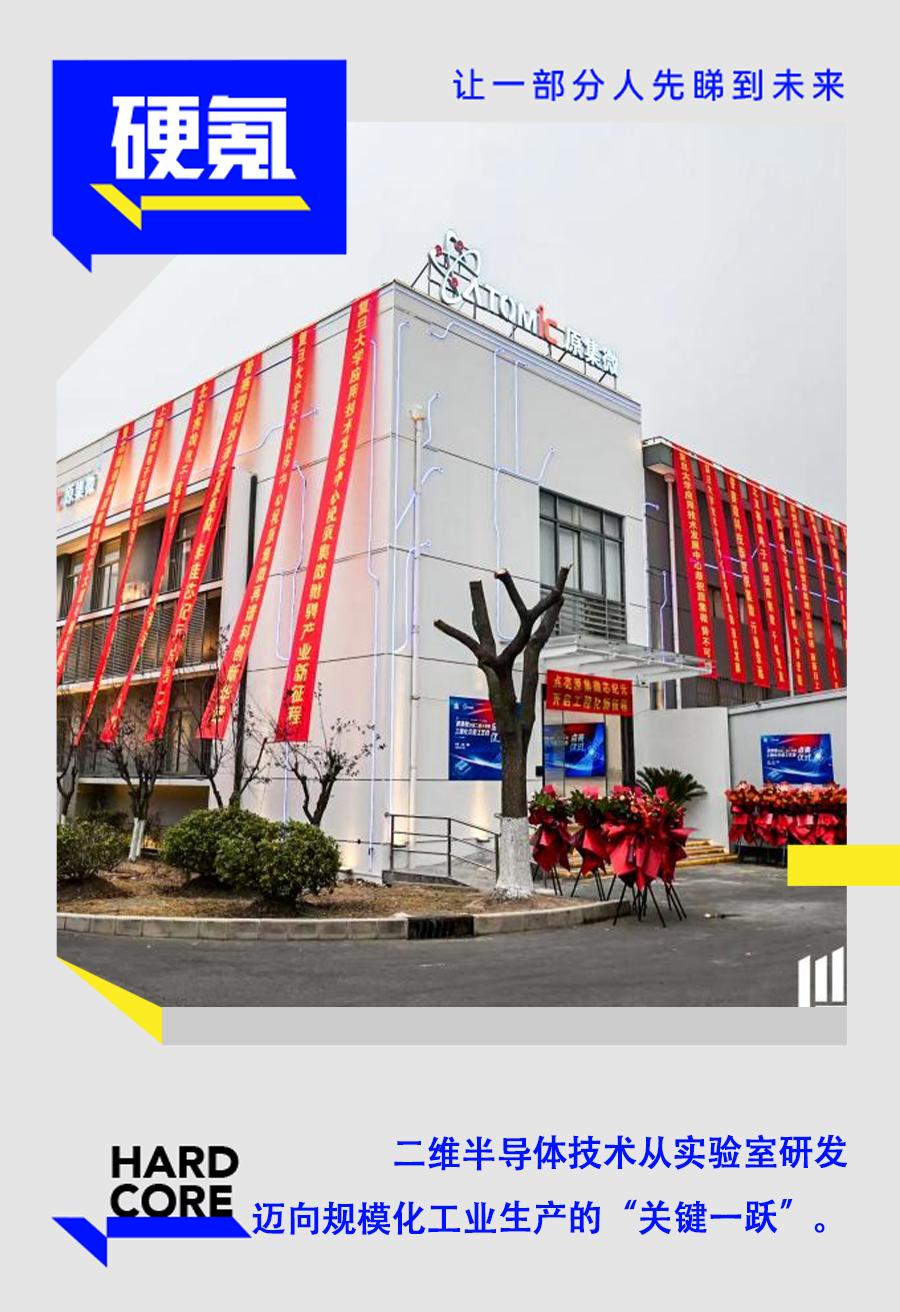
Core Insights - The traditional logic of Moore's Law is facing fundamental challenges as semiconductor components shrink to nanoscale, particularly below 3 nanometers, where silicon materials approach physical limits [2][3] - The global semiconductor industry is pursuing two paths: "continuing Moore's Law" through structural innovation within silicon, and "beyond Moore's Law" by exploring new materials and architectures, with two-dimensional semiconductors seen as a promising direction [3][4] Industry Developments - A team from Fudan University has developed the world's first 32-bit RISC-V architecture microprocessor, "WUJI," based on two-dimensional semiconductor materials, achieving an integration of 5,900 transistors [4][6] - The team aims to transition from academic research to engineering applications, focusing on scaling up from thousands to millions of transistors while addressing yield, cost, and process stability challenges [6][12] Engineering and Production - The newly established engineering demonstration line in Shanghai represents a significant step towards industrial production of two-dimensional semiconductors, aiming to achieve a scale of at least 1 million transistors [6][12] - The current demonstration line operates at a silicon-based process node of approximately 180 nanometers, which is considered relatively outdated but manageable for a startup [12] Competitive Landscape - Major global semiconductor companies like TSMC, Samsung, and Intel are also investing in two-dimensional semiconductors as potential successors to silicon at the 1-nanometer node, indicating a competitive landscape [8][13] - The domestic team recognizes the urgency to advance from research to industrialization to avoid losing competitive advantages to established semiconductor giants [13] Technological Challenges - The transition from research prototypes to commercially viable products involves overcoming significant technical bottlenecks, particularly in achieving acceptable performance, yield, and reliability for two-dimensional semiconductor chips [11][15] - The introduction of AI-driven integrated process optimization is seen as a crucial method to enhance manufacturing efficiency and yield in the complex chip production process [14][16] Future Plans - The company plans to focus on establishing standards and processes for two-dimensional materials, collaborating with various stakeholders to create a complete industrial ecosystem [15] - Funding from recent financing rounds will be directed towards talent acquisition, cleanroom construction, equipment procurement, and process development to accelerate the transition from laboratory to industrial production [16]