建养一体化

Search documents
老旧小区加装电梯纳入国补, 项目“启动难”痛点迎刃而解
Mei Ri Jing Ji Xin Wen· 2026-01-09 06:05
Core Viewpoint - The recent policy by the National Development and Reform Commission and the Ministry of Finance includes subsidies for the installation of elevators in old residential communities, addressing the challenges of project initiation and enhancing competition in the industry [1][4]. Group 1: Policy Changes and Impacts - The 2026 "Two New" policy introduces subsidies for the installation of elevators in old residential communities, marking a significant step in improving living conditions and stimulating domestic demand [4]. - The subsidy standards have been refined to provide differentiated support based on the number of elevator stops, moving away from a flat-rate subsidy [1][4]. - The policy aims to accelerate previously slow projects due to funding issues, positively impacting the entire elevator manufacturing, installation, and service industry [4][5]. Group 2: Current Status and Statistics - Since the beginning of the 14th Five-Year Plan, Beijing has installed 3,391 elevators, benefiting approximately 35,000 households [5]. - In 2025, Beijing plans to complete the installation of 6,073 elevators in old residential buildings, with significant progress already reported [5][6]. - The highest number of elevator installations in Beijing is in Haidian District, with 1,375 units installed [7]. Group 3: Installation Models and Challenges - There are three main models for elevator installation: self-funded by residents, funded by property units or collectives, and a leasing model encouraging private investment [8]. - The new policy alleviates cash flow pressures for companies and activates more projects, but government subsidies may not fully cover costs, serving primarily as a catalyst for additional funding from residents and private sectors [10][21]. - Concerns remain among residents regarding the long-term maintenance costs and potential impacts on property values, complicating consensus on installation [11][14]. Group 4: Market Dynamics and Future Considerations - The new policy is expected to reshape market demand and competition, benefiting manufacturers, installation companies, and maintenance service providers [20]. - Increased participation from small and medium-sized enterprises in bidding for government projects is anticipated, leading to heightened competition in the industry [20]. - Companies may need to explore integrated construction and maintenance models to gain competitive advantages in this evolving market landscape [20][21].

老旧小区加装电梯纳入国补, 项目“启动难”痛点迎刃而解 业内
Mei Ri Jing Ji Xin Wen· 2026-01-09 01:13
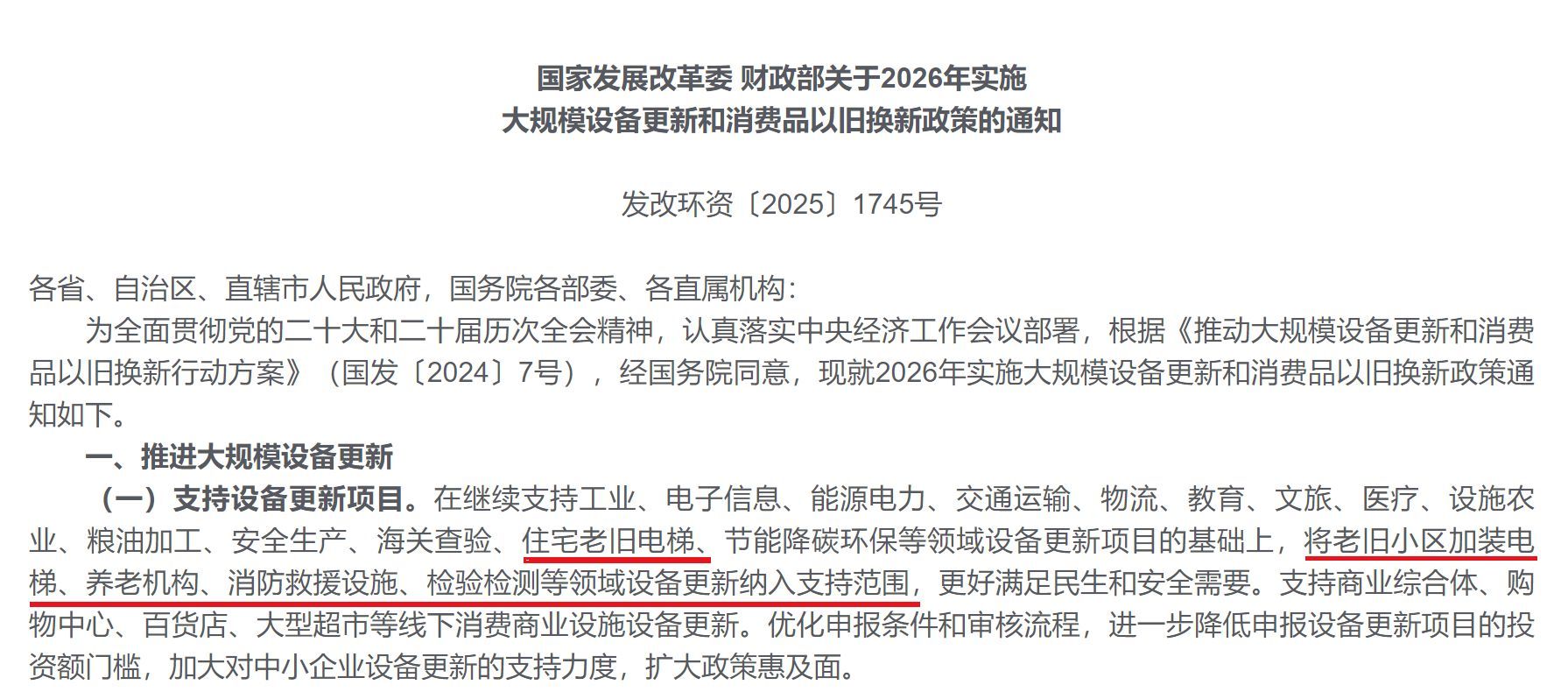
Core Viewpoint - The inclusion of elevator installation in old residential areas under national subsidies is a significant move to enhance public welfare and stimulate domestic demand, addressing the previous funding challenges that hindered project initiation [1][4]. Group 1: Policy Changes and Impacts - The National Development and Reform Commission and the Ministry of Finance have announced a new policy for 2026 that includes subsidies for installing elevators in old residential areas, optimizing support mechanisms and subsidy standards [1][4]. - The adjustment in subsidy standards from fixed amounts to tiered subsidies based on the number of floors will provide more targeted financial support for elevator installations [1][4]. - The policy aims to accelerate the installation of elevators, which has been slow due to funding issues, positively impacting the entire elevator manufacturing, installation, and service industry [4][5]. Group 2: Current Status and Statistics - As of the latest data, Beijing has completed the installation of 3,391 elevators since the start of the 14th Five-Year Plan, benefiting approximately 35,000 households [5][6]. - In 2025, Beijing plans to complete the installation of 6,073 elevators as part of its urban renewal efforts [5]. - The highest number of elevator installations in Beijing is in Haidian District, with 1,375 units, followed by Chaoyang District with 1,056 units [6]. Group 3: Installation Models and Challenges - There are three main models for elevator installation in old residential areas: owner-funded self-construction, collective funding by property units, and a leasing model encouraging private investment [8]. - The new policy is expected to alleviate cash flow pressures for companies and activate more projects, addressing the "difficult start" issue previously faced by residents [10][12]. - However, concerns remain regarding the long-term maintenance costs and the potential impact on property values, which may complicate consensus among residents [12][13]. Group 4: Market Dynamics and Future Considerations - The new policy is likely to reshape market demand and competition within the elevator installation industry, prompting companies to explore integrated construction and maintenance service models [18][19]. - Companies may need to adjust pricing strategies to reflect the differences in installation costs based on building structures and local conditions, ensuring fairness in government subsidies [19]. - The increased participation of small and medium-sized enterprises in bidding for government projects could enhance industry competitiveness [19].
老旧小区加装电梯将被纳入“国补”
3 6 Ke· 2026-01-07 02:38
Group 1 - The core viewpoint of the article is that the new policy implemented by the National Development and Reform Commission and the Ministry of Finance in 2026 aims to enhance the installation of elevators in old residential communities, which is expected to accelerate projects that have been slow due to funding issues, positively impacting the entire elevator industry chain [1][4][10]. Group 2 - The 2026 policy introduces new subsidies for the installation of elevators in old residential areas, particularly focusing on improving living conditions and stimulating domestic demand [1][4]. - The subsidy standards have been adjusted to be more precise, with differentiated subsidies based on the number of floors for elevator updates, moving away from flat-rate subsidies [1][10]. - The policy is seen as a significant signal from the government to address the challenges faced by elderly residents in accessing their homes, potentially resolving long-standing issues [4][10]. Group 3 - Since the start of the 14th Five-Year Plan, Beijing has completed the installation of 3,391 elevators, benefiting approximately 35,000 households, with ongoing projects expected to further increase these numbers [4][5]. - The funding support from national bonds for elevator updates has led to the initiation of numerous projects, with over 9,000 elevators under construction as of late 2025 [5][10]. - The policy encourages various funding models for elevator installation, including self-funded by residents, collective funding by property units, and leasing models involving private capital [8][10]. Group 4 - The article highlights the need for a new model of "integrated construction and maintenance" in the elevator installation industry, as increased competition may require companies to adapt their strategies [21][22]. - The differentiation in subsidy standards based on construction costs and elevator installation will help residents understand the rationale behind government support, aiming to foster community harmony [22].
房建工程通过交工验收,济商高速迎来建设新进展
Qi Lu Wan Bao Wang· 2025-09-12 03:42
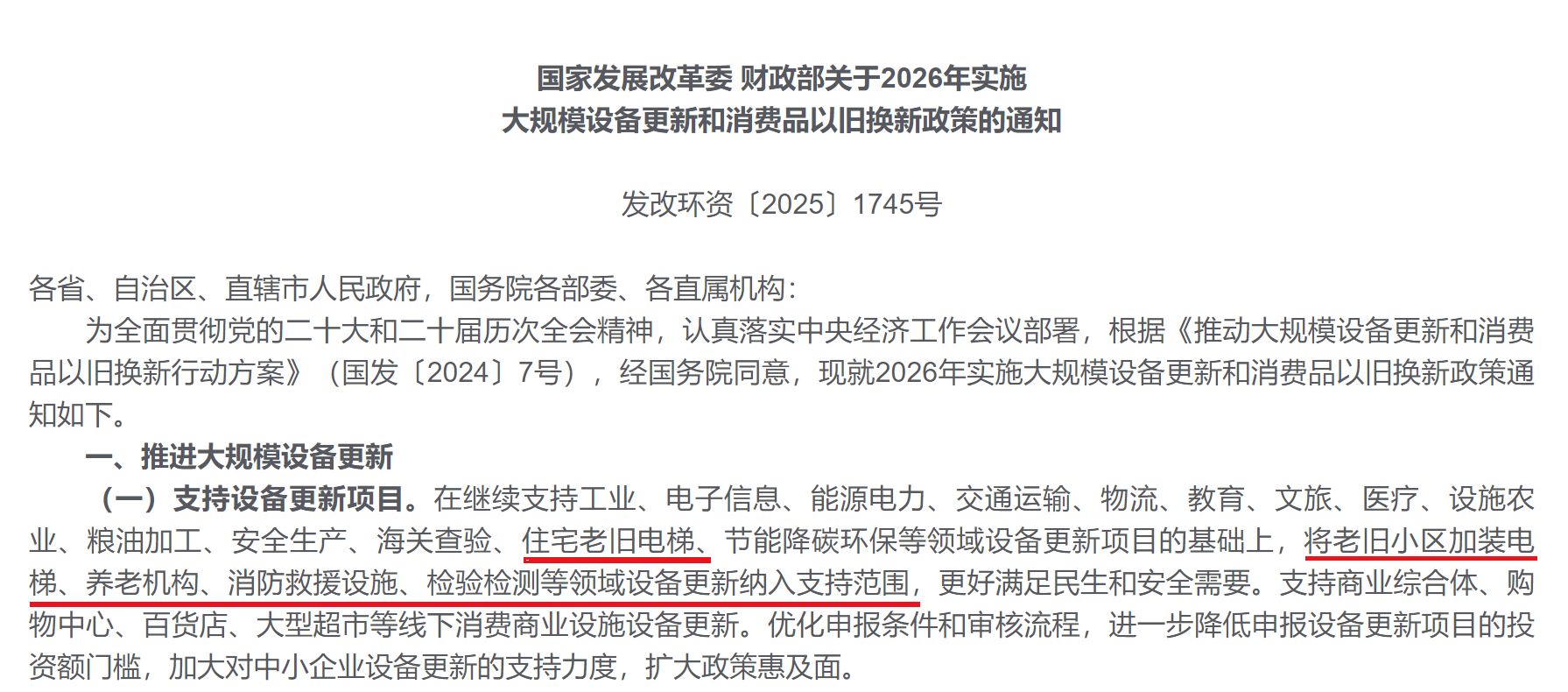
Core Points - The completion of the Jishang Expressway housing construction project has passed the acceptance inspection, marking its readiness for delivery and laying a solid foundation for the expressway's operational goals [1] - The project is part of Shandong Province's "14th Five-Year" highway network plan, with a total length of 45.06 kilometers and designed for a speed of 120 kilometers per hour, enhancing connectivity between major economic zones [5] Group 1 - The acceptance inspection was conducted by a joint team, which included various organizations, and confirmed that the project met quality and safety standards [1][3] - The project has achieved a 100% compliance rate for concrete structure strength and successfully passed the waterproofing test on the first attempt [3] - The construction team has implemented digital and intelligent technologies to enhance project management and ensure quality control throughout the construction process [4] Group 2 - The project adopts a "highway + new energy" construction model, integrating renewable energy technologies such as photovoltaic power generation and microgrid systems [3] - The Jishang Expressway will serve as a rapid transit route connecting the Jiaodong Peninsula, Lunan, and the Central Plains, significantly improving transportation conditions in the region [5] - The project emphasizes a dual prevention mechanism for safety management and focuses on addressing common quality issues through technological innovation [4]