电梯

Search documents
100%分红!超5400亿巨头,突传大动作!
券商中国· 2026-03-30 12:56
Core Viewpoint - Midea Group has announced a significant 100% dividend payout for 2025, returning nearly all of its annual profit to shareholders, which reflects a strategic shift beyond traditional home appliances into AI-driven innovations across various sectors [1][2]. Financial Performance - Midea Group reported total revenue of 458.5 billion yuan and a net profit attributable to shareholders of 43.95 billion yuan for 2025 [1]. - The total dividend for 2025 amounts to 32.4 billion yuan, with an additional 11.6 billion yuan allocated for share buybacks, bringing the total return to shareholders to approximately 44 billion yuan, nearly equivalent to the net profit [2]. Market Position - Midea is recognized as the world's leading brand in smart home appliance sales for 2025, with the highest sales in both online and offline channels in China [3]. - The company has expanded its global reach, increasing the number of countries covered by its subsidiaries from 27 to 50, and holds the top market share in 32 product categories on major platforms like Amazon in North America and Europe [3]. Cash Flow and Investment - Midea's operating cash flow for 2025 reached 53.3 billion yuan, indicating strong business performance and providing the confidence to distribute all profits as dividends [4]. - The company invested 17.8 billion yuan in R&D in 2025, a 9.6% increase year-on-year, with plans to invest over 60 billion yuan in cutting-edge research over the next three years [5]. Diversification and Growth - Midea is diversifying beyond home appliances, achieving significant market shares in various sectors, including motors for air conditioning and elevators, and has seen over 50% growth in its automotive components division [6]. - The company’s robotics division, KUKA, ranks among the top four global industrial robot manufacturers, with a 9.6% market share in domestic sales and a 47.4% share in heavy-load robots [7]. AI Integration - Midea has established a 400-member AI team focused on smart home, manufacturing, and industry empowerment, with over 13,000 AI agents deployed across various operational areas [8]. - The company’s AI capabilities are enhancing efficiency in manufacturing and logistics, exemplified by the certification of its washing machine factory as the world's first smart factory [9]. Future Outlook - Midea's AI-driven initiatives are expected to redefine its operational efficiency and market valuation, prompting discussions on whether the company should be reassessed in the context of the AI era [10].



山东省东营市特检院使命在肩全力当好企业安全“护航员”
Xin Lang Cai Jing· 2026-02-28 02:44
Group 1 - The Shandong Dongying Special Inspection Institute focuses on public welfare and safety, aiming to support enterprise safety development and protect public life and property [1] - The institute actively responds to public concerns regarding elevator safety, conducting thorough inspections and providing rectification advice for identified issues [1] - The institute is involved in the renovation of old elevators, optimizing safety device designs and offering training sessions for elevator management personnel [1] Group 2 - The institute has established a "green channel" for urgent inspections, ensuring timely and efficient service for enterprises during critical production periods [2] - A recent emergency inspection for a gas storage tank was completed efficiently, adhering to safety regulations and ensuring employee safety during the holiday season [2] - The institute plans to enhance its service model by integrating inspection, service, and advocacy to improve the effectiveness of technical support for special equipment safety [2]
科教新城推进老旧电梯更新 提升居民居住品质
Yang Zi Wan Bao Wang· 2026-02-25 10:19
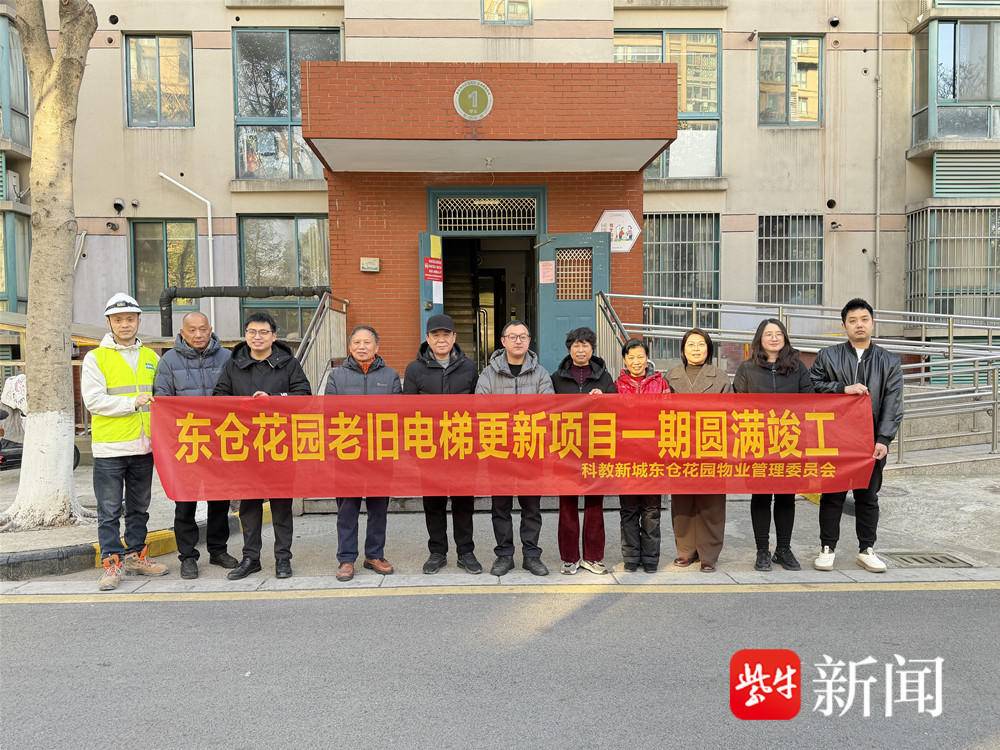
Group 1 - The old elevator update project in Dongcang Garden, the first relocation and resettlement community in Taicang Science and Education New City, has achieved phased results, with four updated elevators officially put into use before the Spring Festival, improving residents' mobility and enhancing living satisfaction [1][3]. - Dongcang Garden, built in 2008, has elevators that have been in service for 17 years, facing issues such as component aging and frequent malfunctions, posing safety risks for residents, especially the elderly [3][5]. - The project was prioritized as a key livelihood initiative following the introduction of policies supporting the update of old residential elevators with ultra-long-term special government bonds, with the local government quickly responding to implement these policies [3][5]. Group 2 - To ensure efficient project advancement, the local construction management office established a special working group composed of community members, property management representatives, and resident representatives to complete preliminary tasks such as soliciting resident opinions and publicizing plans [5]. - The first batch of four elevators was updated and delivered for use within one month after the project commenced on January 4, 2026, receiving widespread recognition from residents [5]. - The update work for the remaining two elevators in Dongcang Garden is progressing smoothly, with completion expected by the end of April 2026, and the local government will continue to coordinate and supervise to ensure the successful conclusion of this beneficial project [7].
广州老楼装上新电梯 一键直达“幸福年”
2 1 Shi Ji Jing Ji Bao Dao· 2026-02-24 23:09
Group 1: Tourism and Economic Impact - Guangdong has become a representative of "reverse New Year," with a 44% year-on-year increase in tourist orders during the 2026 Spring Festival, and a 76% increase in hotel orders [1] - The revitalization of old neighborhoods in Guangzhou, such as Yongqingfang, has attracted tourists and improved local living conditions, blending traditional culture with modern amenities [1] Group 2: Elevator Installation and Upgrades - The installation of elevators in old residential buildings has significantly improved the quality of life for residents, particularly the elderly, by resolving the "upstairs difficulty" issue [2][3] - Guangzhou has implemented policies to support the installation and upgrading of elevators, including a multi-faceted funding model combining national and local subsidies [4] Group 3: Market Demand and Industry Trends - The demand for elevator upgrades and maintenance is increasing as many elevators reach the end of their service life, with an estimated 274 million elevator upgrades needed by 2030 in China [7] - Companies in the elevator industry are shifting focus from manufacturing to service-oriented business models, with an emphasis on the after-market services such as upgrades and maintenance [9]
新疆乌苏市市场监管局助企有序复工复产
Zhong Guo Shi Pin Wang· 2026-02-24 10:29
Core Viewpoint - The Urumqi Market Supervision Bureau in Xinjiang is enhancing its efforts to support safe and orderly resumption of work and production for enterprises following the Spring Festival holiday, focusing on safety inspections and training for special equipment [1] Group 1: Safety Inspections - The bureau conducted comprehensive safety inspections on facilities such as pressure vessels, elevators, and lifting machinery, identifying and rectifying 3 safety hazards [1] - A "safety reminder" document for 2026 was distributed, outlining "Five Alerts" for resuming work and production, and specific guidelines for enterprises and employees [1] Group 2: Support for Enterprises - A special task force was established to assist enterprises in resuming operations, including applying for government subsidies for 4 old elevators and providing guidance on equipment registration and work commencement [1] - The bureau utilized a smart supervision platform to oversee inspections of special equipment for 50 key enterprises, ensuring compliance and safety [1] Group 3: Training and Technical Support - A specialized training session was organized, covering over 70 participants including safety administrators and operators of special equipment, aimed at revising emergency plans for enterprises [1] - Technical experts assisted special equipment users, such as gas stations and hospitals, in conducting operational diagnostics and developing maintenance and emergency response plans [1]
广州老楼装上新电梯,一键直达“幸福年”
2 1 Shi Ji Jing Ji Bao Dao· 2026-02-24 10:00
Group 1: Industry Trends - The elevator market in China has seen significant growth over the past 20 years, with over 7.8 million elevators in operation by the end of 2020, and an expected 2.74 million elevators requiring updates and renovations by 2030 [7] - The demand for maintenance and renovation of aging elevators is becoming a necessity, as elevators typically require significant repairs after 15 years of use, with maintenance costs potentially reaching up to two-thirds of the original purchase price [8] - Companies are increasingly focusing on the after-market services for elevators, including renovation and maintenance, as the new installation market slows down, indicating a shift from manufacturing to service-oriented business models [9] Group 2: Policy and Financial Support - The government of Guangdong and Guangzhou has introduced subsidy policies for the renovation and installation of elevators in old residential buildings, creating a diversified funding model that includes national and local subsidies [4] - Guangzhou has implemented a national debt subsidy program for the replacement of elevators older than 15 years, providing a fixed subsidy of 150,000 yuan per elevator, which has facilitated the financial burden on residents [6] - The city has established a clear process for residents to apply for subsidies, ensuring that they can take advantage of financial support for elevator renovations [4][6] Group 3: Community Impact - The installation of new elevators in old residential buildings has significantly improved the quality of life for residents, particularly the elderly, by making it easier to access their homes and enhancing their overall living experience [2][3] - The integration of elevator installation with urban renewal projects in Guangzhou has revitalized old neighborhoods, improving not only accessibility but also the aesthetic and functional aspects of the community [9] - The positive changes brought by elevator renovations have contributed to a more vibrant and comfortable living environment, especially during festive seasons, reflecting the city's commitment to enhancing residents' well-being [6][9]
新春走基层|广州老楼装上新电梯,一键直达“幸福年”
2 1 Shi Ji Jing Ji Bao Dao· 2026-02-24 09:54
Group 1: Industry Trends - The elevator market in China has seen significant growth over the past 20 years, with over 7.8 million elevators in operation by the end of 2020, and an expected 2.74 million elevators requiring updates and renovations by 2030 [7] - The demand for maintenance and renovation of aging elevators is becoming a necessity, as elevators typically require significant repairs after 15 years of use, with maintenance costs potentially reaching up to two-thirds of the total cost of the elevator [8] - Companies are increasingly focusing on the after-market services for elevators, including renovation and maintenance, as the market for new installations slows down, indicating a shift from manufacturing to service-oriented business models [9] Group 2: Policy and Financial Support - The government of Guangdong and Guangzhou has introduced subsidy policies for the renovation and installation of elevators in old residential buildings, creating a diversified funding model that includes national and local subsidies, as well as contributions from residents [4] - Guangzhou's experience in elevator renovation has been recognized at the national level, with the city being included in a list of replicable policies for updating old elevators, highlighting its effective funding and operational mechanisms [4] - As of October last year, Panyu District reported the highest number of applications for national subsidies for elevator updates, with 498 elevators receiving funding, totaling 74.7 million yuan, demonstrating the effectiveness of the subsidy program [6] Group 3: Consumer Experience - The installation of new elevators in older residential buildings has significantly improved the quality of life for residents, particularly the elderly, by alleviating the difficulties associated with climbing stairs [2][3] - Residents have expressed satisfaction with the convenience provided by newly installed elevators, which allow for easier access to their homes and enhance their overall living experience during festive seasons [3] - The integration of elevator installation with urban renewal efforts in Guangzhou aims to improve not only accessibility but also the overall living environment, including enhancements to green spaces and lighting [9]
我国多领域设备更新加快落地“惠企利民” 为假日消费注入新动能
Yang Shi Wang· 2026-02-22 07:27
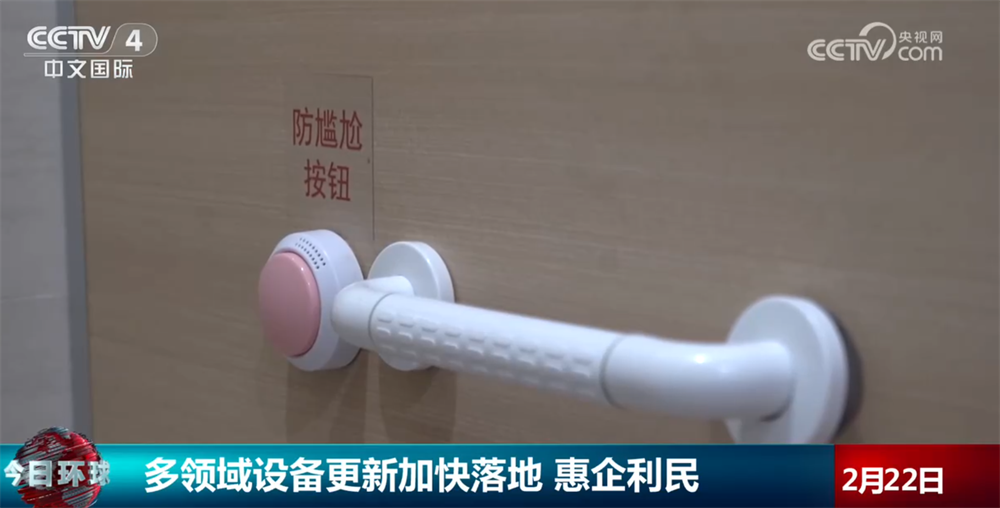
Group 1 - The core viewpoint of the articles highlights China's continued push for large-scale equipment upgrades across various sectors to stimulate holiday consumption and support social welfare [1][3][5][7] Group 2 - The offline commercial facilities' equipment upgrades have been included in the policy for the first time this year, with several commercial complexes in Shanghai, Zhejiang, and Sichuan showcasing new equipment during the Spring Festival [1] - In the grain and oil processing sector, new equipment for peanut oil production has been implemented to ensure market supply during the holiday period [3] - The policy for upgrading old elevators has been expanded to include the installation of new elevators in old residential communities, benefiting over 600 households in a Beijing community [5] Group 3 - A new round of equipment upgrades is set to launch in 2026 across 31 provinces and regions, covering approximately 20 sectors including industry, electronic information, and energy conservation [7] - The application conditions and review processes for equipment upgrade projects will be optimized, lowering the investment threshold and increasing support for small and medium-sized enterprises [7]
降门槛、扩范围!新一轮设备更新已陆续启动
Yang Shi Xin Wen· 2026-02-22 02:25
Group 1 - The core viewpoint of the articles highlights the ongoing large-scale equipment upgrades across various sectors in China, aimed at stimulating holiday consumption and supporting social welfare [1][2] - The inclusion of offline commercial facilities in the equipment upgrade policy for the first time this year has led to significant improvements in consumer experience during the Spring Festival, with daily foot traffic increasing by over 50% in upgraded shopping malls [1] - In the grain and oil processing sector, new equipment has been implemented to ensure market supply during the holiday period, resulting in improved product quality and taste [1] - The expansion of the old elevator upgrade policy to include the installation of elevators in old residential communities has benefited over 600 households in a Beijing community [1] Group 2 - A new round of equipment upgrades is set to commence in 2026 across 31 provinces and regions, covering approximately 20 sectors including industrial, electronic information, and energy conservation [2] - The government plans to optimize application conditions and review processes for equipment upgrade projects, lowering investment thresholds and increasing support for small and medium-sized enterprises [2]
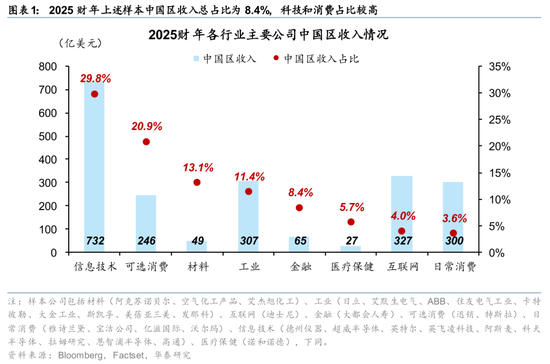
华泰 | 海外看中国:海外上市公司如何看中国修复
Xin Lang Cai Jing· 2026-02-20 01:40
Core Insights - Domestic demand recovery is ongoing, with technological advancements and emotional consumption as structural highlights [1] - 45% of multinational companies reported improved performance in Q4 2025, while 33% expect further improvement [1][5] - The real estate sector continues to drag down growth, but there are notable structural strengths, particularly in technology and service consumption [1][5] Domestic Demand - Overall domestic demand remains weak, but there are structural highlights such as optimistic prospects for renovation in coatings and elevators [2][12] - Service and emotional consumption are experiencing high demand, with companies like Estée Lauder and Procter & Gamble reporting double-digit growth in specific product lines [2][12] - Companies are adapting to trade friction by increasing localization, with ABB reporting over 85% localization in China [2][12] Trade Friction - Localization strategies are being adopted by companies to mitigate the impact of trade tensions, with some firms shifting to local development and sales models [2][12] - Companies like SKF are facing supply chain pressures due to trade policy uncertainties, but are implementing measures to manage these risks [34] Technology - There is a slight decline in external demand for technology products, with a trend towards domestic substitution becoming evident [3][13] - Traditional companies are benefiting from increased demand driven by technological advancements, particularly in the semiconductor sector [3][13] - U.S. export restrictions and domestic competition are impacting overseas companies' revenues in China [3][13] Industry Summaries Materials and Industrial - Demand for materials and industrial products is generally weak, but there are structural demands in electronic gases due to the semiconductor industry [14][26] - The coatings sector is showing resilience due to renovation demand, while traditional electrical and elevator businesses are facing declines [14][27] Consumer Sector - The consumer sector shows significant differentiation, with companies like Uniqlo experiencing revenue declines due to increased competition [20][21] - High-end products in the beauty sector are performing well, while food and beverage sectors are facing slight declines [21][22] Financial Services - MetLife's operations in China are showing strong recovery, with a focus on optimizing distribution channels and enhancing service offerings [19][41] - The company is transitioning away from telemarketing and focusing on high-end customer segments [41] Technology Hardware - Semiconductor companies maintain a high revenue share in China, but face challenges from export controls and supply chain adjustments [23][30] - Companies like Intel and AMD are experiencing delays and increased competition from local manufacturers [30][31] Machinery - Caterpillar anticipates positive growth in the Chinese market, particularly in larger excavators, while SKF is facing challenges in the automotive sector [32][33] - Companies are adjusting their strategies to focus on local development and sales, with a shift in production towards Southeast Asia [39]