异构计算平台

Search documents
5000亿芯片巨头,大变局!
Zhong Guo Ji Jin Bao· 2026-01-08 09:27
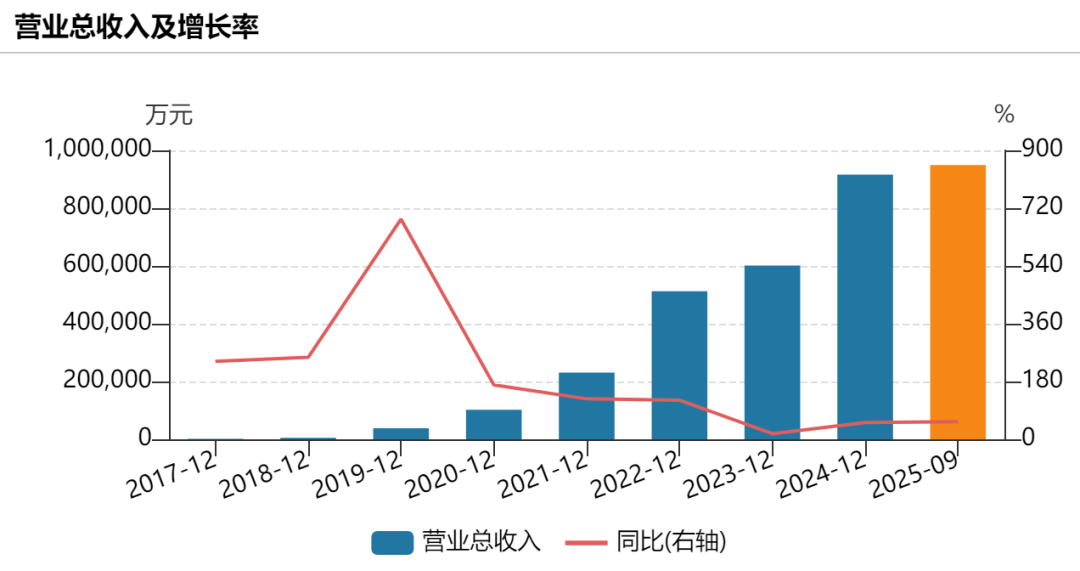
Core Insights - Haiguang Information is building a domestic chip open ecosystem, aiming to establish a strong presence in the CPU industry by leveraging a "high-speed rail model" for market penetration [1][2] - The company has achieved significant revenue growth, with projections indicating a potential revenue of approximately 20 billion yuan by 2027, supported by a dual-core strategy involving both CPU and DCU development [2][6] Revenue Growth and Projections - Haiguang Information's revenue reached 9.162 billion yuan in 2024, with a year-on-year growth of 52.4% [4] - The company maintained a revenue growth rate of 17.3% in 2023, despite industry downturns, and surpassed its 2024 revenue in the first three quarters of 2025, achieving 9.49 billion yuan, a 54.65% increase year-on-year [4][6] Dual-Core Strategy - The company has established a "dual-core" development framework, integrating high-end general-purpose processors (CPU) and co-processors (DCU) to enhance its market competitiveness [2][7] - Haiguang Information's DCU products are designed to meet national strategic needs and have been well-received by clients and ecosystem partners [8] Ecosystem Collaboration - The company emphasizes collaboration with various partners in the ecosystem, including machine manufacturers, xPU manufacturers, and OS vendors, to create a comprehensive open ecosystem for domestic chips [2][6] - As of December 2025, the "Light Alliance" has gathered over 6,000 partners and established 28 physical ecological adaptation centers across the country [20] Future Development Stages - The company has outlined its development in three phases: the initial phase focused on product development (2014-2019), the second phase on providing critical infrastructure (2020-2023), and the upcoming third phase (2024 onwards) aims to integrate with upstream and downstream partners to build a self-sufficient domestic chip ecosystem [3][21]

英伟达被批准入股英特尔 联手重塑全球芯片产业格局
Zhong Guo Jing Ying Bao· 2025-12-21 13:58
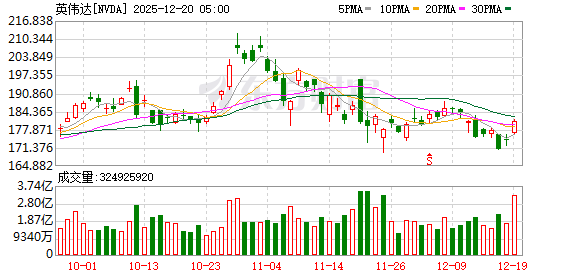
Group 1 - The core viewpoint of the news is that the FTC's approval of NVIDIA's $5 billion strategic investment in Intel is seen as a significant regulatory milestone that will accelerate the development of next-generation AI chips and reshape the global semiconductor industry amid increasing US-China tech competition [3][4]. - Following the announcement, Intel's stock rose to $36.82 per share, reflecting a 74.67% increase over the past six months, while NVIDIA's stock reached $180.99 per share, with a market capitalization of $4.4 trillion [1][6]. - The collaboration between NVIDIA and Intel involves the joint development of customized CPUs based on the x86 architecture, integrating NVIDIA's NVLink technology with GPUs to create a new heterogeneous computing platform for data centers and AI PCs [2][4]. Group 2 - The investment allows NVIDIA to reduce its reliance on TSMC for GPU manufacturing by potentially integrating Intel's capabilities, which could serve as a backup production route amid rising US-China tech decoupling risks [6]. - The partnership is expected to enhance Intel's manufacturing and transformation efforts under its "IDM 2.0" strategy, with the development of x86+RTX SoCs potentially marking its return to the high-performance computing market [6]. - AMD and ARM ecosystems are likely to face challenges as they may be excluded from the next generation of AI PCs and servers due to the deep integration of NVIDIA and Intel's technologies [5][7]. Group 3 - The approval of the investment by the FTC reflects a strategic endorsement of the collaboration, although there may be regulatory conditions to prevent the formation of new technological barriers [4]. - China's response to this partnership could involve regulatory scrutiny, as the Chinese market regulator has initiated an antitrust investigation into NVIDIA, which may limit the collaboration's scope in China [7][8]. - China is actively promoting its own semiconductor ecosystem, focusing on RISC-V architecture and domestic AI chip development, indicating a competitive landscape that extends beyond performance to standards and ecosystems [7][8].