微机电系统(MEMS)

Search documents
脑机接口,重大突破!
证券时报· 2026-02-07 13:12
Core Viewpoint - The article highlights significant advancements in brain-machine interface (BMI) technology in China, showcasing breakthroughs in flexible electrode arrays and clinical applications, indicating a growing investment interest and market potential in this field [1][4][6]. Group 1: Technological Breakthroughs - A research team from Northwestern Polytechnical University has developed a three-dimensional conical carbon-based flexible cortical electrode array, addressing key issues such as brain tissue damage and poor biocompatibility, and achieving international space environment technology validation [1]. - The electrode shows hundreds of times improvement in key performance metrics compared to traditional metal electrodes, ensuring long-term safety and stability for clinical applications [1]. - The article notes that 2025 is referred to as the "year of the brain-machine interface" in China, with multiple clinical trials and innovations being reported [2]. Group 2: Investment and Market Growth - Investment enthusiasm in the BMI sector has surged, with 24 financing events recorded from January to November 2025, marking a 30% year-on-year increase, and total financing exceeding 10 billion yuan over the past five years [4]. - The "14th Five-Year Plan" has identified brain-machine interfaces as one of six future industries, indicating a strategic focus on this technology as a new engine for economic growth [4]. - The BMI market in China was valued at 3.2 billion yuan in 2024, with an 18.8% year-on-year growth, projected to reach 5.58 billion yuan by 2027, reflecting a 20% growth rate [6]. Group 3: Clinical Applications and Innovations - Ming Vision Brain Machine Technology has introduced an implantable BMI visual reconstruction system, offering new possibilities for visually impaired patients [5]. - The second invasive BMI clinical trial has achieved significant progress, transitioning from 2D screen control to 3D physical world interaction [5]. - Shanghai Brain Tiger Technology has successfully completed the first clinical trial of a fully implanted, wireless, and functional BMI product, emphasizing the technology's potential to connect life and hope [5]. Group 4: Stock Market Performance - Several BMI-related stocks have experienced significant declines, with 14 stocks showing over a 20% drop from their highs, including HaiGe Communication and PuLiTe [6][7]. - In terms of profit forecasts for 2025, nine BMI-related stocks are expected to see net profit growth, with notable increases for companies like BeiLu Pharmaceutical and LePu Medical [8].


1700万订单,气相色谱仪国产替代+1
仪器信息网· 2025-12-19 03:56
Core Viewpoint - The successful acquisition of a 170 million yuan order by Sichuan Zhongce Biao Wu Technology Co., Ltd. for its domestically developed online gas chromatography analyzer marks a significant milestone for the application of high-end domestic analytical instruments in the national energy sector, transitioning into a new phase of scale and normalization [2] Group 1: Product Development and Technology - The core components of the domestic online gas chromatography analyzer, such as the chip-level micro-sampler and thermal conductivity detector, are likened to the "heart" of the instrument [4] - The company has achieved over 95% localization in the overall production of the analyzer, with its performance reaching international advanced levels and some technologies being internationally leading [4] Group 2: Market Validation and Testing - The National Pipeline Group has opened industrial testing sites, allowing the product to undergo over 10,000 hours of rigorous testing, demonstrating data accuracy and stability comparable to or even superior to imported equipment [5] - The product has been tested in extreme environments, such as those encountered in the China-Russia East Line project, further validating its reliability [5]

MEMS时钟新贵,要革命SiTime
半导体行业观察· 2025-12-18 01:02
Core Viewpoint - A new micro clock based on MEMS technology has been developed, achieving record stability with a deviation of only 102 nanoseconds after 8 hours of operation, making it a potential competitor to atomic clocks while being smaller and more energy-efficient [1][5]. Group 1: Technology and Features - The MEMS clock consists of tightly integrated components on a chip smaller than a sugar cube, featuring a silicon wafer with a piezoelectric film that vibrates at its inherent frequency [3]. - The clock's stability is attributed to phosphorus-doped silicon, which maintains mechanical properties despite temperature changes, allowing for operation between -40°C and 85°C without significant frequency variation [3][4]. - The system includes self-correcting features with an internal temperature sensor that adjusts the heating element to maintain timing accuracy [4][5]. Group 2: Performance and Comparison - The MEMS clock can run continuously for 8 hours with an error of only 102 billionths of a second, translating to a deviation of just over 2 microseconds over a week [5]. - Compared to atomic clocks, the MEMS clock is significantly smaller and consumes only one-tenth to one-twentieth of the power, making it a more practical solution for various applications [5][6]. Group 3: Applications and Future Prospects - The technology has broad potential applications, particularly in environments where GPS signals are unreliable, such as space exploration and underwater tasks, where compact and low-power timing devices are essential [6][7]. - The project is part of a DARPA initiative aiming for a clock that can run for a week with an error of just 1 microsecond, indicating ongoing research and development challenges [6]. - Despite competition from established companies like SiTime, the team believes their physics-based approach can lead to a more precise resonator, potentially outperforming existing MEMS solutions [7].
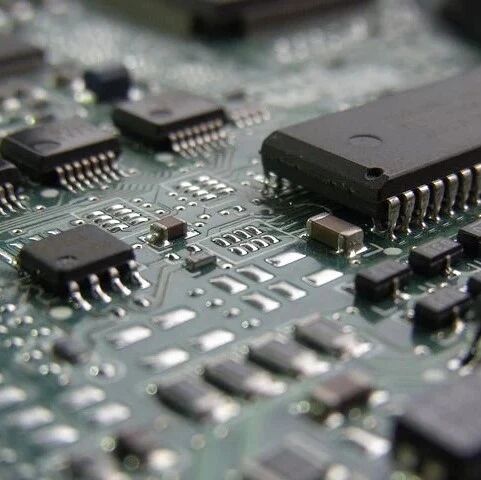
重磅!深迪半导体强势重组!
是说芯语· 2025-07-14 03:45
Core Viewpoint - Deeply Semiconductor (Shaoxing) Co., Ltd. has undergone significant changes, including new shareholders such as BYD Co., Ltd. and an increase in registered capital by over 6.94% from approximately $17.07 million to about $18.26 million, indicating strong investor confidence and growth potential in the semiconductor sector [1][3]. Group 1: Company Overview - Founded in 2008, Deeply Semiconductor is a pioneer in China's semiconductor industry, specializing in the research and design of MEMS gyroscope series inertial sensors for commercial and automotive applications [1]. - The company has developed a comprehensive and professional business system, with products applied across various sectors, including IoT, smart terminals, smart homes, artificial intelligence, and industrial automation [1]. Group 2: Product and Market Position - In the automotive sector, Deeply Semiconductor's six-axis IMU series products enhance vehicle positioning accuracy and safety, positioning them as potential core components for advanced autonomous driving systems [2]. - The company has successfully completed 13 rounds of financing, attracting major investors like BYD and Haibo Investment, which not only provide capital but also strategic industry insights [2][4]. Group 3: Recent Developments and Industry Context - The recent investment from BYD was in discussion for about a year, highlighting the strategic interest in Deeply Semiconductor, although details on potential business collaborations remain undisclosed [3]. - The semiconductor industry is experiencing a merger and acquisition wave, with nearly 270 cases reported from 2020 to 2025, driven by the need for technological upgrades and competitive positioning [4]. - The global semiconductor market is showing growth, with sales reaching $59 billion in May 2025, a 19.8% increase from the previous year, while the domestic semiconductor industry is also expanding rapidly [5]. Group 4: Competitive Landscape - Despite the growth in the semiconductor sector, domestic MEMS inertial sensor companies face challenges, with top foreign companies holding a significant market share of 69% in MEMS accelerometers and 93% in IMUs [6]. - The restructuring of Deeply Semiconductor is expected to enhance its competitiveness in the domestic market and challenge the dominance of foreign firms in the MEMS gyroscope sector [6].