
性价比消费趋势

Search documents
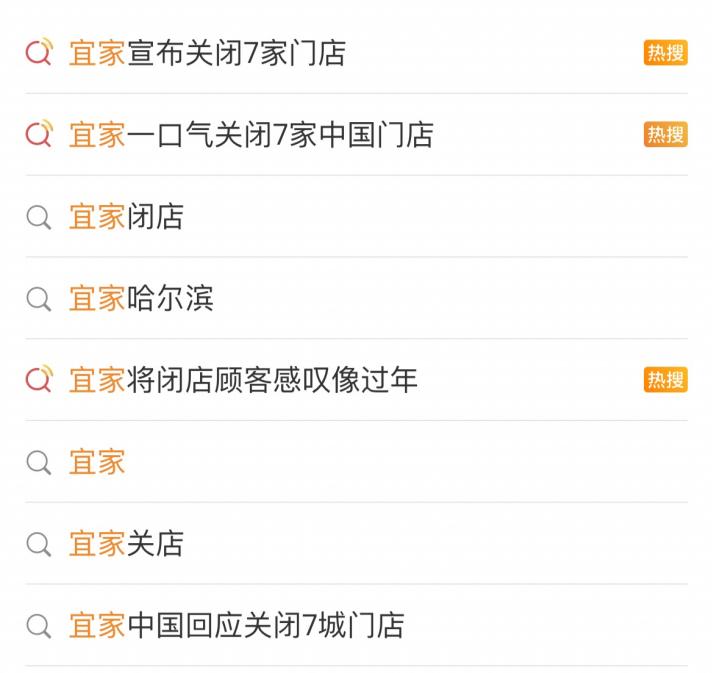
零售巨头宣布关店,清仓引发3小时排队抢购,“现场像过年”
3 6 Ke· 2026-01-27 01:00
Core Insights - IKEA is closing seven stores in China, marking its largest store reduction since entering the market 28 years ago, as it seeks to adapt to changing consumer preferences and market dynamics [3][9][21] - The closures have sparked significant consumer interest, with long lines and a rush to purchase discounted items, indicating a nostalgic farewell to the brand's iconic stores [1][10][17] Group 1: Store Closures and Market Impact - The seven stores being closed include locations in Shanghai, Guangzhou, Tianjin, Nantong, Xuzhou, Ningbo, and Harbin, with operations ceasing on February 2, 2026 [1][9] - This decision is part of a broader trend where IKEA has been closing stores since 2021, with a notable decline in sales growth from 17% to 6.5% between 2021 and 2023 [9][10][19] - The closures are seen as a strategic move to address declining revenues, with sales in the Chinese market dropping from 12.07 billion yuan in the previous fiscal year to 11.15 billion yuan, a decrease of nearly 1 billion yuan [9][10][21] Group 2: Changing Consumer Preferences - The shift in consumer behavior is attributed to a transition from new home purchases to renovations of existing homes, which has reduced the effectiveness of IKEA's large store model [13][14] - Local brands have gained market share by offering more tailored products and services, leveraging e-commerce and local supply chains to meet consumer demands more effectively [15][16] - The nostalgia surrounding IKEA's stores reflects a collective farewell to a shopping experience that is no longer aligned with current consumer needs [10][17] Group 3: Future Strategies - IKEA plans to invest in smaller store formats and digital channels, with a goal to open over ten small stores in the next two years, focusing on high-frequency items and closer proximity to urban consumers [21][22] - The company is also implementing a price subsidy policy for popular products, aiming to regain market interest and adapt to the evolving landscape [22] - The strategic shift indicates a move from a "destination shopping" model to a more integrated approach that combines large warehouses, small urban stores, and online platforms [21][22]

本土比萨龙头赴港IPO!性价比红利VS扩张隐忧
Sou Hu Cai Jing· 2026-01-23 10:02
Core Viewpoint - The article discusses the IPO of Big Pizza, a leading domestic pizza restaurant chain in China, aiming to become the first local pizza stock in Hong Kong, amidst a growing trend of restaurant companies going public in the region [1]. Company Overview - Big Pizza, founded by Zhao Zhiqiang and Ma Jifang in 2002, has grown from a single store in Beijing to 387 locations across 127 cities, with a focus on affordable pricing and self-service dining [3][4]. - The company holds a significant market position, ranking first in domestic pizza restaurants by GMV and leading in the self-service and Western casual dining segments [3]. Financial Performance - Big Pizza has experienced rapid revenue growth, with revenues of 944 million yuan in 2023, 1.147 billion yuan in 2024 (up 21.5%), and 1.389 billion yuan in the first three quarters of 2025 (up 66.6% year-on-year) [7]. - The average customer spending has decreased from 70.9 yuan in 2023 to 62.8 yuan in 2025, while the table turnover rate increased from 4.6 times per day to 6.0 times [5][6]. Expansion Plans - The company plans to use the IPO proceeds to fund store expansion, technology upgrades, supply chain optimization, and brand building, with a target of opening 610 to 790 new stores by 2028 [14][12]. - However, the company faces challenges with regional imbalances in store distribution, as most locations are concentrated in northern China, while southern regions remain underrepresented [16][12]. Competitive Landscape - Big Pizza's competitive edge lies in its ability to engage with consumers through social media and adapt quickly to feedback, which helps maintain high repurchase rates [11]. - The pizza market is becoming increasingly competitive, with both international brands like Pizza Hut and local brands like Zunbao posing significant challenges [18][12]. Financial Risks - The company has a high debt ratio of 93.02% as of September 2025, with total liabilities of 838 million yuan against total assets of 901 million yuan, raising concerns about its financial stability [16][12]. - The reliance on supplier credit financing and the high proportion of lease liabilities could pose risks if new store openings do not meet profitability expectations [17][16].
会员店模式在国内行不通?
Hu Xiu· 2025-08-19 02:14
Core Viewpoint - The article discusses the challenges faced by membership stores in China, particularly focusing on the struggles of local brands compared to established foreign players like Sam's Club and Costco. It highlights the need for these stores to adapt to changing consumer demands and improve their product offerings and brand trust. Group 1: Membership Store Challenges - Sam's Club China has faced consumer criticism regarding product quality after introducing brands like Holley and Wangwang, leading to the removal of controversial products from shelves [1] - Hema has closed its last X membership store in several cities, indicating a retreat from the membership model [2] - The rapid expansion of membership stores has not translated into sustainable success, with local brands like Fudi shifting focus to high-end organic supermarkets instead of warehouse membership models [3][4] Group 2: Market Dynamics - The membership store model in China is undergoing a transformation due to deep changes in retail structure and consumer demand, suggesting a potential "value reshaping" for membership stores [5] - The rise of middle-class consumers in China, with a significant increase in GDP and private car ownership, has created a favorable environment for membership stores [30] - However, a trend of consumer downgrading has emerged, with shoppers increasingly prioritizing price and quality, pushing retailers to adapt [31] Group 3: Competitive Landscape - Sam's Club and Costco have established a strong foothold in China, with Sam's Club planning to open 8-10 new stores annually starting in 2025, while Costco faces challenges due to its reliance on imported goods [25][23] - The competition is intensifying, with various retail formats emerging, such as discount community supermarkets and boutique supermarkets, which may replace traditional membership stores [32][35] - Despite challenges, the middle-income group in China remains a solid consumer base for membership stores, with a report indicating that the population of middle-income individuals has reached 109 million [36] Group 4: Operational Insights - Sam's Club has been criticized for quality control issues following rapid expansion, with multiple food safety incidents reported [26][27] - The operational differences between local and foreign membership stores are evident, with foreign brands benefiting from established supply chains and procurement strategies [12][18] - Local membership stores must focus on product quality, service, and brand trust to remain competitive in a rapidly evolving retail landscape [16][37]


良品铺子(603719):性价比趋势、量贩分流致经营承压
HTSC· 2025-04-29 07:56
Investment Rating - The investment rating for the company is "Accumulate" with a target price of 14.04 RMB [7][8]. Core Views - The company experienced a revenue decline of 11.0% year-on-year in 2024, with total revenue reaching 7.16 billion RMB. The net profit attributable to the parent company was -0.5 million RMB, a significant drop from 1.8 million RMB in 2023. The fourth quarter of 2024 saw a revenue of 1.68 billion RMB, down 18.0% year-on-year, and a net loss of 0.7 million RMB [1][4]. - The company's high-end product positioning is facing pressure from the trend towards cost-effective consumption, leading to a net reduction of 589 stores in 2024. The first quarter of 2025 also saw a decline in revenue of 29.3% year-on-year, indicating ongoing operational challenges [1][2]. - The company is expected to take time to adjust its operations effectively due to a weak recovery in the consumer environment and ongoing competition from bulk retail formats [4]. Summary by Sections Financial Performance - In 2024, the company's gross margin decreased by 1.6 percentage points to 26.1%, primarily due to price reductions impacting profitability. The sales expense ratio increased by 1.5 percentage points to 21.1% as scale effects weakened [3]. - The first quarter of 2025 saw a gross margin of 24.6%, with a net profit margin of -2.1%, reflecting the challenges posed by low pricing strategies and reduced scale effects [3]. Revenue and Store Count - Revenue by product category in 2024 showed declines across most segments, with dried fruits down 6.1%, nuts down 14.0%, and meat snacks down 23.6%. The company also faced a significant reduction in store count, with a net decrease of 123 stores in the first quarter of 2025 [2]. - The e-commerce channel experienced a decline of 30.0% year-on-year in the first quarter of 2025, indicating a shift in consumer purchasing behavior and increased competition [2]. Earnings Forecast - The earnings per share (EPS) forecast for 2025 has been adjusted down to 0.02 RMB, with expectations of a gradual recovery in 2026 to 0.26 RMB and 0.42 RMB in 2027. The target price reflects a price-to-earnings (PE) ratio of 54x for 2026 [4][6].
