总体财务组合

Search documents
【有本好书送给你】2026股市开门红,财富奇迹,藏在 “理性的懒惰” 里
重阳投资· 2026-02-25 07:32
Core Viewpoint - The article emphasizes the importance of reading and continuous learning as a pathway to wisdom and growth, inspired by the thoughts of renowned investors like Charlie Munger and Warren Buffett [1][2][6]. Group 1: Investment Philosophy - The article discusses the concept of "rational laziness" and "disciplined patience" as powerful tools for ordinary investors in a market dominated by high-frequency trading and complex models [12][28]. - It highlights the significance of compound interest, illustrating that a substantial portion of wealth is generated in the later stages of investment, as shown by Warren Buffett's wealth accumulation [13][15]. - The "72 Rule" is introduced as a practical tool for estimating how long it will take for an investment to double based on its annual return [15]. Group 2: Saving and Financial Planning - Saving is redefined as prioritizing payments to one's future self rather than merely cutting back on current expenses [18]. - The article emphasizes the importance of maximizing employer-matched pension plans, which can yield significant long-term benefits [19]. - It provides various strategies for effective saving, such as automatic deductions from salaries and prudent spending habits [20][22]. Group 3: Market Dynamics and Investment Strategies - The article notes a fundamental shift in investment dynamics over the past fifty years, with over 90% of market transactions now conducted by professional investors [25][26]. - It stresses the challenges faced by individual investors in outperforming the market, suggesting that the best strategy is to invest in low-cost index funds to achieve average market returns [29]. - The article highlights the importance of minimizing costs and fees in investment, as even small differences can lead to significant wealth disparities over time [29]. Group 4: Comprehensive Financial Planning - A holistic view of financial planning is advocated, considering not just securities but the entire financial ecosystem, including assets like real estate [32]. - The article suggests that investors should limit major investment decisions to about 20 throughout their lifetime to enhance long-term returns [36]. - It introduces the "4% rule" for sustainable withdrawals from investment portfolios during retirement, ensuring longevity of wealth [40].


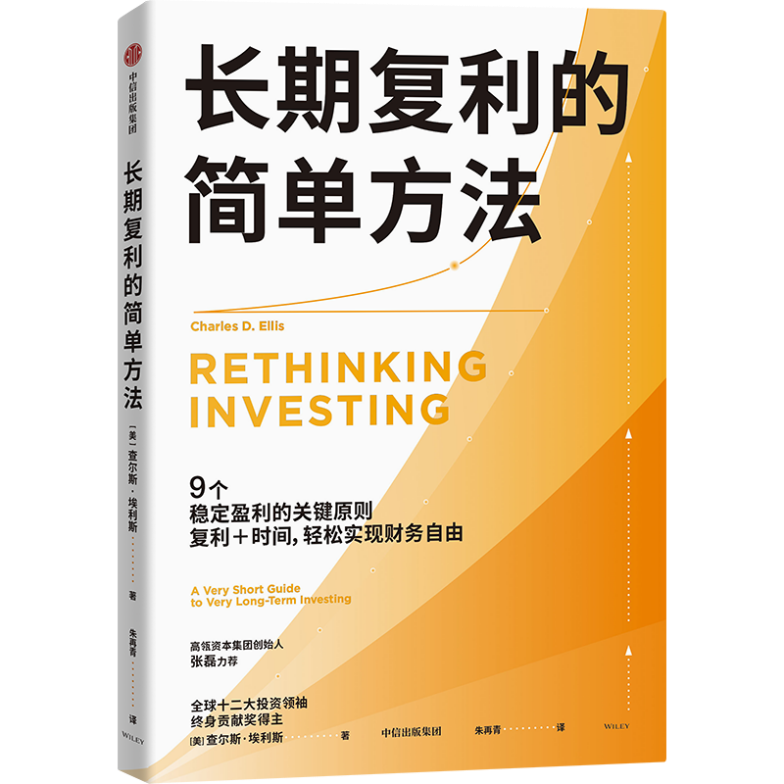
好书推荐:《长期复利的简单方法》
点拾投资· 2026-01-11 11:00
Group 1 - The core viewpoint of the article emphasizes the importance of long-term investment strategies, particularly the power of compound interest and the benefits of index funds over active trading [1][37] - The article discusses the dual drivers of market optimism: "policy expectations" and "technology cycles," which have led to a more solid foundation for market growth compared to previous years [1] - It highlights the common pitfalls of emotional trading and frequent strategy changes among individual investors, suggesting that a simple buy-and-hold strategy in broad index funds often yields better results [1][19] Group 2 - The article introduces the concept of compound interest as a powerful yet often misunderstood phenomenon, illustrating how significant wealth is typically generated in the later stages of investment [6][37] - It presents the "Rule of 72" as a practical tool for estimating how long it will take for an investment to double based on its annual return [8] - The discussion includes the importance of saving as a means of prioritizing future financial security, framing it as a trade-off for greater future utility [10][11] Group 3 - The article notes a fundamental shift in investment dynamics over the past fifty years, with over 90% of market transactions now conducted by professional institutional investors, making it increasingly difficult for individual investors to outperform the market [21][22] - It emphasizes the need for individual investors to adopt a strategy of owning the market at the lowest cost, primarily through index funds and exchange-traded funds (ETFs) [24][25] - The article warns against the high costs associated with active management and highlights the behavioral advantages of index funds, which help mitigate emotional decision-making [25][26] Group 4 - The article advocates for a comprehensive financial planning approach that goes beyond traditional asset allocation rules, encouraging investors to consider their entire financial ecosystem [28][29] - It suggests that investors should limit major investment decisions to about 20 throughout their lifetime to enhance long-term returns [32] - The article concludes with nine key principles of investing, emphasizing the importance of understanding compound interest, saving, and the evolving market structure [37][40]

2026股市开门红,最“懒惰”的投资策略,才最聪明
Feng Huang Wang Cai Jing· 2026-01-06 10:17
Core Viewpoint - The stock market opened positively in 2026, with the Shanghai Composite Index surpassing 4000 points, driven by "policy expectations" and the "technology cycle," indicating a solid foundation for market optimism. However, the challenge remains for ordinary investors to convert index gains into actual account profits, as frequent trading and emotional decision-making often lead to losses [1]. Group 1: The Power of Compounding - Compounding is often referred to as the "eighth wonder of the world," with its true impact being more profound than commonly understood. A simple mathematical sequence illustrates that a significant portion of wealth is created in the later stages of compounding [3]. - Warren Buffett's wealth accumulation demonstrates that most of his fortune was built after age 50, emphasizing the importance of time in the compounding process [3]. Group 2: Saving as a Priority - Saving should be redefined as "paying yourself first," representing a wise trade-off between lower current consumption and higher future utility [7]. - The "Rule of 72" can be a practical tool for estimating how long it will take for an investment to double based on its annual return [5]. - High-interest consumer debt is detrimental to wealth accumulation, and eliminating such debt should be a priority in any wealth-building strategy [10]. Group 3: Changing Investment Landscape - The investment landscape has fundamentally changed, with over 90% of stock market transactions now conducted by professional institutional investors, making it increasingly difficult for individual investors to outperform the market [18]. - The rise of index funds and ETFs represents a significant shift in investment philosophy, allowing investors to achieve market returns at lower costs [20]. Group 4: Overall Financial Planning - A comprehensive financial plan should consider the entire financial ecosystem, including asset allocation, savings plans, and spending rules [24]. - The "4% rule" is recommended for sustainable withdrawals from investment portfolios during retirement, ensuring wealth longevity [33]. Group 5: Key Investment Principles - The nine key investment principles outlined include recognizing the power of compounding, the importance of saving, understanding market structure changes, and minimizing costs [35][36][37].