成品油暴跌风险

Search documents
如果俄乌达成协议,油价会跌多少?
Hua Er Jie Jian Wen· 2025-11-27 05:49
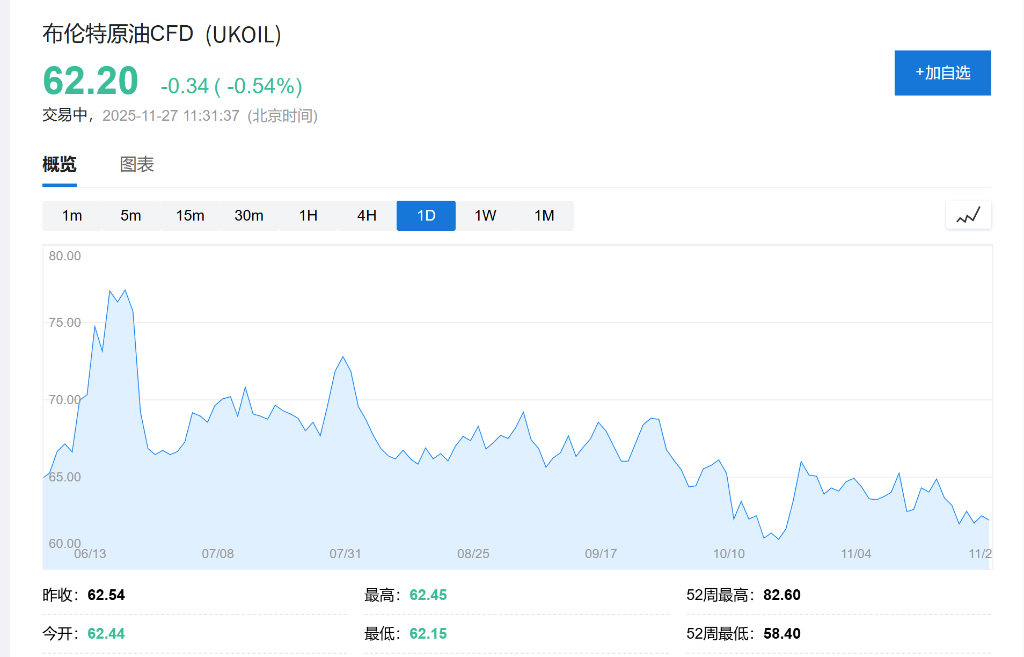
Core Viewpoint - Goldman Sachs' latest report quantifies the potential impact of a peace agreement on oil prices, indicating that the downside risk for refined oil is significantly greater than for crude oil [2][3] Group 1: Market Expectations and Price Projections - As of November 26, 2025, Brent crude oil prices have fallen to $62 per barrel, with European diesel crack spreads plummeting nearly 25% to $28 per barrel due to market expectations of peace negotiations between the U.S. and Russia [3] - In Goldman Sachs' baseline scenario, Russian liquid fuel production is projected to decline from 10.1 million barrels per day (mb/d) in Q4 2025 to 9.0 mb/d by the end of 2027, driven by ongoing drone attacks on Russian energy infrastructure and low oil prices [3] - Even without a peace agreement, strong non-Russian supply is expected to push Brent/WTI prices down to $56/$52 per barrel by 2026 [3] Group 2: Impact of Peace Agreement on Oil Prices - If a peace agreement is reached and sanctions on the Russian oil industry are lifted, Goldman Sachs estimates that Brent oil price forecasts for 2026 could be adjusted down by $4-$5 per barrel due to the gradual recovery of Russian production and the release of floating storage inventories [4][5] - Two recovery scenarios are outlined: a slow recovery maintaining production at 10.1 mb/d until 2027, leading to average Brent prices of $52/$58 for 2026/2027, and a rapid recovery returning to pre-war levels of 11.3 mb/d by the end of 2027, resulting in average prices of $51/$54 [6] Group 3: Refined Oil Price Risks - The impact of a peace agreement on refined oil prices is expected to be more direct and severe, with diesel margins projected to drop by $6-$8 per barrel if negotiations succeed [7][9] - The current risk premium for European diesel is estimated to include $7 per barrel above the physical fundamentals, indicating a significant adjustment could occur if sanctions are lifted and shipping costs normalize [9] Group 4: Trading Strategies - Goldman Sachs recommends shorting the Brent crude oil calendar spread from Q3 2026 to December 2028, reflecting a view on oversupply in 2026 [10] - Oil producers are advised to hedge against price declines in 2026, while consumers should consider the potential price drop in 2026 as an opportunity to hedge against future price increases starting in 2028 [10]