
战略瘦身

Search documents
8元出售8家子公司,苏宁易购卖家乐福“减负”
阿尔法工场研究院· 2025-12-12 11:32
Core Viewpoint - Carrefour's presence in the Chinese market is expected to further diminish as Suning.com continues to divest its non-core subsidiaries at symbolic prices, reflecting a strategic shift towards focusing on its core business of home appliances and 3C products [4][18]. Summary by Sections Asset Disposal - Suning.com announced the sale of 8 subsidiaries for a total of 8 yuan, with each subsidiary priced at 1 yuan, marking the third instance of such symbolic asset disposals within 2025 [5][11]. - The subsidiaries involved span various sectors, including liquor sales and supermarket operations, and will no longer be included in Suning's consolidated financial statements post-sale [7][11]. Financial Implications - The divested subsidiaries were generally in a state of insolvency, with negative equity values. For instance, one subsidiary had a book value of -161 million yuan and an assessed value of -35.38 million yuan [11]. - The transactions are expected to improve Suning's financial statements, with an anticipated increase in net profit of approximately 383 million yuan [11]. Strategic Focus - Suning.com is committed to streamlining its operations by focusing on its core business, which includes home appliances and 3C products, while reducing its debt levels [15][16]. - The company plans to enhance its offline store strategy by opening and upgrading 75 new stores in key cities, emphasizing a combination of product variety and deep service [16]. Historical Context - The recent disposals are part of a broader trend following Suning's acquisition of Carrefour China in 2019 for 4.8 billion yuan, which has now turned into a financial burden [18]. - The divestiture of these subsidiaries signifies a complete exit from the Carrefour brand in China, as the company has faced challenges due to changing consumer behavior and external market conditions [18]. Future Outlook - The effectiveness of Suning's strategy to focus on its core business and the success of its new store formats will be critical in generating sustainable operating cash flow moving forward [19].


老品牌杀入网红局!85度C开“生甜甜圈”专品店,这波能爆吗?
东京烘焙职业人· 2025-12-08 08:36
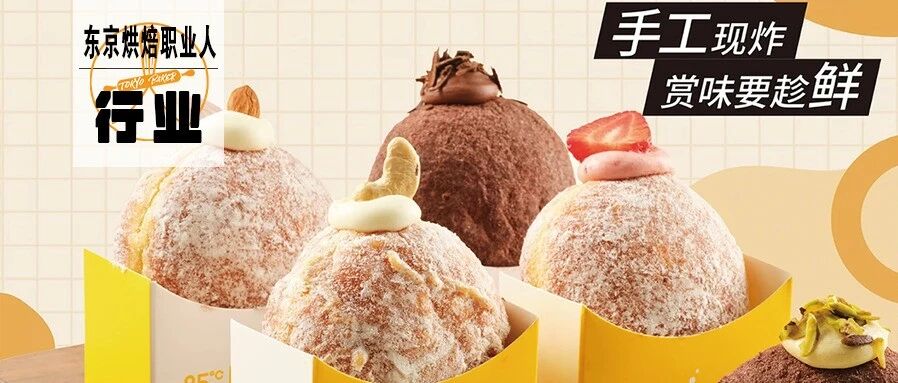
Core Viewpoint - The article discusses the strategic transformation of 85°C, a bakery brand, as it introduces a new model focused on selling a single product, "raw donuts," in small, independent outlets, aiming to revitalize its brand and attract younger consumers amidst declining performance and increased competition [3][4][19]. Group 1: Business Model Transformation - 85°C is shifting from large, comprehensive stores to small, approximately 10 square meter outlets that exclusively sell "raw donuts," reflecting a significant strategic pivot in response to past challenges [3][4]. - The new "85°C DONUT" outlets are designed to be low-cost and efficient, leveraging existing store infrastructure and sharing customer traffic with the main 85°C stores [6][8]. - The business model emphasizes resource reuse and customer flow exchange, allowing the new donut outlets to attract customers who may also visit the main store for coffee [8]. Group 2: Pricing Strategy - The pricing strategy for "raw donuts" is set between 6-11 yuan, significantly lower than competitors who price similar products above 18 yuan, aiming to attract a broader, price-sensitive audience [9][11]. - Promotions such as "buy four, get two free" are employed to enhance value perception and drive traffic, focusing on high volume rather than high margins [11]. Group 3: Market Positioning and Consumer Engagement - The choice of "raw donuts" aligns with current market trends and consumer preferences for fresh, high-quality products, particularly appealing to younger demographics [13][19]. - The brand aims to rejuvenate its image and connect with younger consumers through a new visual identity and product offering, distancing itself from its older brand perception [16][20]. Group 4: Challenges and Future Outlook - Despite initial success, the long-term viability of the "raw donut" concept will depend on continuous product innovation and the ability to adapt to changing consumer tastes [18]. - The brand faces significant financial challenges, with reported losses expected to exceed 93 million yuan for the year if adjustments are not made [15].
业绩飘红下仍坚持“瘦身”,药明康德拟28亿元剥离非核心资产
Bei Ke Cai Jing· 2025-10-28 08:55
Core Viewpoint - WuXi AppTec has announced the sale of its clinical service subsidiaries, aiming to focus on its CRDMO business model and enhance global capabilities while reporting strong financial performance in the first three quarters of the year [1][2][9]. Group 1: Asset Sale Details - WuXi AppTec plans to sell 100% equity of its subsidiaries, Shanghai Kangde Hongyi Medical Clinical Research Co., Ltd. and Shanghai WuXi Jishi Pharmaceutical Technology Co., Ltd., to Hillhouse Capital for a base price of 2.8 billion yuan [1]. - The two subsidiaries generated approximately 1.16 billion yuan in revenue and 90 million yuan in net profit for the first three quarters of 2025, accounting for 3.5% and 0.7% of WuXi AppTec's total revenue and net profit, respectively [2]. Group 2: Strategic Focus - The sale is part of WuXi AppTec's strategy to concentrate on its CRDMO business model, which includes drug discovery, laboratory testing, and process development, thereby providing financial support for global capacity expansion [2][7]. - The company has been optimizing its business structure over the past year, including the sale of its WuXi ATU business in the U.S. and U.K., which contributed 1.32 billion yuan in revenue for 2024 [3]. Group 3: Financial Performance - For the first three quarters of 2025, WuXi AppTec reported revenue of 32.857 billion yuan, a year-on-year increase of 18.61%, and a net profit of 12.076 billion yuan, up 84.84% [9]. - The chemical segment was the largest revenue contributor, generating 25.98 billion yuan, a 29.3% increase year-on-year [10]. - The U.S. market remains the primary revenue source, with 22.15 billion yuan in revenue, reflecting a 31.9% growth [11].
